
Driving Lessons in Orlando, With a Licensed, Patient Instructor
Rated 5.0 on Google from 24 reviews
Students and parents describe patient, calm, professional lessons.
Insured teaching cars with dual controls
Beginner Lessons and Road Test Preparation
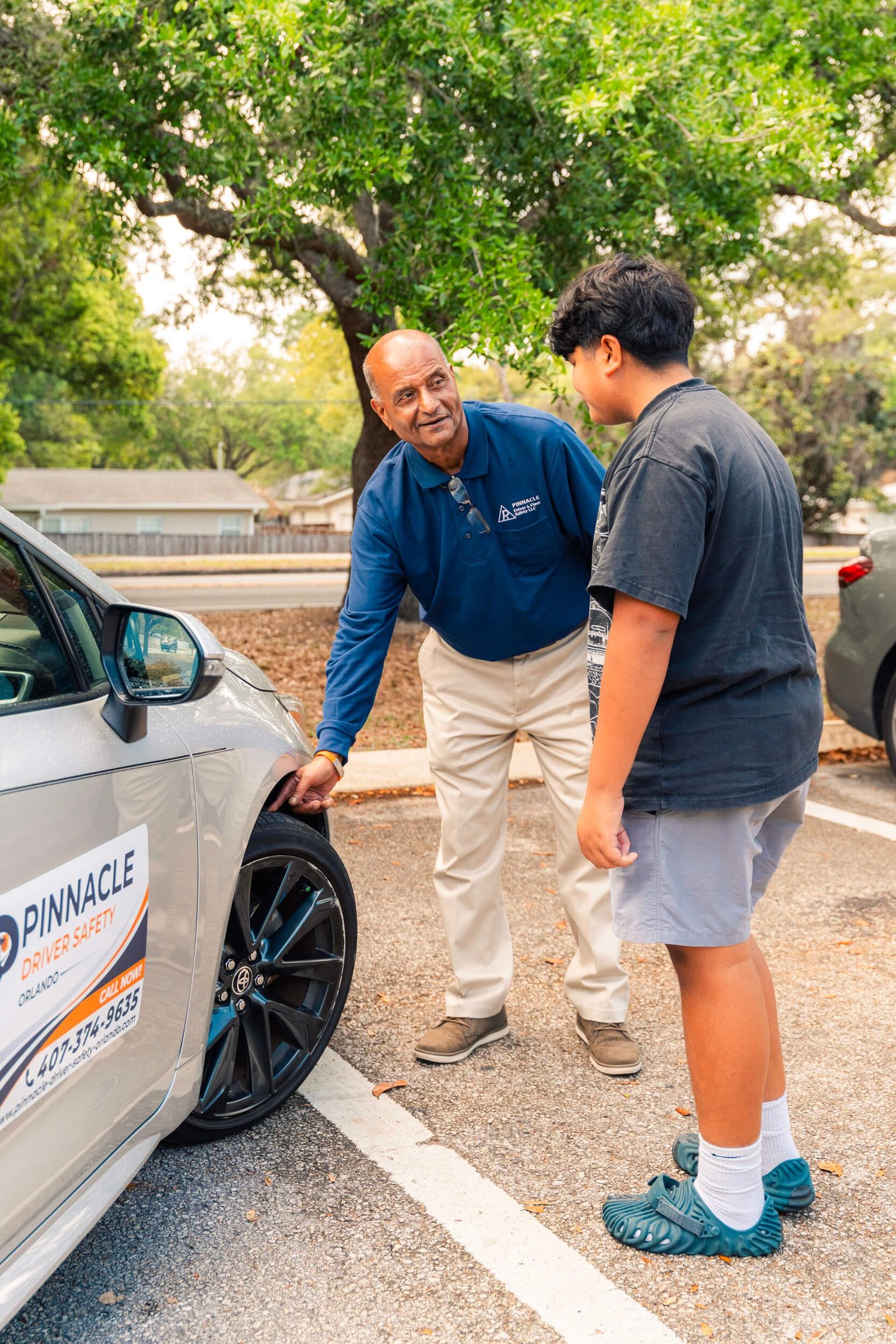
Beginner and New Driver Lessons
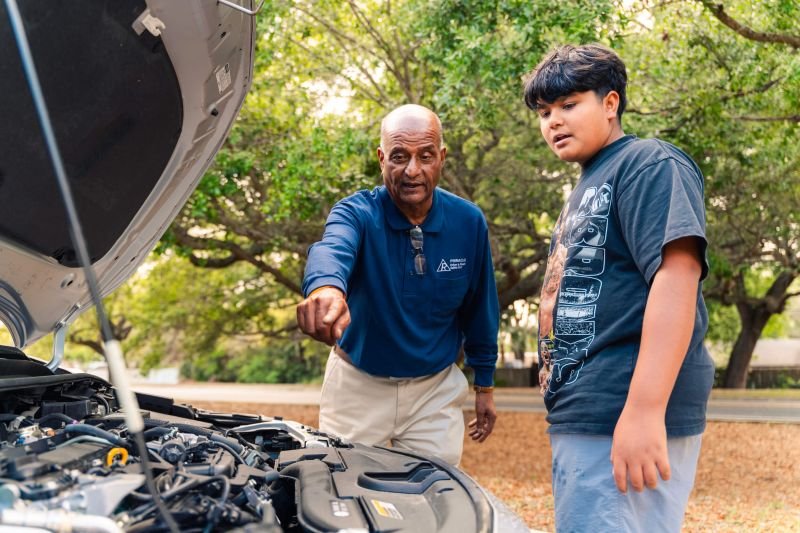
Road Test Preparation
Why Families Choose Pinnacle Driver Safety Orlando
A Written Plan for Every Student
We start by listening: your experience, your worries, what you already know about Florida road rules. After every lesson we write down what we covered, so the next one picks up where you left off. Parents can ask for a copy.
Defensive Driving Training
Central Florida roads are busy and fast. We teach you to spot trouble early, leave a safe gap and stay calm when other drivers do not.
Dual Control Training Cars
Every training car has a second brake on the instructor's side. Knowing it is there settles nerves quickly. The cars are insured for teaching, clean and roadworthy.
Pickup and Drop Off
We collect you from home, school, college or work and bring you back afterward. Nobody has to leave work early to drive you.
Every Lesson Is One on One
Learn From Master Instructor Rakesh Sharma
Version A is better supported now, because every Google reviewer names him. The old site still says “instructors” in several places, so confirm with the client which version is true. The title “Master Instructor” should match what is on his licence.
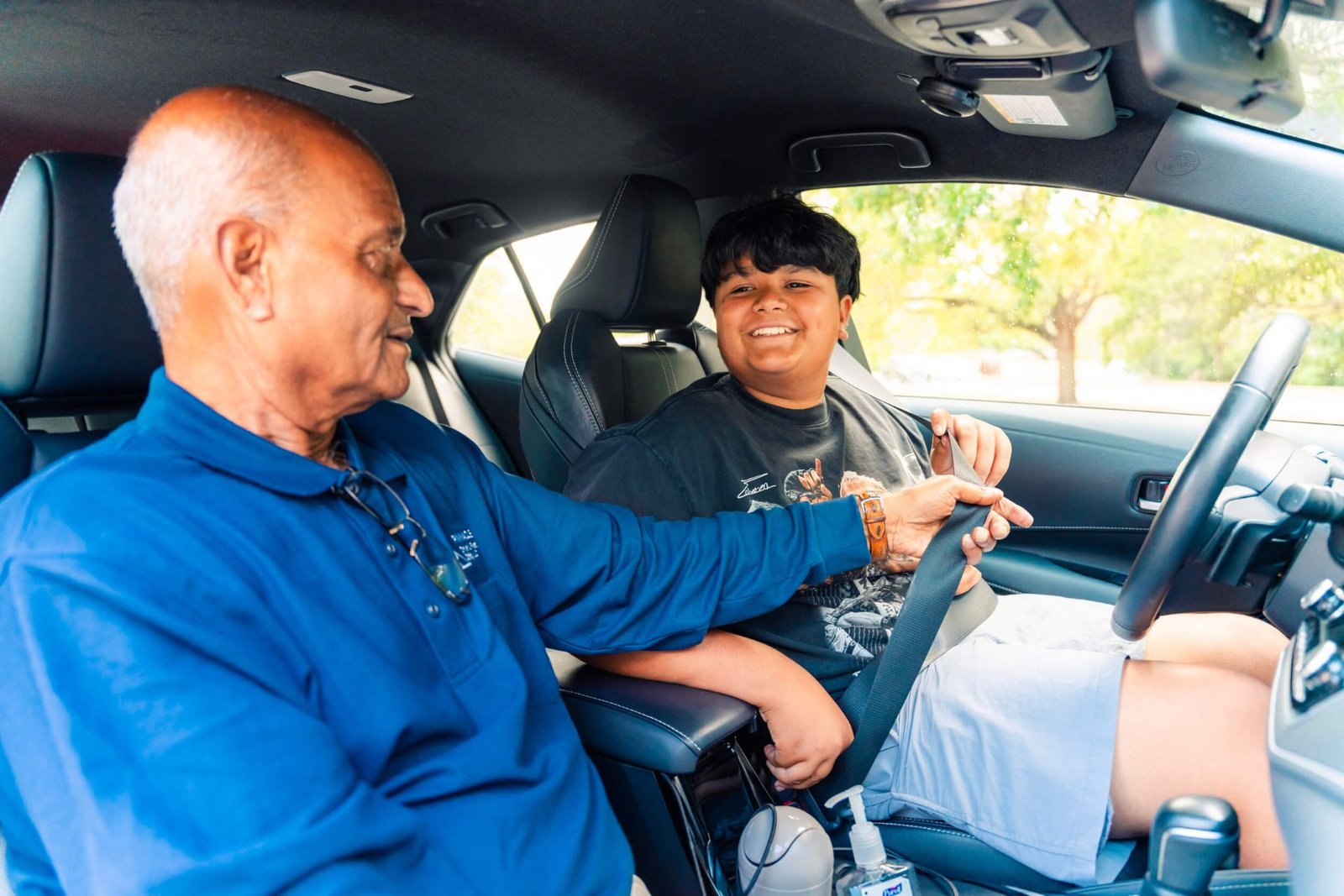
- Calm, step by step coaching for nervous drivers
- Road test maneuver practice
- Defensive driving habits for Central Florida roads
- A written Training Action Plan for every student
- Highway driving in the Road-Ready package
- Teaches every lesson personally
Rakesh Sharma
What the Florida Road Test Covers
The Florida driving skills test checks a set of specific maneuvers, along with everyday habits like stopping fully and yielding. Choose a skill to see what the examiner asks for and how we practice it with you.
20 to 40 foot space
What is Tested:
You turn the car around in a space about 20 to 40 feet wide, using three movements: forward, reverse, then forward again. The state handbook describes the steps. Move to the right, signal and check traffic, turn the wheel sharply left and creep forward to the edge of the road, then reverse with the wheels turned sharply right, and finally drive forward into the correct lane.
How we coach it
We begin in an empty lot with cones, so you can feel how much steering the car needs before a real curb is nearby. Then we move to quiet streets and practice the whole sequence, including the signal and the traffic checks, until it is smooth and unhurried. We also teach you when not to make one: on a curve, on a hill, or where a sign says no U turns.
Centered in the space
What is Tested:
You park so the car sits centered in the space, with no part of it sticking out into the traffic lane. The examiner uses this to see how well you handle the car in tight spaces, judge distance and stay in control as you turn into the space.
How we coach it:
We teach reference points on the car, so you are lining things up instead of guessing. We start slowly in an empty lot, then move to real parking lots with parked cars around you. A wide enough approach, and straightening the wheels before you stop, usually make the difference.
Wheels turned correctly
What is Tested:
You show how to park facing uphill or downhill, with and without a curb, and how to set the parking brake. If your test route has no hill, the examiner can have you demonstrate it where you are parked.
How we coach it:
One rule covers almost every case: turn the front wheels toward the edge of the road. Downhill with a curb, they point toward the curb. With no curb, they turn right. Uphill with a curb is the one exception, where they turn away from the curb. We practice on a real slope whenever we can, then finish every park with the parking brake.
50 feet, no camera
What is Tested:
You back up 50 feet at a slow speed, looking to the rear. The state handbook says not to use the rear view mirror or the backup camera for this part of the test.
How we coach it:
Many drivers now rely on the camera, so this feels strange at first. We practice turning your body, looking through the rear window and making small, slow steering corrections, so the car stays straight. Going slower is easier to control than most students expect.
From about 20 mph
What is Tested:
You drive at about 20 mph, and when the examiner tells you to stop, you make a quick, safe stop. The aim is a fast stop that stays controlled, with the car staying straight.
How we coach it:
We practice reacting the moment you hear the instruction, then braking firmly and steadily with both hands on the wheel. We start in an empty lot, then move to a quiet road with no traffic behind us. After a few repetitions it stops feeling like a surprise.
Stop before the line
What is Tested:
You signal if you are turning, approach in the proper lane, and come to a complete stop before the stop line or crosswalk. You stay stopped until you can move safely, without interfering with cross traffic or pedestrians.
How we coach it:
Rolling through a stop is an easy habit to pick up, so we practice full stops on every drive. We teach you to stop with the car completely still and the nose behind the line, look both ways, and go only when it is clear.
Pedestrians and emergency vehicles
What is Tested:
You let pedestrians cross, pull over and stop for emergency vehicles, and do not enter an intersection where you would block other traffic.
How we coach it:
We go through who goes first at busy intersections, crosswalks and shared roads, and we practice scanning early, so you have time to yield smoothly. These are habits the examiner sees across the whole test, so we correct them as they happen on every lesson.
Driving Lesson Packages
Every package is private, one on one instruction in a dual control car, with pickup and drop off included. Lessons are paid in full when you book, by credit or debit card.
Single Session
A good first try, a refresher, or a quick skills check.
- One 90 minute private lesson
- We check where you are and what to work on
- Seat and mirror setup, so you start comfortable
- Written notes on what we covered
Starter Foundation Package
For beginners who want solid control and confidence in light traffic.
- 4 hours of private instruction
- Residential streets and pedestrian awareness
- Pickup and drop off included
The design says 4 hours as four 60 minute sessions, which contradicts the 90 minute policy. I left the session length out.
Road-Ready Package
Everything you need to feel ready for real traffic and the road test.
- 8 hours of private instruction
- Highway driving practice
- Multi lane roads and tricky intersections
- Road test maneuver practice
A parent’s Google review confirms this package includes highway driving.
Complete Confidence Package
For learners who want to be fully independent behind the wheel.
- 12 hours of private instruction
- Highway practice and full road test preparation
- Pickup and drop off included
Cancellation note: Plans change. Give us 48 hours’ notice and we will reschedule at no cost. For same day changes, we need at least 4 hours’ notice.
Where we teach
- Downtown Orlando
- Winter Park
- Lake Nona
- Avalon
- Union Park
- Conway
- College Park
- Dr. Phillips
- Oviedo
- Altamonte Springs
- Kissimmee
- St. Cloud
- plus the areas around UCF
- Rollins College and Full Sail University
Google Reviews From Orlando Students and Parents
Straight from Google, written by the people we have taught.
Driving Guides From Our Blog
Short articles on what to expect in a first lesson, Florida permit rules and highway driving.
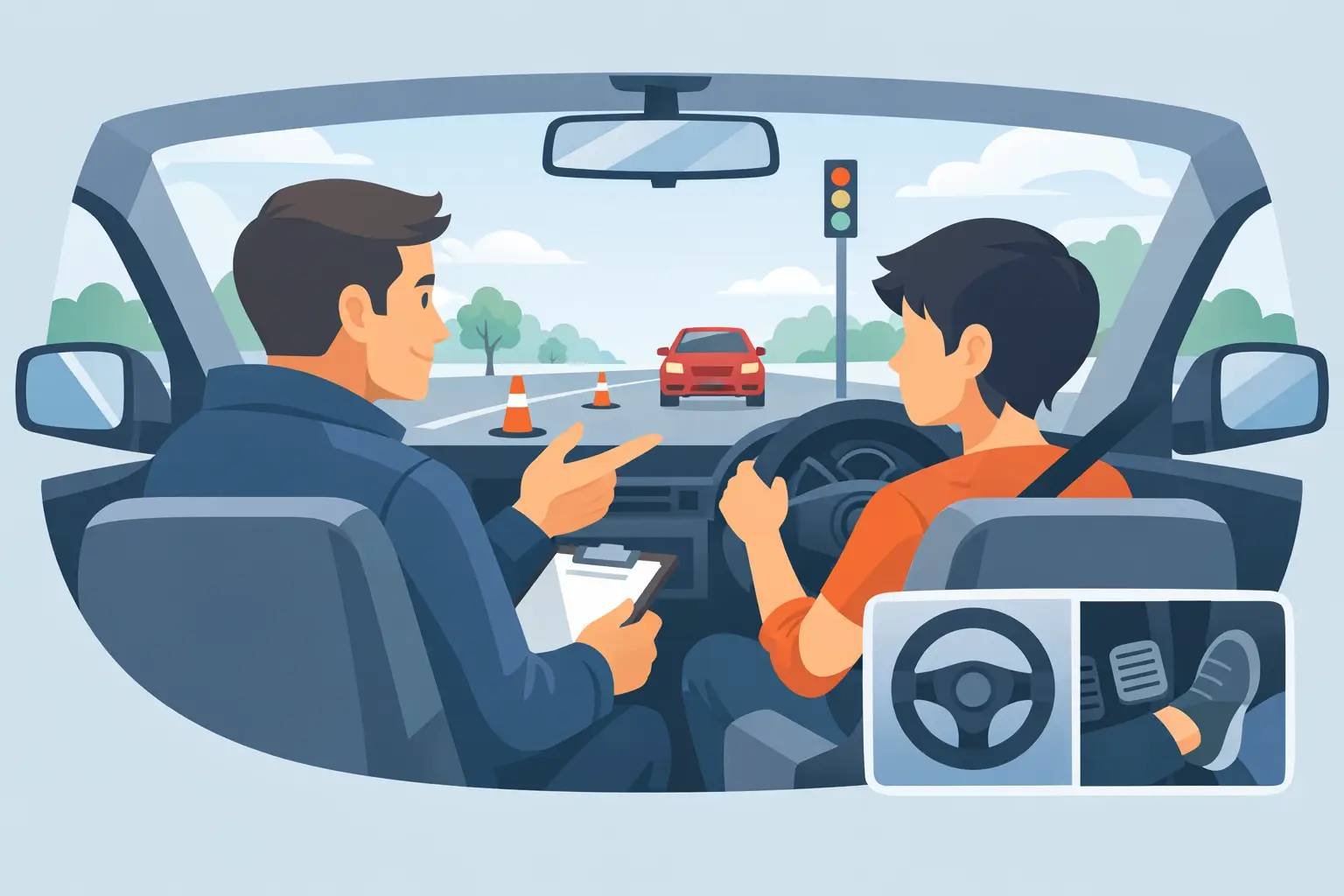
A first driving lesson usually starts before the car even moves. For most new drivers, that is a relief. If you are wondering what happens during a first driving lesson,
A lot can change on the road in ten, twenty, or thirty years. Traffic moves faster, intersections feel busier, vehicle technology is different, and many licensed adults find themselves wondering
A student can steer smoothly, brake gently, and still miss the hazard that matters most. That is why parents and instructors ask how to teach defensive scanning, not just how