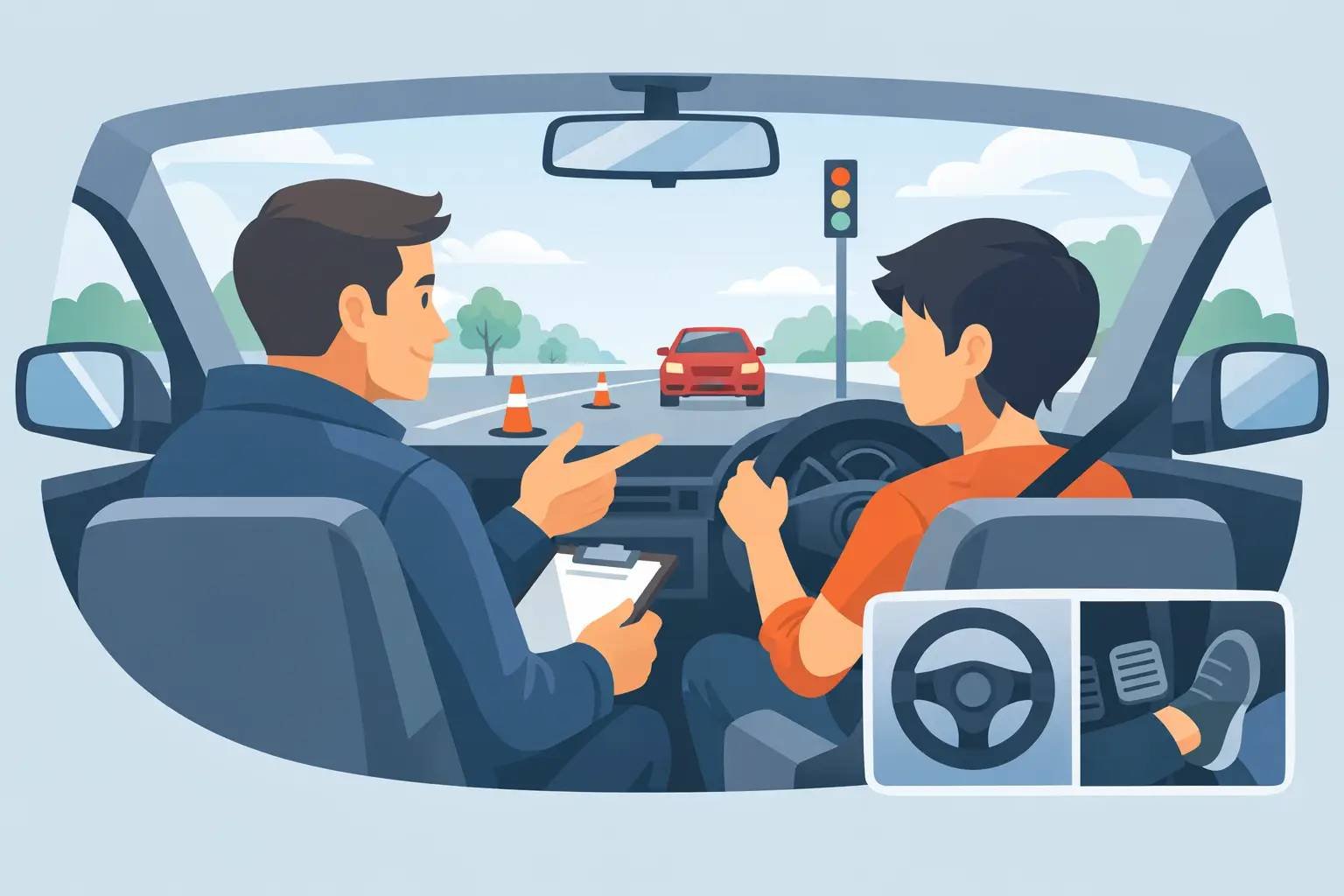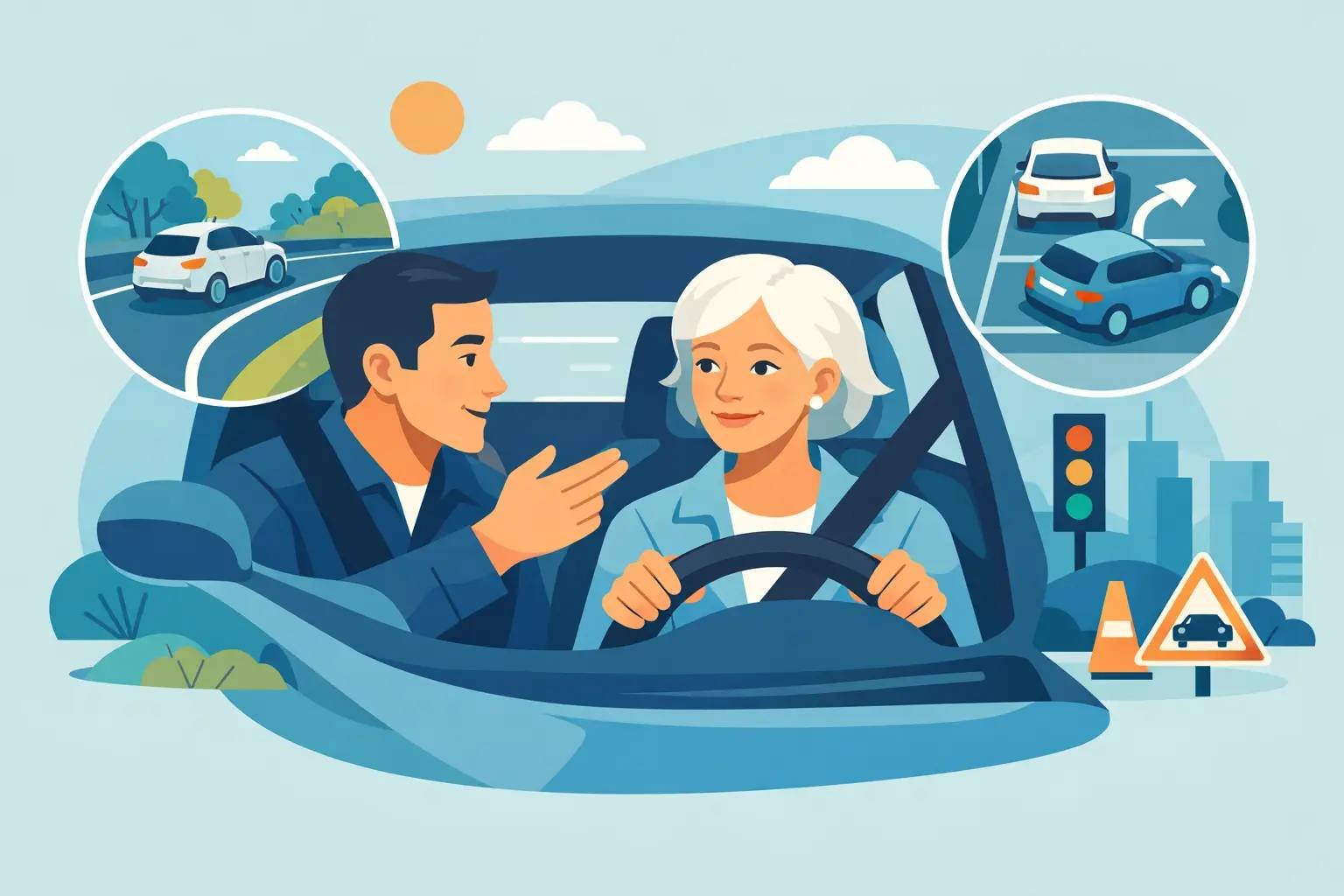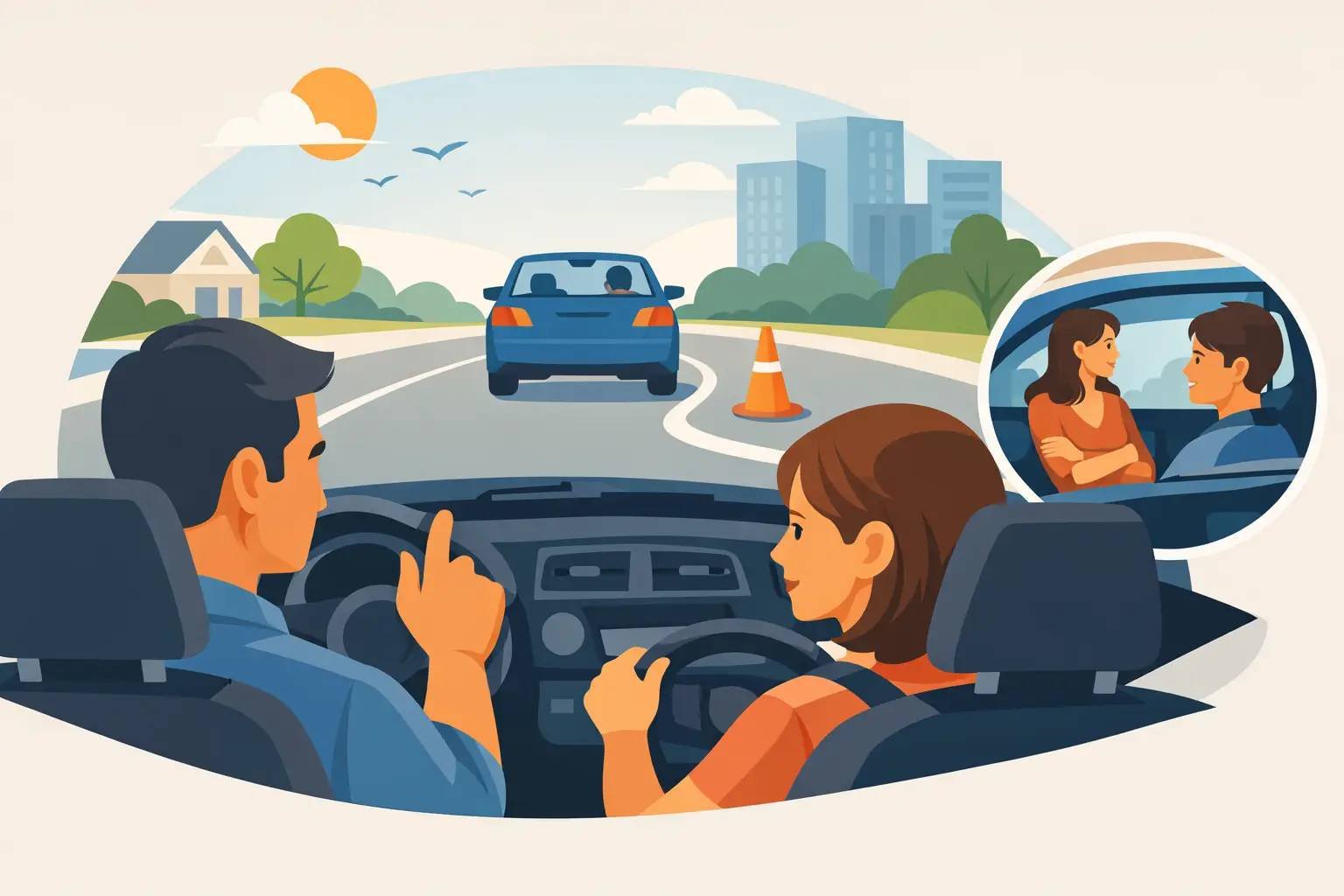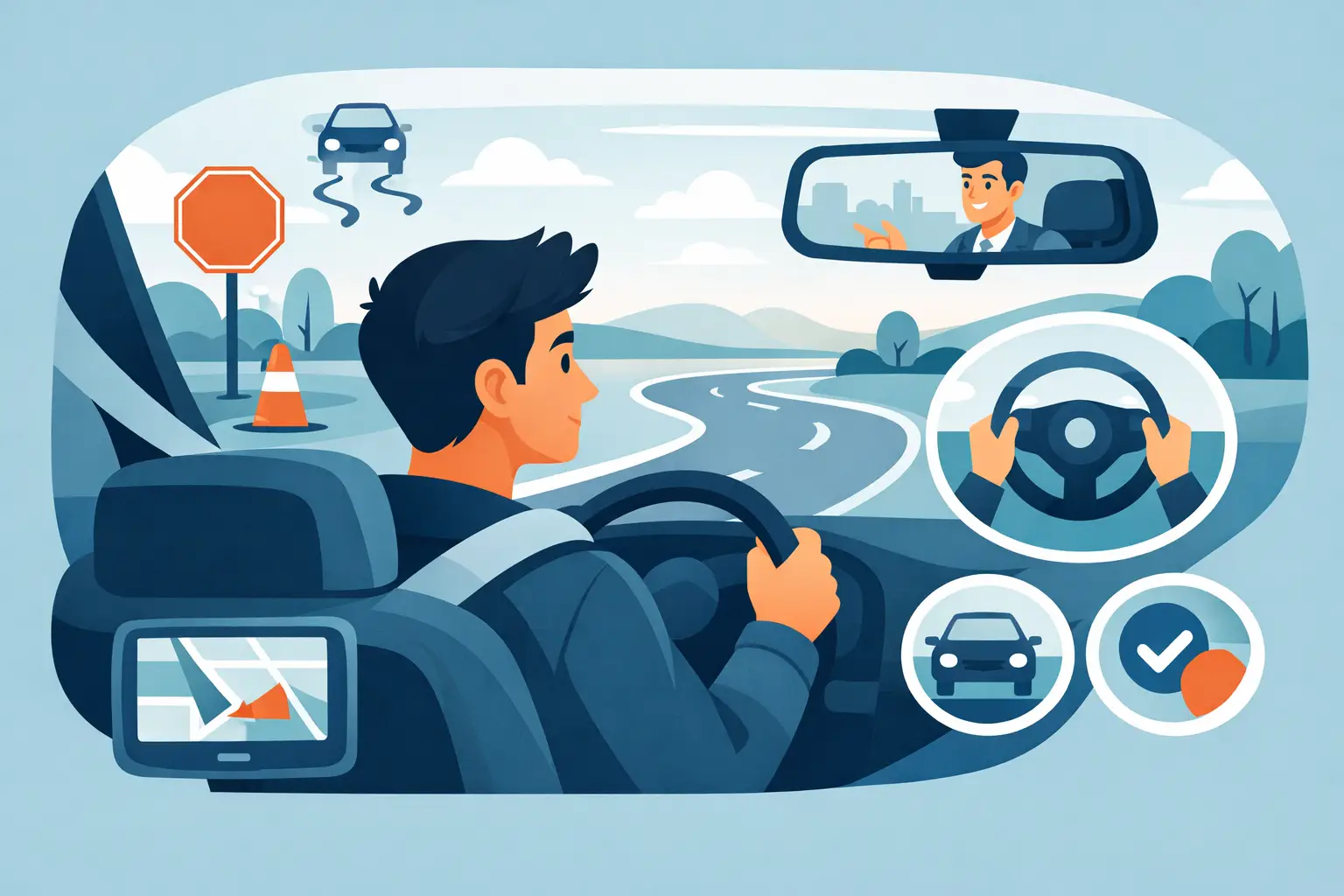
The first few times behind the wheel usually feel the same – too many things happening at once, too many decisions to make, and not much time to make them. That is exactly why the best driving tips for first time drivers are not about tricks or shortcuts. They are about building safe habits early, before rushed choices turn into costly mistakes.
For teens, new adult drivers, and families in the Orlando area, the goal should be bigger than passing a road test. A license gives legal permission to drive. It does not automatically give judgment, hazard awareness, or calm decision-making in traffic. Those skills are built one lesson, one correction, and one repeatable habit at a time.
Best driving tips for first time drivers start with control
A surprising number of beginner errors happen before the car even moves. If your seat is too far back, your mirrors are poorly adjusted, or your hands are placed inconsistently on the wheel, every decision that follows becomes harder.
Start every drive the same way. Adjust the seat so you can fully press the brake without stretching. Set the mirrors to reduce blind spots as much as possible. Fasten your seat belt before starting the engine. Then place both hands securely on the steering wheel and take a moment to identify your surroundings.
This may seem basic, but consistency matters. A first-time driver who begins each lesson with the same setup routine is less likely to panic once traffic starts moving.
Look farther ahead than feels natural
New drivers often stare at the hood of the car or fixate on the vehicle directly in front of them. That habit limits reaction time. Defensive driving requires scanning well ahead so you can spot brake lights, lane changes, pedestrians, cyclists, and turning vehicles before they become immediate hazards.
A good rule is to keep your eyes moving. Check far ahead, then mid-range, then your mirrors, then back to the road ahead. If you only react to what is directly in front of you, you will often brake late, steer late, and feel behind the situation.
On busy Central Florida roads, that difference matters. Traffic can shift quickly around intersections, school zones, multilane roads, and tourist corridors. Looking ahead gives you time, and time is one of the safest things a driver can create.
Keep your speed under control, not just legal
One of the most practical driving tips for first time drivers is to understand that the posted speed limit is not always the right speed for the moment. Rain, glare, congestion, construction, and unfamiliar roads can all make a legal speed unsafe.
Beginners sometimes worry so much about driving too slowly that they begin matching aggressive traffic around them. That is a mistake. You should move with traffic when conditions allow, but never faster than your skill level and visibility support.
The better approach is steady, predictable driving. Accelerate smoothly. Leave early so you do not feel rushed. If another driver is impatient, let that driver be impatient. Your job is not to satisfy them. Your job is to make safe, lawful choices.
Leave more space than you think you need
Following too closely is one of the most common beginner mistakes because it does not feel dangerous until the car ahead brakes suddenly. By then, it is too late to wish for more room.
Keep a proper following distance and increase it in rain, at night, in heavy traffic, and anytime you feel uncertain. More space reduces pressure. It also gives you a better view of what is happening ahead, which improves decision-making long before emergency braking is needed.
For first-time drivers, extra space is not overcautious. It is disciplined driving.
Best driving tips for first time drivers at intersections
Intersections demand attention because they combine speed changes, turning decisions, signal timing, and other drivers who may not do what they should. Many beginner drivers focus only on the traffic light and miss the larger picture.
When approaching an intersection, check the signal early, ease off the accelerator when needed, and scan left, right, and ahead. Watch for cars trying to beat the light, pedestrians stepping into crosswalks, and vehicles turning across your path. If the light turns green, do not launch forward automatically. Confirm the intersection is clear first.
Right turns on red deserve special care in Florida. A legal turn is not the same as a safe turn. Come to a full stop, check for signs that prohibit the turn, yield to pedestrians, and look carefully for approaching traffic. New drivers often rush this step because traffic behind them feels impatient.
Do not let pressure from behind make your decision for you.
Make lane changes simple and deliberate
Lane changes cause anxiety for many first-time drivers because they require timing, mirror use, speed control, and confidence all at once. The answer is not to avoid lane changes forever. It is to break them into a repeatable process.
Check your mirrors, signal early, look over your shoulder to confirm the blind spot is clear, and then move smoothly without drifting or jerking the wheel. Cancel the signal if it does not turn off automatically.
If traffic is dense and the lane change is not necessary, wait for a better opportunity. There is no award for forcing your way over. Inexperience often shows up as rushed steering, last-second merges, or indecision. Calm, early planning solves most of that.
Manage distractions before the car moves
Phones are an obvious distraction, but they are not the only one. Passengers, music, food, fatigue, and emotional stress can all interfere with judgment. For teen drivers in particular, divided attention raises risk fast.
Set your route before leaving. Put the phone away. Keep volume low enough to hear traffic and emergency vehicles. If a conversation becomes distracting, reduce it or pause it. If you are upset, tired, or overwhelmed, delay the drive if possible.
A first-time driver does not need more stimulation. They need fewer demands competing for attention.
This is one reason structured practice matters. A calm instructor or supervising adult should reduce noise, give directions clearly, and avoid turning the lesson into a lecture. Safe learning depends on a focused environment.
Practice in layers, not all at once
Confidence grows faster when practice is organized. Start in low-pressure areas and build upward. Empty parking lots can help with basic steering and braking, but they are only the beginning. A driver also needs experience with neighborhood streets, traffic lights, multilane roads, parking, backing, and highway entry when ready.
The order matters. Throwing a nervous beginner into heavy traffic too early can create panic. Staying only in easy environments for too long can create false confidence. Good training introduces complexity in stages.
That is why professional instruction can make such a difference. A structured lesson plan, documented skill coverage, and the safety backup of dual-control brakes allow beginners to learn progressively instead of guessing what to practice next. For Orlando-area families, Pinnacle Driver Safety Orlando uses that kind of measured progression because real readiness comes from documented repetition, not hope.
Learn the road test skills, but do not stop there
Many families understandably focus on the Florida road test. It matters. Drivers need to know how to stop smoothly, back safely, signal properly, turn correctly, and follow directions. But test performance and everyday safety are not identical.
Some new drivers can perform a maneuver in a controlled setting and still struggle in live traffic. Others pass the exam but do not yet manage speed, spacing, scanning, or lane choices well under pressure.
Treat the road test as a checkpoint, not the finish line. The strongest new drivers continue practicing after licensure with clear goals and supervision.
Stay calm when you make a mistake
Every first-time driver makes mistakes. Missing a turn, braking too hard, choosing the wrong lane, or hesitating at the wrong moment does not mean someone cannot become a safe driver. What matters is how the mistake is handled.
Do not stack one error on top of another by panicking. If you miss a turn, continue safely and reroute. If you are in the wrong lane, do not cut across traffic at the last second. If another driver honks, keep your attention on the road and your next safe action.
Emotional control is a driving skill. In some cases, it is the skill that keeps a small mistake from becoming a crash.
Parents and supervising adults play a role here too. Feedback should be specific, calm, and immediate. Yelling rarely improves performance. Clear correction does.
Build habits you can keep for life
The best driving tips for first time drivers are the ones that still matter five years from now. Scan ahead. Leave space. Slow down when conditions change. Use signals early. Stay off the phone. Never let another driver rush your decisions.
Safe driving is not one big skill. It is a set of small habits repeated so often they become automatic. If you build those habits early, confidence becomes more stable because it is based on judgment, not luck.
That is the standard new drivers should aim for – not just getting through a test, but becoming the kind of driver other people can trust on the road.