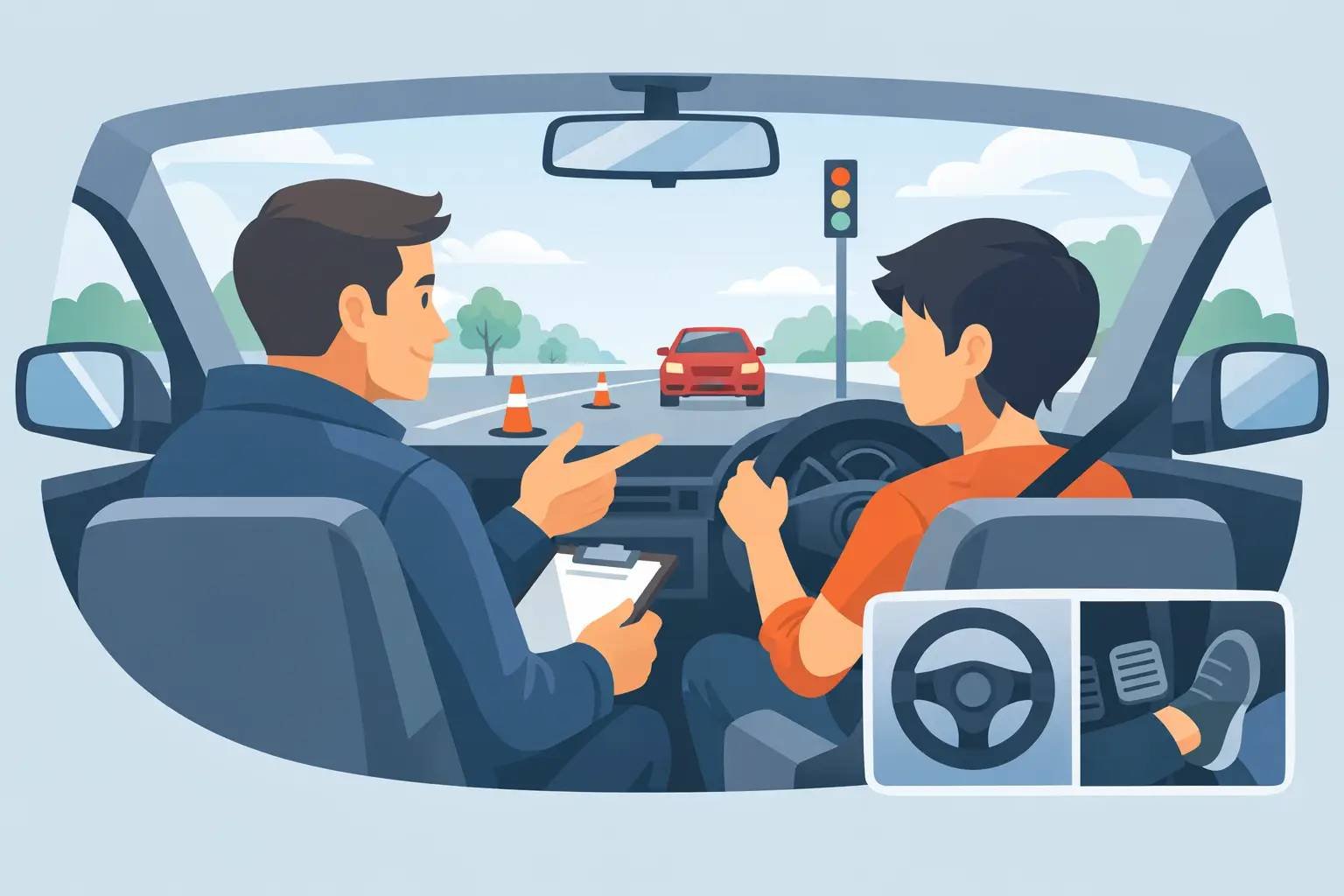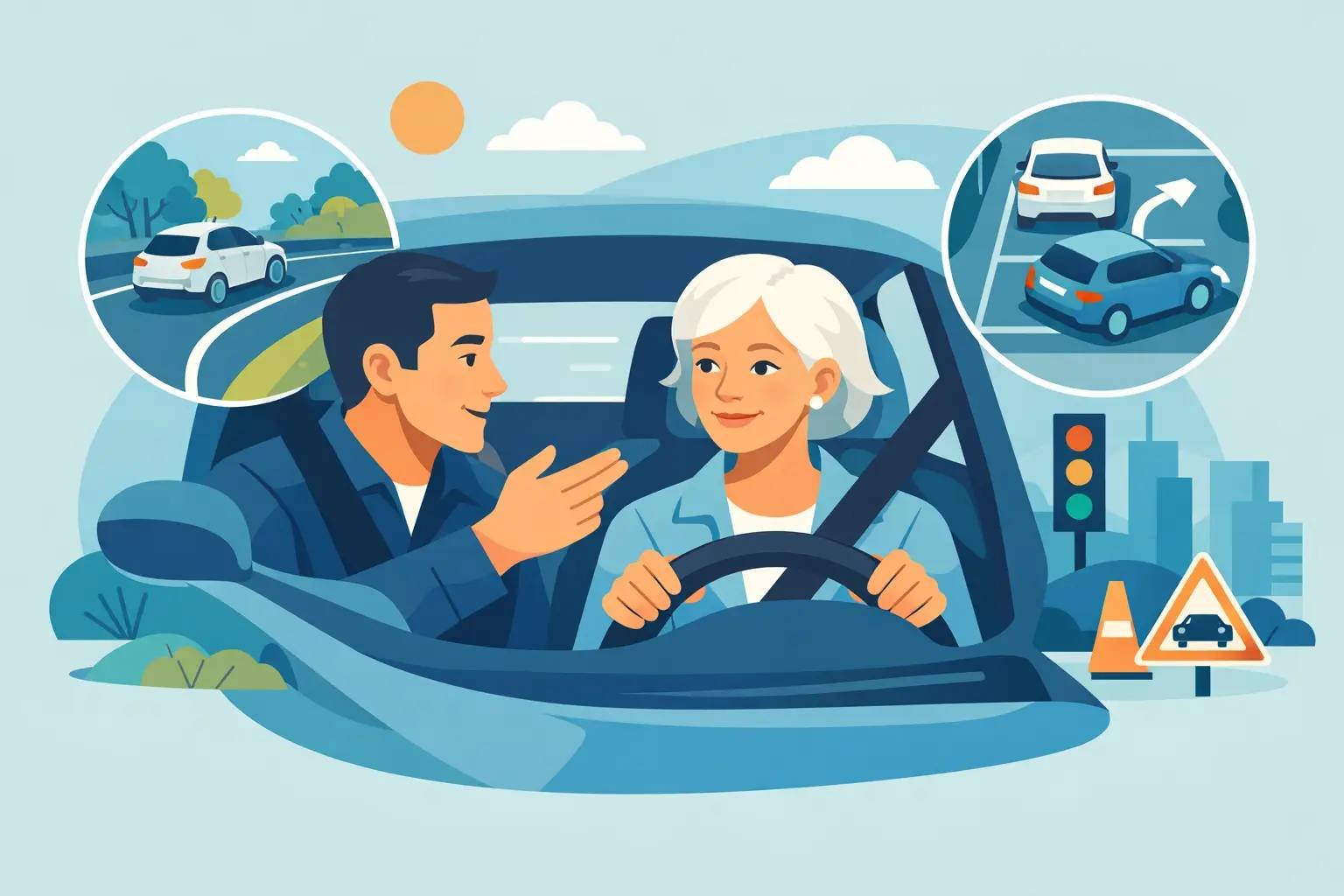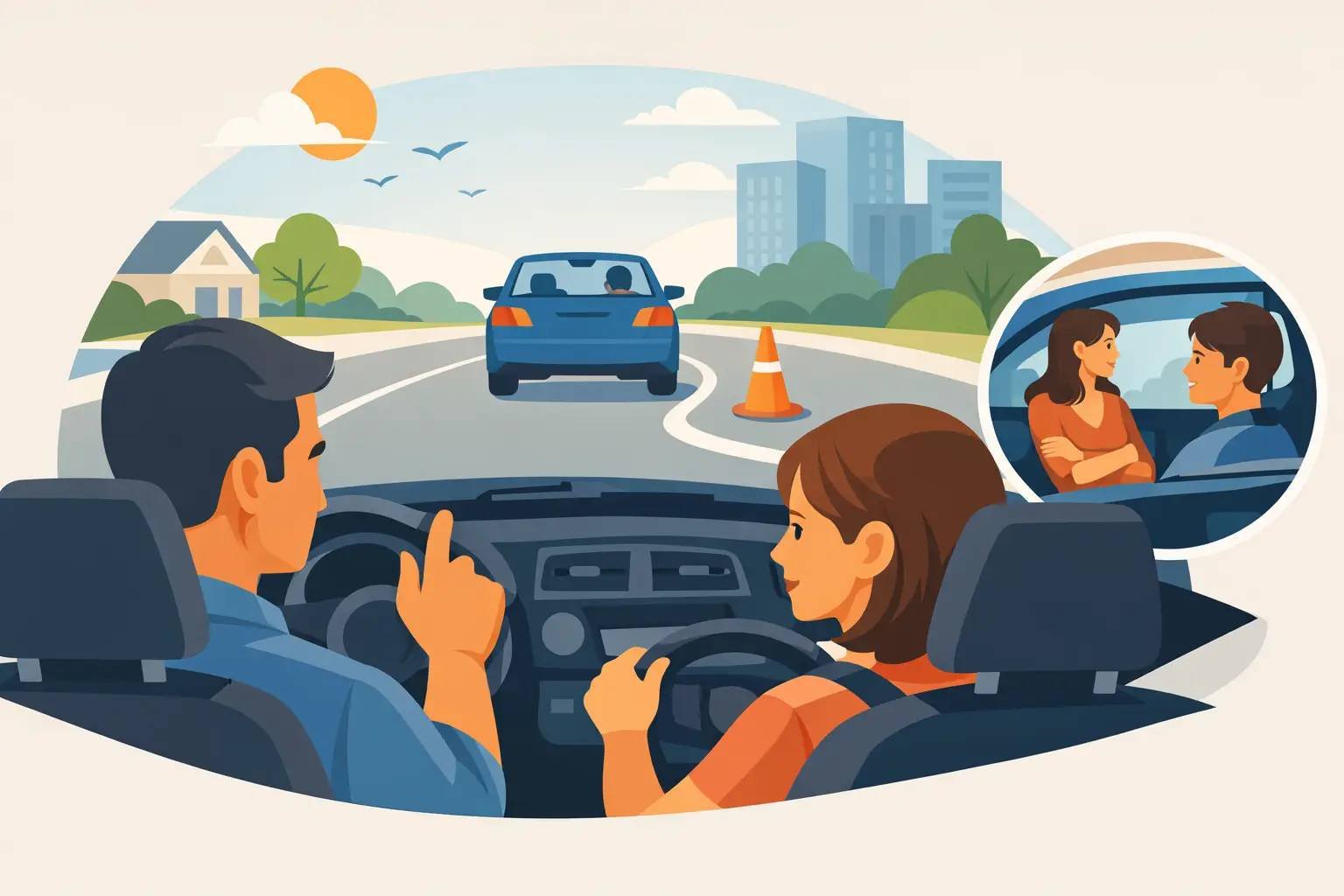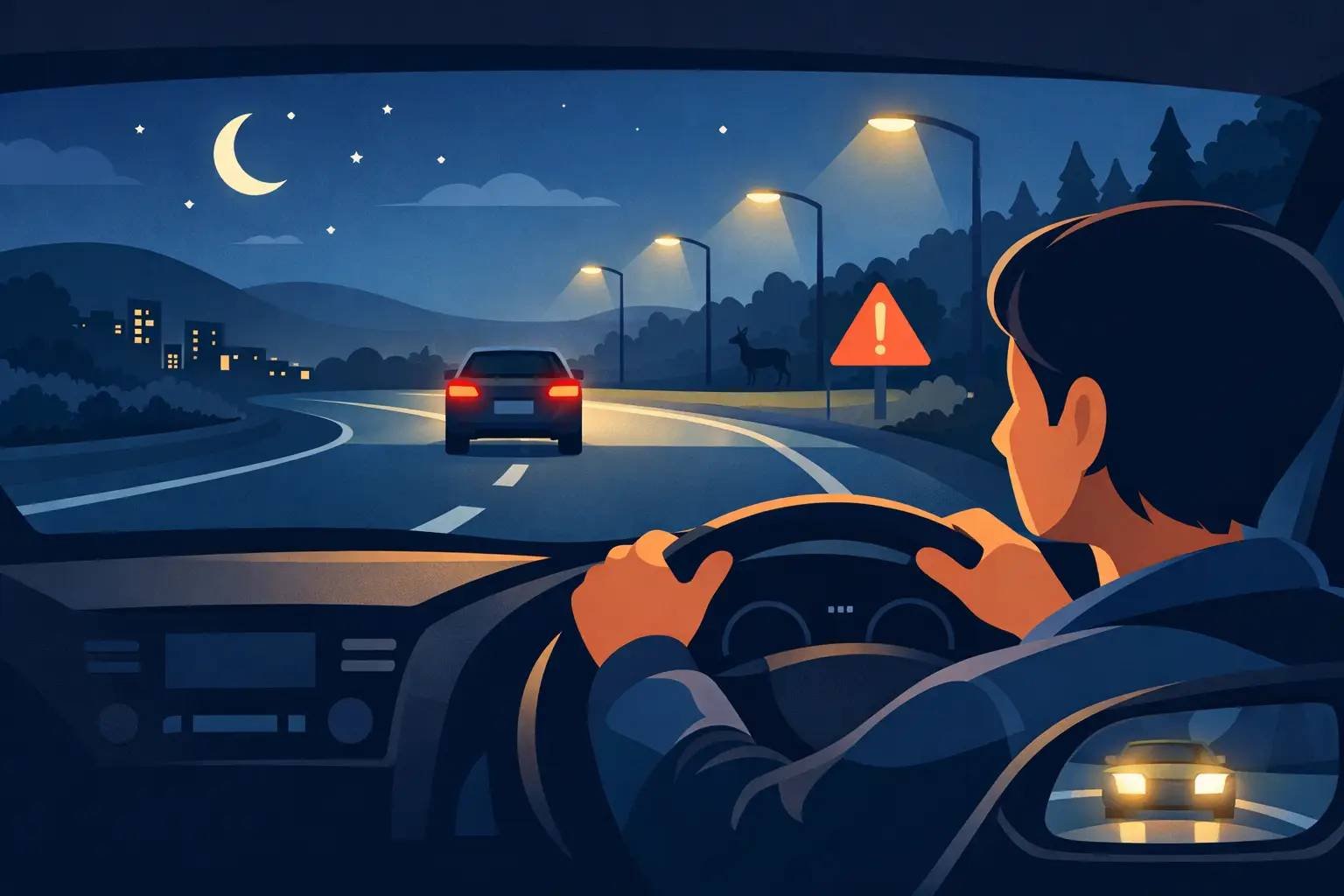
The first time a new driver leaves a well-lit parking lot and merges onto a darker road, the entire driving task changes. Distances feel less certain, headlights distort speed, and common hazards appear later than expected. That is why night driving safety tips for new drivers should be treated as core training, not an afterthought once daytime practice feels comfortable.
For teen drivers, nervous adults, and families trying to build real road readiness, nighttime driving requires a more disciplined approach. You are working with reduced visibility, higher fatigue, more glare, and less margin for error. The goal is not to be afraid of driving after dark. The goal is to use better habits, earlier decisions, and calmer judgment.
Why night driving is harder for new drivers
At night, you do not see the full traffic picture as early as you do in daylight. Lane lines may be faded, pedestrians can blend into the background, and curves often look sharper once you are already in them. For a new driver, that delayed visual information creates a chain reaction – late braking, overcorrecting, drifting in the lane, or following too closely without realizing it.
There is also a confidence issue that families should take seriously. Some beginners drive too timidly at night, which can disrupt traffic flow and create hesitation at turns or merges. Others become overconfident because roads seem quieter. Neither pattern is safe. Good night driving is steady, alert, and deliberate.
Night driving safety tips for new drivers that matter most
1. Slow down before you need to
The most reliable nighttime adjustment is simple: reduce speed early. Not dramatically, and not in a way that surprises drivers behind you, but enough to give yourself more time to identify signs, hazards, and changes in traffic patterns.
This matters even more on suburban Orlando roads where lighting can change quickly from bright intersections to darker stretches. A speed that felt easy at 4 p.m. may be too fast at 9 p.m. because your sight distance is shorter. If you cannot stop within the distance you can clearly see ahead, your speed is too high for the conditions.
2. Keep your eyes moving, not fixed
New drivers often stare straight ahead when they feel stressed. At night, that habit makes things worse. Safe scanning means checking farther down the road, monitoring lane position, reading mirrors, and watching the right and left edges for pedestrians, cyclists, and turning vehicles.
A fixed stare narrows awareness. A steady scan widens it. This becomes especially important near shopping centers, apartment entrances, school areas, and intersections where someone may step out from poor lighting.
3. Manage glare the right way
Headlight glare is one of the biggest problems for beginners. The common mistake is looking directly at approaching headlights. That increases discomfort and can leave you temporarily blinded.
Instead, shift your focus slightly down and to the right side of your lane while still keeping the road ahead in your peripheral vision. Use lane markings as a guide. If glare from a vehicle behind you is distracting, adjust your rearview mirror to night mode if your mirror has that feature. The goal is to reduce the glare without losing awareness of surrounding traffic.
4. Increase following distance more than you think
Following distance is a safety issue in daylight. At night, it becomes even more important because brake lights and road conditions can be harder to judge. A new driver may recognize that the car ahead is slowing down a fraction too late.
More space gives you time to process what you are seeing. It also reduces stress. If the vehicle ahead brakes suddenly for a pedestrian, debris, or an unexpected turn, you have more room to respond smoothly instead of panicking.
5. Make sure the windshield is truly clean
A windshield can look clean in the driveway and still cause major visibility problems at night. Dust, streaks, and film scatter light from headlights and street lamps, making glare worse.
This is a small maintenance step with a big payoff. Clean the inside and outside of the windshield, check that wiper blades are working properly, and make sure washer fluid is available. If a driver wears glasses, those lenses should also be clean. Visibility is not just about what is outside the car. It is also about removing anything that interferes with clear vision.
Use the vehicle correctly after dark
Adjust headlights and dashboard lighting
A surprising number of new drivers do not notice when their headlights are not fully on, especially in areas with ambient lighting. They may have daytime running lights but no rear lights, which creates a serious safety problem. Before moving, confirm that the headlights are on and that the vehicle is set correctly for nighttime operation.
Dashboard brightness matters too. If interior screens or gauges are too bright, your eyes have a harder time adjusting to the darker road ahead. Dim them enough to stay comfortable while keeping all information readable.
High beams help – but only at the right time
High beams improve visibility on dark roads with limited lighting, but they must be used with discipline. They should be dimmed when another vehicle is approaching or when you are following another car closely. Misusing high beams reduces safety for everyone.
For new drivers, the rule is not just knowing when to turn them on. It is developing the habit of turning them off early enough to avoid blinding others.
Build better judgment at intersections and on curves
Night driving often exposes weak decision-making at intersections. A driver sees fewer details, assumes there is more time than there is, or misjudges the speed of an oncoming car based only on headlights.
At left turns, be especially cautious. Headlights can make an approaching vehicle look farther away than it is. If there is any doubt, wait. The same rule applies when pulling out from side streets or driveways. A few extra seconds of patience is a much better outcome than forcing a rushed decision.
Curves require the same discipline. Enter slower than you think you need to, keep your steering smooth, and avoid braking hard mid-curve unless necessary. New drivers sometimes discover too late that they entered too fast because the road shape was harder to read in darkness.
Fatigue changes everything at night
Tired driving is impaired driving
Families often focus on darkness and forget about fatigue. But many nighttime mistakes come from slowed reaction time, poor judgment, and reduced concentration. A teen driving home after a long school day, practice, work shift, or late event may be more limited by tiredness than by technical skill.
Warning signs include missing turns, drifting within the lane, delayed braking, and feeling mentally foggy. If a driver is tired, the safest decision may be not to drive. That can be inconvenient, but inconvenience is minor compared with the consequences of a nighttime crash.
Passengers should lower the workload, not raise it
For new drivers, passengers can either support safety or erode it. At night, conversation, music, phone activity, and peer pressure create extra distraction right when the road already demands more attention.
Set expectations early. Keep the cabin calm. Limit unnecessary noise. If a driver is still building confidence, nighttime practice with a responsible adult is a better step than a car full of friends.
Practice night driving in stages
The safest way to improve is progressive exposure. Start in lower-risk settings before moving to complex roads. A new driver should first practice in familiar areas with moderate traffic and good weather. Then add busier roads, more difficult intersections, and longer drives once basic nighttime scanning and judgment are consistent.
This is where structured instruction helps. A disciplined lesson plan builds skills in sequence instead of pushing a beginner into conditions they are not ready to handle. At Pinnacle Driver Safety Orlando, that kind of step-by-step coaching is part of how drivers build confidence without cutting corners on safety.
Parents should also remember that one successful night drive does not equal mastery. Real improvement comes from repeated, documented practice under different conditions. Dry roads, light rain, commercial traffic, and unfamiliar routes each place different demands on the driver.
When a new driver should postpone the trip
Sometimes the safest choice is not to continue. If visibility is poor, the driver feels rushed, emotions are elevated, or weather is making road markings difficult to see, postponing the drive is a responsible decision. That is not a lack of confidence. It is mature risk management.
New drivers need permission to make that call. Families can support safety by treating delayed arrivals, changed plans, or pickup requests as acceptable when conditions are beyond the driver’s current skill level.
A careful night driver is not the one who proves they can push through every condition. It is the one who recognizes limits early, stays calm, and makes measured decisions. That habit protects new drivers long after the learner stage is over.