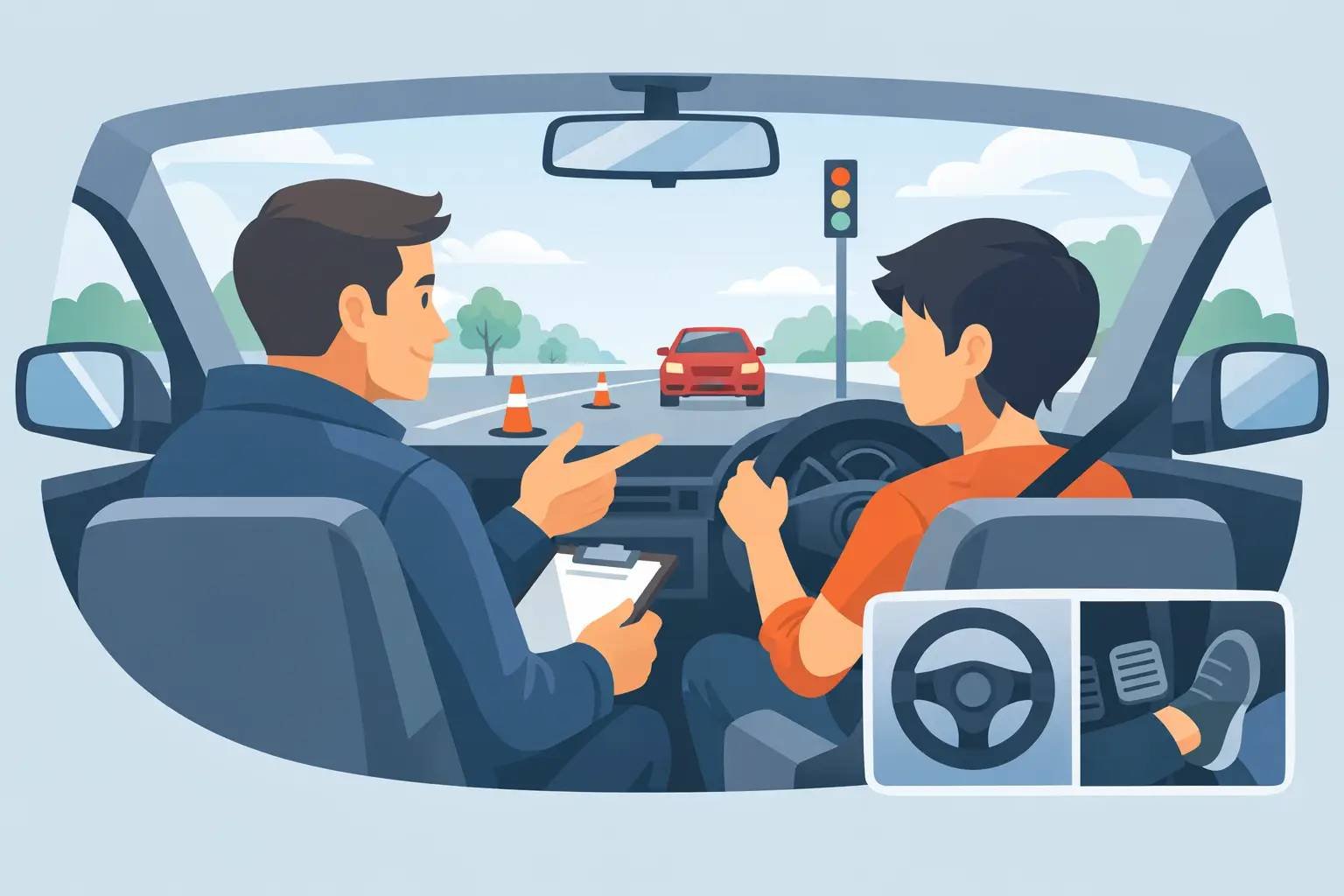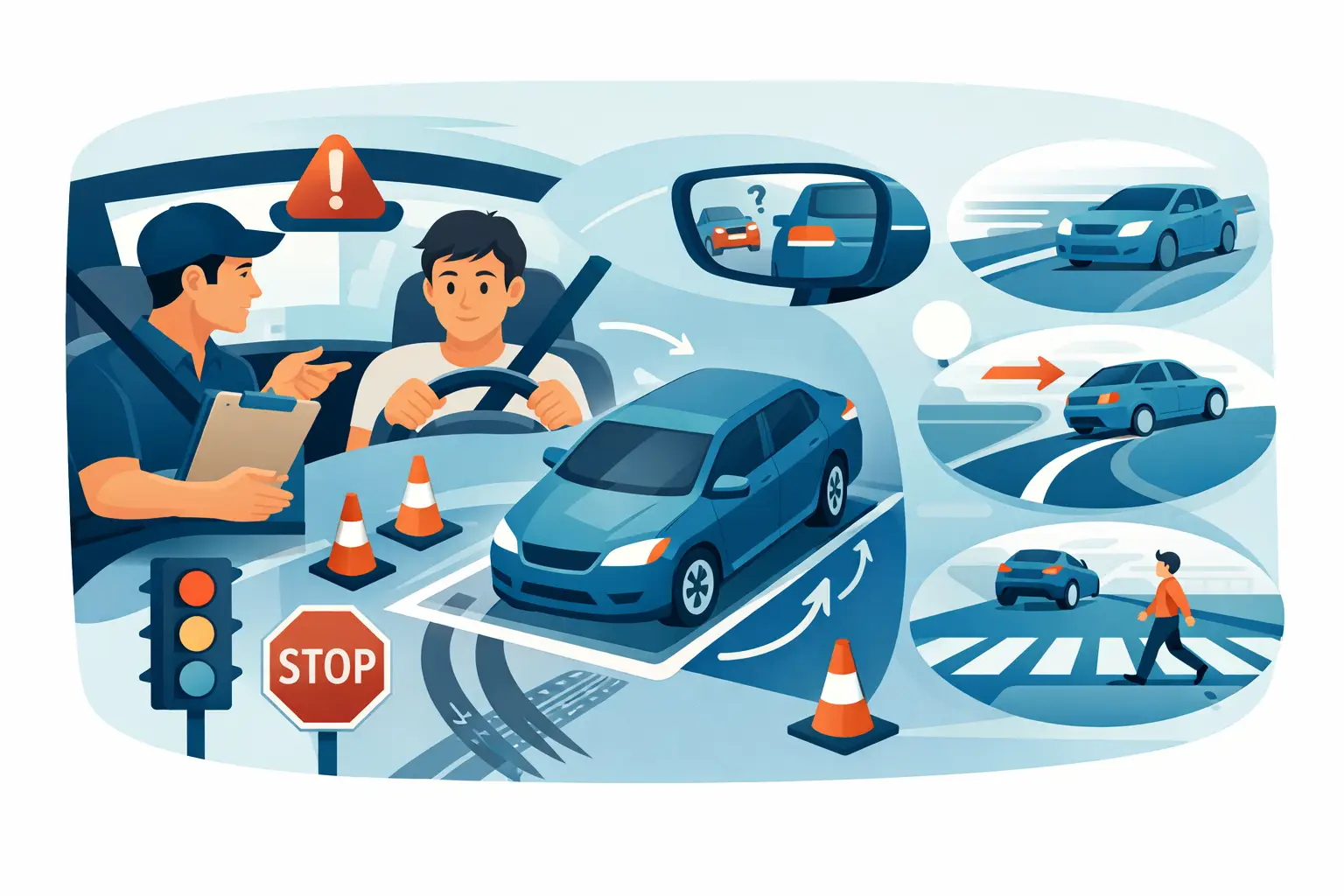
A road test can go off track in the first two minutes, not because the driver lacks potential, but because nerves erase routines. The top mistakes during road tests are usually not dramatic. They are small lapses in observation, speed control, lane positioning, and decision-making that signal a bigger issue to the examiner – inconsistent safety habits.
For teens, nervous first-time drivers, and adults returning to the road, that distinction matters. Examiners are not looking for perfection. They are looking for control, awareness, and judgment that stay steady under pressure. That is why the drivers who perform best are usually not the ones who memorized the test route. They are the ones who practiced safe habits until those habits became automatic.
Why the top mistakes during road tests happen
Most road test errors come from one of three causes: rushing, overthinking, or undertraining. A rushed driver rolls a stop because they are focused on what comes next. An overthinking driver hesitates too long at a turn or forgets a basic mirror check because their attention is split. An undertrained driver may know the rule in theory but has not repeated the skill enough times to perform it smoothly.
This is especially common with teen drivers. Many have spent time practicing the obvious skills – turning, parking, stopping – but not enough time building the defensive-driving behaviors behind those actions. The examiner notices that difference quickly. A turn is not just a turn. It involves speed choice, scanning, signaling, lane position, and yielding correctly.
Adult drivers can face a different version of the same problem. A licensed driver moving to Florida or returning to driving after a lapse may assume their general experience will carry them through. Sometimes it does. Sometimes it leads to missed details, especially around local traffic flow, school zones, right turns on red, and busy multilane roads common around Orlando.
The most common road test mistakes examiners see
Incomplete stops
This is one of the most preventable errors. A complete stop means the vehicle fully stops behind the line, before the crosswalk, or at the proper position if markings are absent. Many drivers slow down enough to feel cautious but do not actually stop. That rolling movement tells the examiner the driver is not disciplined at intersections.
This mistake often shows up when a driver is nervous and eager to keep moving. It can also happen during right turns at red lights, where drivers focus on finding a gap in traffic before they have completed the stop itself.
Weak observation habits
A driver may use the turn signal and still lose points if they fail to check mirrors and blind spots. Examiners watch the driver’s head and eyes, not just the vehicle. If lane changes, turns, backing, and parking happen without visible observation, the examiner has to assume the driver is not checking thoroughly.
This is one area where practice quality matters more than practice quantity. Twenty casual drives do less than a smaller number of lessons where observation is coached clearly and repeated consistently.
Poor speed control
Some drivers fail because they speed. Others lose points because they drive too slowly for conditions and disrupt traffic flow. Both can indicate weak judgment. Safe driving is not about choosing the lowest possible speed. It is about choosing an appropriate speed for the posted limit, traffic, visibility, and the specific maneuver.
School zones, neighborhood streets, and multilane roads each require a different feel. If a driver has only practiced in quiet residential areas, the test can feel much faster than expected.
Lane position errors
Widening too much on a right turn, cutting across a left turn, drifting within a lane, or changing lanes without proper alignment are all common road test issues. These errors suggest that steering control is not yet consistent.
In Orlando-area traffic, lane discipline matters. Roads can be busy, signage can come quickly, and intersections are not always forgiving. Drivers who struggle with lane position are often trying to think too many steps ahead instead of finishing the current task correctly.
Confusion at intersections
Intersections expose hesitation, poor scanning, and right-of-way mistakes. Four-way stops are especially revealing. Drivers may arrive unsure who goes first, wave another driver through unnecessarily, or move when they should yield.
Examiners do not expect aggression, but they do expect lawful and predictable choices. Being overly timid can be almost as risky as being too assertive. Safe drivers do not guess. They observe, decide, and proceed when the right-of-way is clear.
Top mistakes during road tests that start before the car moves
Many test problems begin before the vehicle is even in motion. A driver who does not adjust the seat, mirrors, and steering wheel starts at a disadvantage. If the seating position is off, pedal control suffers. If mirrors are poorly set, observation gets weaker. If the driver is unfamiliar with the vehicle, even basic tasks can feel rushed.
This is one reason test-day vehicle choice matters. A larger SUV may be perfectly safe, but if the student practiced mostly in a smaller training car, the change can affect parking, turning radius, and confidence. Consistency reduces avoidable stress.
Paperwork and timing matter too. Drivers who arrive rushed tend to carry that rushed mindset into the test. It is better to arrive early, settle in, and take a full minute to reset than to jump straight from stress into performance mode.
How to avoid these mistakes without overcomplicating the test
The best preparation is not trying to outsmart the examiner. It is building a simple, repeatable routine for every major driving task. Before moving, check position and surroundings. Before changing speed or direction, mirror check, signal, and confirm space. At intersections, stop fully, scan left-right-left, and proceed only when the path is clearly legal and safe.
That sounds basic because it is basic. Under pressure, basic wins.
Practice should also include the uncomfortable situations many families avoid. That means not just empty parking lots and familiar neighborhood loops, but also busier roads, lane changes in traffic, proper stops on hills if available, and repeated work on parking and backing. A student who has only practiced what feels easy often looks unprepared the moment the route becomes less familiar.
Structured instruction helps because it closes skill gaps in order. At Pinnacle Driver Safety Orlando, that is one reason documented lesson progression matters. Drivers need to know which skills are already consistent and which still need repetition before test day. Confidence should come from evidence, not guesswork.
The role of nerves and how to manage them
Test anxiety is real, and it affects good drivers. Nervous students sometimes grip the wheel too tightly, forget to breathe, or become so focused on avoiding one mistake that they create another. The answer is not to pretend nerves do not matter. The answer is to train in a way that leaves enough mental space for nerves without losing safe habits.
A useful standard is this: if a skill only works when the driver is calm, it is not test-ready yet. It needs more repetition. Drivers should be able to perform stops, turns, lane changes, and parking while talking through the process and while driving in moderate traffic. That level of consistency usually transfers better to the exam.
Sleep, timing, and routine help more than people think. A rushed morning, skipped meal, or last-minute argument in the car can make an average test feel harder. Families can support the student by keeping test day quiet, early, and predictable.
When a failed road test is actually useful
Failing a road test feels discouraging, but it can be useful if the response is honest. The wrong reaction is to blame the examiner or schedule a retest without changing anything. The better response is to identify exactly where the breakdown happened. Was it observation, speed control, lane discipline, or right-of-way judgment?
That matters because not all mistakes have the same root cause. A parking issue may be a repetition problem. A rolling stop may be a discipline problem. Hesitation in traffic may be a confidence problem tied to underexposure. The right fix depends on the reason.
A focused retraining plan usually works better than broad extra practice. Ten more random drives may not correct a blind-spot habit that has never been coached properly. But a few lessons with clear feedback, repetition, and a documented action plan often can.
A road test is short. The habits behind it last much longer. If you prepare for the test only, you may pass and still feel unsure on real roads. If you prepare for safe driving first, the test usually becomes much more manageable.