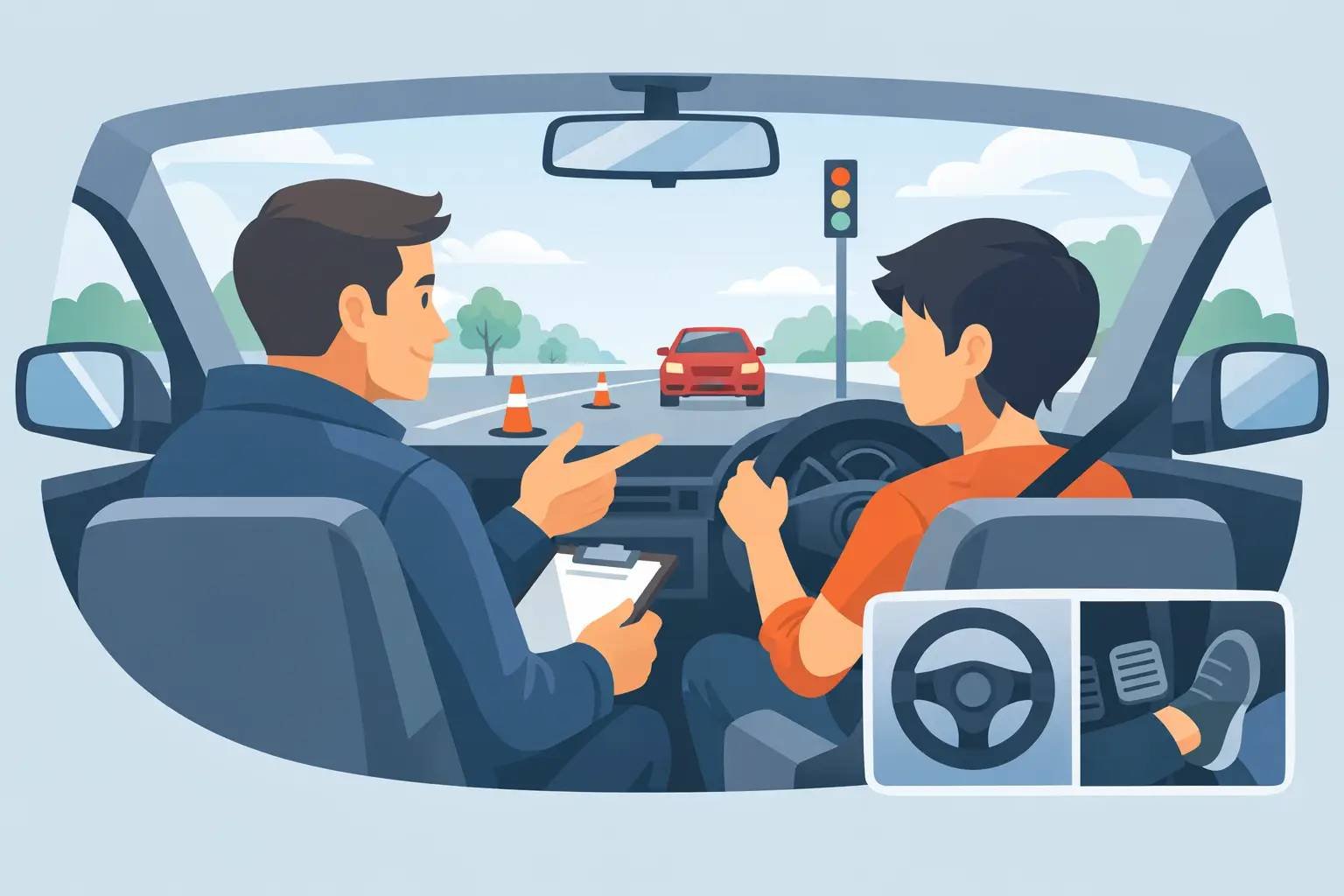
A teen can parallel park perfectly and still be unprepared for the moment an SUV cuts across three lanes on I-4 to make an exit. A new driver can recite right-of-way rules and still freeze when a pedestrian steps off the curb near a school zone. That gap between “can do the maneuver” and “can manage real traffic” is where most families in Orlando feel the pressure – and where safety-first instruction matters.
This is exactly why Pinnacle Driver Safety Orlando is built around defensive driving and measurable, on-the-road skill progression. If your goal is simply to pass a test, you can check boxes. If your goal is for your teen (or you) to drive calmly, legally, and predictably across the greater Orlando area, you need training that holds up on busy arterials, in sudden weather changes, and around drivers who do not always do what they’re supposed to do.
Why Orlando driving exposes “test-ready” gaps
Orlando is not a gentle training environment. Between tourism traffic, frequent lane changes, heavy intersection volume, and road construction that seems to rotate weekly, drivers are constantly forced to make quick decisions. Defensive driving is not a special add-on here – it is the baseline.
For teens, the risk isn’t just lack of experience. It’s inconsistent judgment under stress. A new driver may “know” the speed limit, but still drift upward with traffic flow, underestimate stopping distance in rain, or follow too closely at a red light because they’re watching the crosswalk instead of their mirrors.
For adult learners – especially those returning to driving after years off the road, or relocating from outside Florida – the challenge is often confidence and local adaptation. The rules may be familiar, but the tempo is different. If you feel rushed, your scanning narrows. When scanning narrows, mistakes happen.
What a safety-first driving school should prove, not promise
A driving school earns trust through operational standards you can verify, not motivational language. Families should be able to ask a few direct questions and get clear answers.
State licensing, insurance, and dual controls are not “extras”
If the vehicle used for instruction is not commercially insured or the instructor is not properly licensed, you are taking on unnecessary risk. Dual-control brakes matter for the same reason seatbelts matter – you hope you never need them, but you want them there when a learner makes a late decision.
Professional driving instruction should reduce risk while building independence. That means safety equipment, compliant operations, and coaching that is structured enough to be repeatable.
Documentation changes everything for teens and parents
Many families struggle with the “How do we know they’re improving?” problem. Without documentation, training turns into vague impressions: “They seem better,” “They still scare me,” “I think they’re ready.” That uncertainty creates arguments at home and often leads to either overconfidence or unnecessary delay.
A documented lesson approach solves that. At https://www.pinnacle-driver-safety-orlando.com/, instruction is organized through a Training Action Plan (TAP) so lessons aren’t random drives around the neighborhood. Skills are covered intentionally, and progress is visible – which helps teens feel coached instead of judged, and helps parents stay aligned with a realistic readiness timeline.
The progression that builds real-world readiness
The fastest way to create an anxious driver is to throw them into complex traffic before fundamentals are automatic. The fastest way to create an overconfident driver is to practice only easy routes and call it “done.” A safety-first progression moves from control, to awareness, to judgment – and then repeats those layers under increasing complexity.
Stage 1: Vehicle control without panic
Early lessons should focus on smooth acceleration, controlled braking, correct steering input, lane positioning, and mirror use that is consistent, not occasional. This is where many nervous drivers benefit most because calm repetition builds predictability.
A common turning point is learning that good drivers are not “fast responders.” They are early planners. When a learner starts braking earlier, signaling earlier, and making slower, cleaner turns, their stress drops because the car’s movement matches their intention.
Stage 2: Scanning habits and space management
Defensive driving starts with what you see and what you leave yourself room to handle. Learners need to build a scanning rhythm: far ahead, near front, mirrors, sides, then back far ahead again. The goal is not to stare everywhere – it’s to prevent tunnel vision.
Space management also becomes concrete here. Following distance, stopping gap at lights, and lane choice are not “preferences.” They are safety controls. A driver who maintains space buys time, and time is what prevents collisions.
Stage 3: Intersection judgment and right-of-way under pressure
Most serious mistakes are intersection mistakes: rolling stops, late yellow decisions, unprotected left turns, or failing to recognize a pedestrian who has already committed to a crosswalk.
A strong instructor will teach not only the legal right-of-way, but the practical reality: other drivers will hesitate, creep, or go when they shouldn’t. Defensive driving is learning to avoid being “technically right” and physically hit.
Stage 4: Complex traffic, lane changes, and highway readiness
Orlando-area driving requires lane discipline and confident, legal lane changes. Learners need repetition with mirror checks, blind spot checks, and signaling that is early enough to communicate intent.
Highway driving is often where teens either become timid or overly bold. The goal is neither. It’s stable speed control, predictable spacing, and decision-making that avoids last-second exits or aggressive merges. If your training never gets beyond quiet streets, you are postponing the most important learning.
Florida requirements and what “compliant” really means
Families often ask about Florida’s teen driver requirements, especially the 6-hour training mandate. Compliance matters because it’s tied to eligibility and legal expectations, but it should never be treated as the finish line.
If a program is designed only to satisfy a minimum hour requirement, it can create a false sense of readiness. Hours are not the same as skill coverage. A well-run program treats mandated training as a foundation and then builds beyond it with structured road-test preparation and real-world defensive driving.
Picking the right lesson package without guessing
One of the most practical decisions you’ll make is how many lessons to schedule. Pinnacle offers structured options (4+, 6+, 10+, and 20+ lessons), and the best fit depends on where the learner is starting and what “ready” needs to mean for your household.
If a teen has never driven before, a longer package typically creates the best outcome because it allows fundamentals to become automatic before complex environments are added. If the learner has some experience but inconsistent habits (late braking, weak scanning, hesitant turns), mid-range packages often give enough runway to correct patterns, not just introduce skills.
A shorter package can make sense for an adult with years of experience who needs a targeted refresher, or a relocating driver who is confident in general but needs Florida-specific adaptation – signage conventions, right-turn-on-red judgment, school zone discipline, and the speed and density of local traffic.
The trade-off is simple: fewer lessons can reduce cost upfront, but it can increase the likelihood that the learner needs “extra” training later after a failed road test, a near-miss, or a confidence crash. More lessons are an investment in stability – especially for families who want fewer surprises once the teen is driving solo.
Door-to-door training is not just convenience – it’s realism
A mobile lesson model with pick-up and drop-off from home, school, or work isn’t only about busy schedules. It also allows training to happen in the environments the driver will actually face.
Driving out of your own neighborhood, navigating the intersections you’ll use every day, and practicing the routes to school or work creates relevant repetition. It also helps instructors coach the small details that cause big problems: where visibility is limited, where pedestrians appear unexpectedly, where merging gets aggressive, and where speed transitions are easy to miss.
Coaching nervous drivers without reinforcing fear
Some learners don’t need more rules. They need a calmer nervous system behind the wheel.
A disciplined instructor can normalize anxiety while still holding firm expectations: you can be nervous and still drive correctly. That means coaching breathing and pacing indirectly through driving habits – earlier braking, longer following distance, clearer lane choice, and fewer “rush” decisions.
The key is not to shelter the learner from real traffic forever. It’s to introduce complexity gradually so confidence is built on proof. When a nervous driver successfully handles the same challenge multiple times with the same method, their confidence becomes durable.
What “road-test ready” should look like
Road-test prep works best when it is step-by-step, not a single cram session. The strongest preparation looks like this: the learner can explain what they’re about to do, execute it smoothly, and self-correct without spiraling if something changes.
The test itself is a snapshot. Safe driving is a lifetime skill. When instruction focuses on predictable habits – scanning, spacing, signaling, speed control, and calm decision-making – the test becomes a natural byproduct.
A helpful way to think about readiness is this: if your teen can drive safely when you’re silent in the passenger seat, they’re getting close. If they can drive safely when another driver behaves unpredictably, they’re closer.
A closing thought for parents and adult learners
If you only measure progress by how quickly someone can “handle the car,” you’ll miss the part that keeps them safe: the judgment to avoid trouble before it’s visible. Choose training that treats every lesson as practice for the day no one is coaching from the passenger seat – because that’s the day your habits do the talking.