If your teenager is counting down to their 15th birthday, the question usually is not just, “When can I drive?” It is, “What exactly does Florida require, and what can derail the process?” That second question matters more than most families expect. A missed document, an incomplete course, or confusion about night-driving limits can turn a simple milestone into a stressful delay.
For Orlando-area families, the safest approach is to treat licensing as a staged process, not a one-time event. Florida builds teen driving privileges in steps for a reason. New drivers need time to develop judgment, scanning habits, speed control, and defensive decision-making before they are fully independent.
Florida teen driving requirements 2026 at a glance
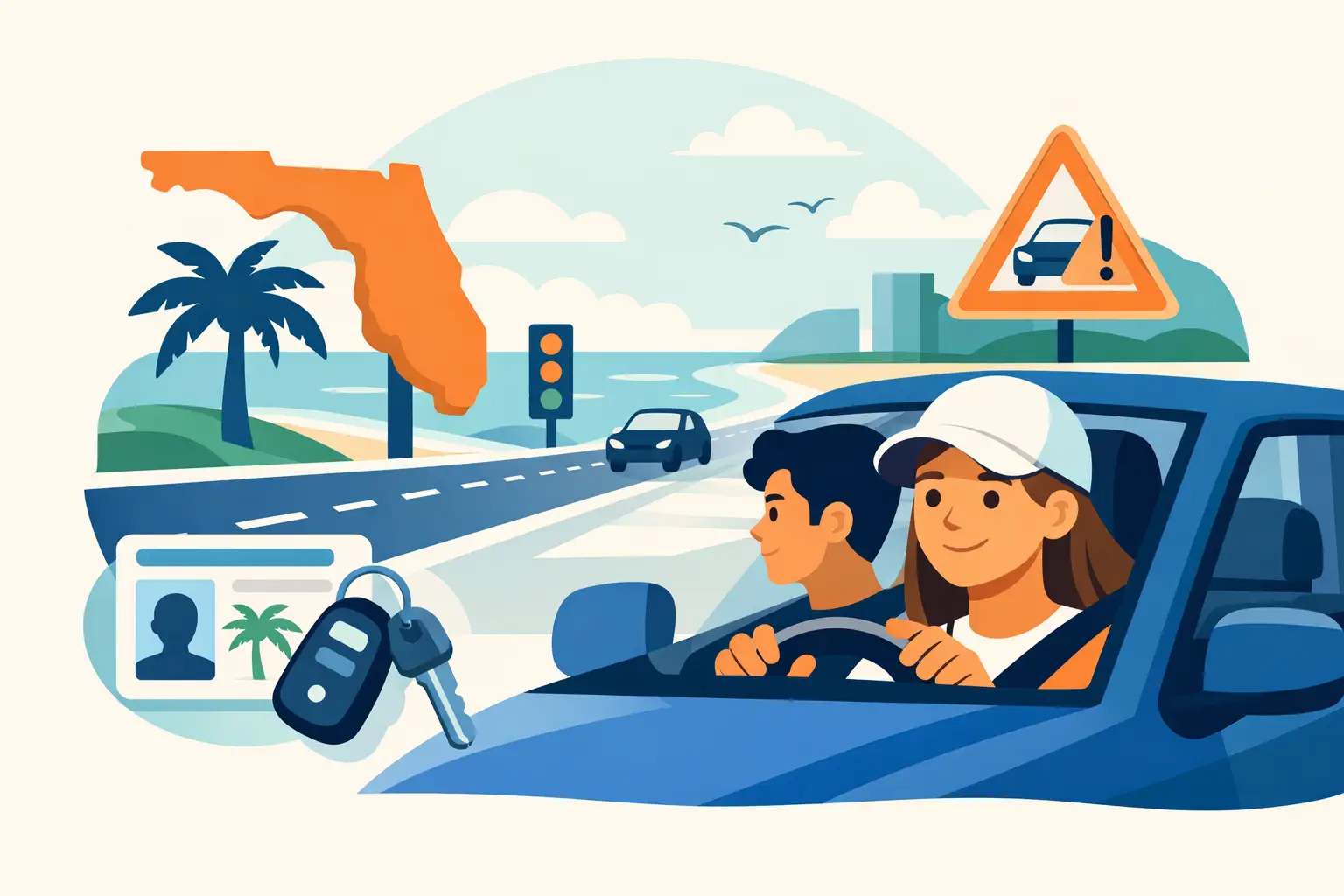
For most teens, the path starts with a learner’s license at age 15. To qualify, the teen must complete the required traffic law and substance abuse education course, pass the vision and hearing screening, pass the knowledge exam, and provide the needed identity and residency documents. A parent or guardian also plays a formal role by signing for the minor.
After holding the learner’s license for at least 12 months – or until turning 18, whichever comes first – a teen can move toward an intermediate license if they meet the supervised driving requirement and pass the road test. At age 16, driving is restricted to certain hours. At 17, those hours expand, but they still are not the same as full adult driving privileges.
That structure can feel strict, but it is built around risk. Teen crash rates are highest early in independent driving, especially at night and when passengers are involved. Florida’s requirements are meant to slow the jump from supervised practice to full freedom.
Getting a learner’s license in Florida
The first major step in the Florida teen driving requirements 2026 process is the learner’s license, often called a permit. In Florida, a teen must be at least 15 years old to apply.
Before the permit is issued, the student must complete the state’s required traffic law and substance abuse education course. Families often know this as the 6-hour permit course. It covers traffic laws, alcohol and drug risks, and basic driver responsibility. It is mandatory, not optional.
The teen must also pass several screenings and tests. Vision and hearing checks are straightforward, but the written knowledge exam deserves real preparation. Many students assume it will be easy because they have seen signs and ridden in cars their whole lives. That assumption can lead to preventable failure. The exam tests rules, signs, penalties, and safe-driving decisions, not just casual familiarity.
Documentation is another area where delays happen. The teen will need proof of identity, Social Security number, and residential address. If the names or addresses on family records do not line up cleanly, it can create extra work. It is smart to confirm document requirements before the appointment rather than sorting it out at the counter.
For minors, a parent or legal guardian must sign the application and accept financial responsibility. That signature is not a formality. It reflects the fact that teen licensing is a shared responsibility between the state, the student, and the family.
What a teen can and cannot do with a learner’s license
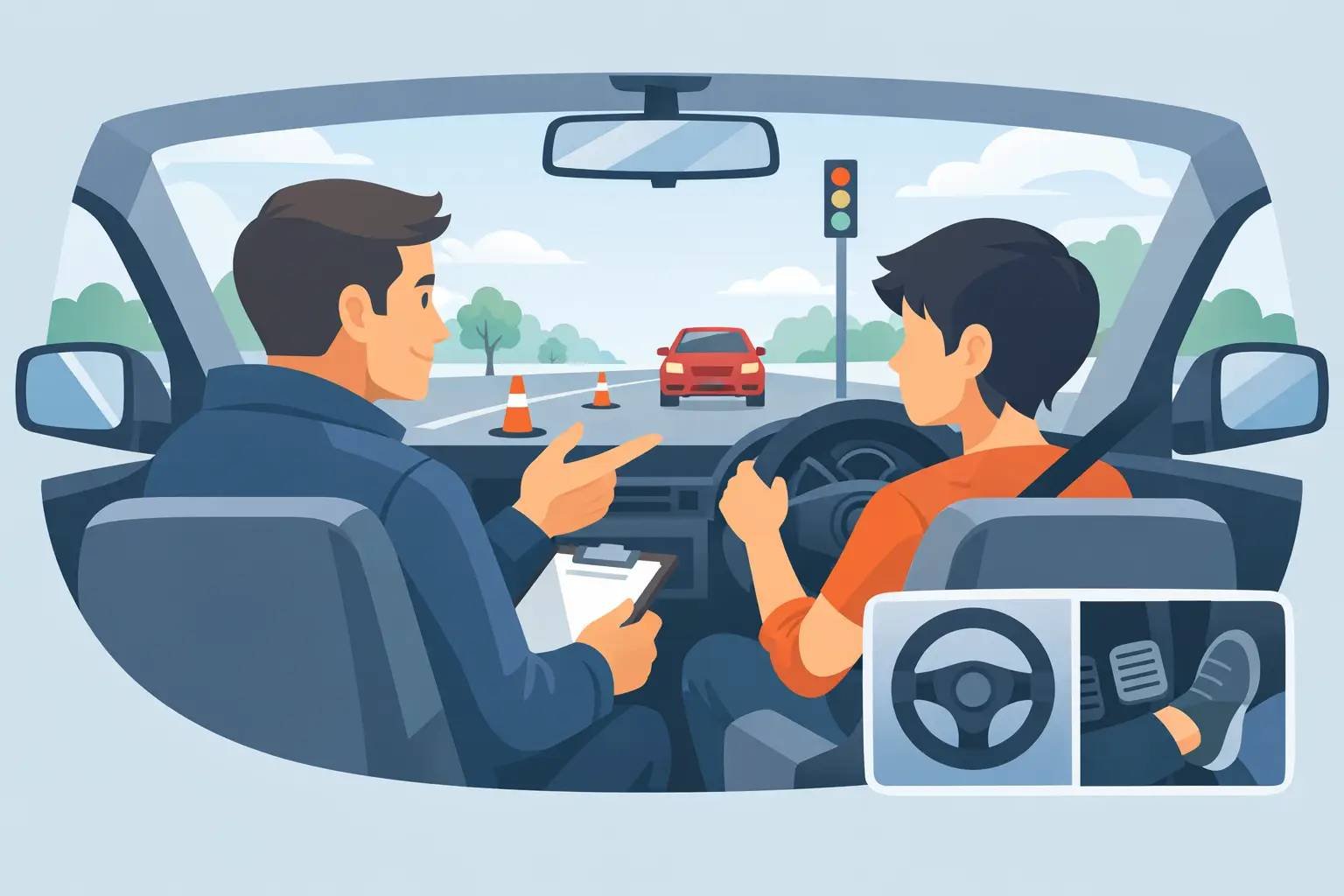
A learner’s license allows practice driving, but only under supervision. The teen must be accompanied by a licensed driver who is at least 21 years old and occupies the front passenger seat.
For the first three months, the teen may drive only during daylight hours. After that, driving may continue until 10 p.m. This is one of the first places where families get tripped up. A permit is not a limited independent license. It is supervised practice only, and time-of-day rules still apply.
This stage is where habits are formed. If practice is rushed, inconsistent, or limited to easy neighborhood routes, the teen may technically hold a permit without building true road readiness. A stronger approach includes residential streets, multilane roads, parking lots, intersections, lane changes, braking control, backing, and defensive scanning in light and moderate traffic.
The supervised driving requirement
To move from a learner’s license to the next level, Florida requires documented supervised driving. A parent, guardian, or responsible adult must certify that the teen completed at least 50 hours of driving experience, with at least 10 of those hours at night.
That sounds manageable, but many families underestimate how long it takes to build quality hours. Fifty hours of meaningful practice is not the same as fifty hours sitting behind the wheel with minimal challenge. Real preparation should expose the student to a range of environments and decisions.
Night hours are especially important because visibility, depth perception, glare, fatigue, and hazard detection all change after dark. A teen who has never practiced those conditions with calm supervision is at a disadvantage the first time they encounter them alone.
There is also a trade-off here. Some students are eager to test as soon as they become eligible. Others benefit from a little more time, especially if they still struggle with lane position, unprotected turns, or speed management. Legal eligibility and actual readiness are not always the same thing.
Moving to an intermediate license
Once the teen has held the learner’s license for at least 12 months without traffic convictions and has completed the 50 required practice hours, they may apply for an intermediate license. They also must pass the driving test.
At age 16, a licensed teen may drive between 6 a.m. and 11 p.m. unless traveling to or from work or accompanied by a licensed driver age 21 or older. At age 17, those hours extend to 1 a.m. under the same exception structure.
These curfews matter. They are not suggestions, and a violation can carry consequences that affect driving privileges. Families sometimes focus heavily on passing the road test and pay less attention to the restrictions afterward. That is a mistake. A license with conditions is still a conditional license.
The intermediate stage is a transition, not an endpoint. Teens are gaining independence, but the state still recognizes that they are in a higher-risk period. The safest families continue active coaching well beyond test day.
What can delay or jeopardize a teen license
The most common delays are practical. A student may not complete the required course, may not have the right documents, or may fail the written or road exam. Those issues are frustrating, but they are usually fixable.
More serious problems involve behavior. Traffic convictions during the learner stage can affect advancement. School attendance can matter too. Florida ties teen licensing to education compliance, so families should not assume driving privileges are separate from school-related requirements.
Parents should also understand the risk of false confidence. A teen who looks comfortable in light traffic may still lack safe habits under pressure. Merging, judging gaps, reacting to aggressive drivers, and managing distractions are the skills that tend to break down first when nerves rise.
This is where structured instruction can make a real difference. A professional, safety-first lesson plan gives families a clearer progression and better documentation of what has actually been covered. At Pinnacle Driver Safety Orlando, that means on-road coaching with state-licensed instructors, dual-control brake vehicles, and a Training Action Plan that helps families see measurable progress instead of guessing.
Road test readiness is not just about passing
Florida’s road test checks basic operational skill, but passing it does not automatically mean a teen is prepared for busy Orlando traffic, heavy tourist corridors, sudden lane changes, or afternoon storm conditions. Those are separate readiness questions.
A student might pass the exam and still need more work on defensive following distance, mirror use, right-of-way decisions, or calm responses to mistakes. That is normal. Safe driving develops through repetition, correction, and gradually increased complexity.
Families should think beyond the minimum. The goal is not simply to produce a licensed teen. The goal is to produce a driver who can recognize risk early, avoid panic reactions, and make disciplined choices when the road becomes unpredictable.
How parents can make the process smoother
The most effective parents set expectations early. They treat driving as a responsibility tied to maturity, practice, and accountability rather than as an automatic privilege at a certain birthday.
Consistency helps. Short, regular practice sessions are often better than occasional long drives, especially for nervous beginners. Calm feedback also matters. Teens learn faster when coaching is specific and steady instead of emotional or contradictory.
It is wise to practice in stages. Start with low-speed control and simple turns. Then add traffic lights, lane changes, parking, busier roads, night driving, and more complex traffic patterns. When a teen struggles, slowing the progression is not a setback. It is a safety decision.
What to watch for in 2026
Families searching for Florida teen driving requirements 2026 should always verify current state rules before scheduling testing, because administrative procedures, accepted documents, and testing details can change. The overall graduated structure is familiar, but small updates can affect timing.
That is why a disciplined process works best. Confirm the current course requirement, gather documents early, track supervised hours carefully, and do not wait until the last week to prepare for the exam. The families who have the smoothest experience usually are not the luckiest. They are the most organized.
A driver’s license is one of the first adult responsibilities a teenager will carry on their own. When the training process is handled with patience, structure, and respect for the law, that milestone becomes more than permission to drive. It becomes the start of safer judgment that can last for decades.