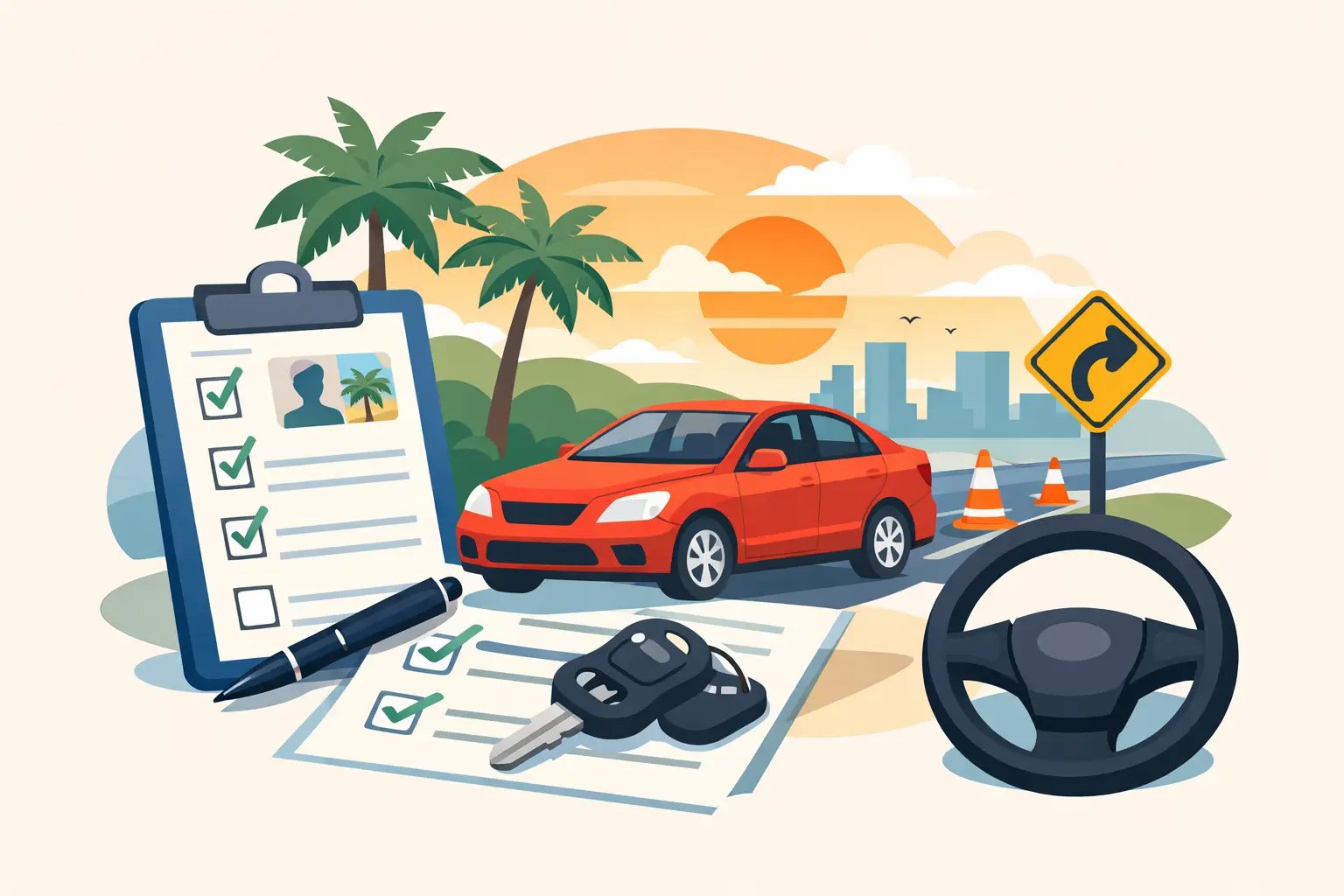
The most common road test problem is not a missing parking maneuver. It is showing up underprepared, rushed, and unsure of what the examiner is actually watching. A solid Florida road test checklist helps you organize the small details that affect performance, from documents and vehicle condition to observation habits and speed control.
For many teens and first-time drivers, the pressure comes from treating the test like a one-time performance. That mindset creates mistakes. The better approach is to treat the road test as a safety check. Florida examiners are looking for controlled, lawful, predictable driving. They want to see that you can operate a vehicle without creating risk for yourself, your passengers, or others on the road.
What a Florida road test checklist should cover
A useful Florida road test checklist has three parts. First, you need the legal and logistical items that allow the test to happen at all. Second, you need a vehicle that is safe and test-ready. Third, you need the driving behaviors the examiner will score, which is where many applicants lose points.
That last part matters most. A student can know every sign in the handbook and still struggle if they fail to check mirrors, stop too hard, drift on turns, or forget to signal. Passing the test depends on habits, not just knowledge.
Before test day: documents, eligibility, and planning
Start with the basic requirement that often gets overlooked. Make sure the driver taking the test is actually eligible on the scheduled day. For teens, that means completing the required steps tied to Florida licensing rules and holding the proper permit for the required period before attempting the road test.
Bring every document you were instructed to bring. Requirements can vary by appointment type, but generally that means identification, proof connected to your permit or license process, and any appointment confirmation if one was issued. If a parent or guardian needs to be present, do not assume that can be handled casually at the last minute.
It also helps to plan the day with extra time. Arriving late raises anxiety and reduces focus. Give yourself time to check in, settle your breathing, adjust mirrors, and review the basics. If you are a nervous driver, that extra buffer can make a real difference.
Vehicle checklist for the Florida road test
The car used for the exam needs to be legal, clean enough for visibility, and in proper working order. If the vehicle has an obvious safety issue, the test may not proceed. Even when a problem does not cancel the appointment, it can distract you and affect your control.
Check the brake lights, turn signals, horn, windshield, mirrors, tires, and seat belts before test day. Make sure the registration and insurance are current and available. The vehicle should also have enough fuel and no dashboard warning issue that suggests it is unsafe to drive.
A simple but important detail is the interior setup. Adjust the seat, steering wheel position if needed, and mirrors before the test starts. If you wait until the examiner is already giving instructions, you begin from a rushed position. Safety starts before the vehicle moves.
Skills examiners usually watch closely
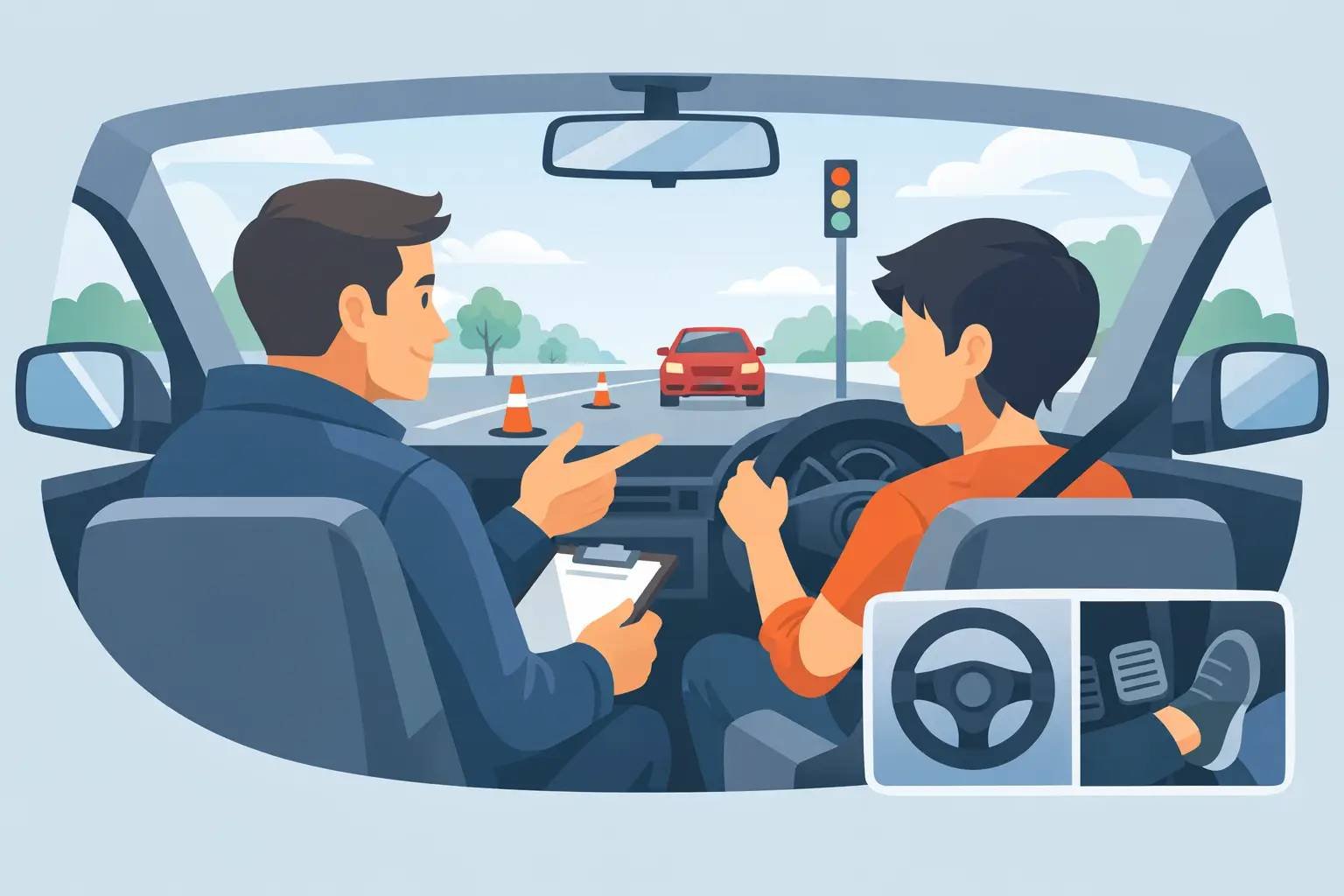
Examiners are not looking for aggressive confidence. They are looking for calm control. In most road tests, that means your observation habits, lane position, speed management, and ability to follow directions safely matter more than trying to look polished.
Stopping is one area where problems show up quickly. A complete stop means the car fully stops before the limit line, crosswalk, or entry into traffic. Rolling stops are a common reason drivers appear careless, even if everything else seems acceptable.
Turns matter for the same reason. The examiner wants to see proper signaling, smooth braking, good lane discipline, and visual scanning through the turn. Wide turns, cutting corners, or forgetting to check for pedestrians can all signal weak judgment.
Backing up, parking control, three-point turns, and general low-speed maneuvering are often part of road test preparation because they reveal how well a driver manages space and steering input. These are not just test skills. They are indicators of patience and vehicle awareness.
The habits that separate a pass from a near miss
A lot of drivers can technically complete the required maneuvers. Fewer drivers perform them with safe habits from start to finish. That difference is where results often change.
Mirror checks need to be timely and purposeful. The same is true for checking over your shoulder when appropriate. If your eyes stay fixed only in front of the hood, the examiner may assume you are missing hazards around you.
Your speed should match conditions, not just the posted number. Driving too fast is an obvious concern, but driving too slowly can also create problems if it disrupts traffic or suggests uncertainty. Smooth, steady control is the goal.
Following distance is another quiet test category. Many anxious drivers focus so hard on directions that they creep too close to the vehicle ahead. That short gap reduces reaction time and tells the examiner you may not yet be thinking defensively.
A Florida road test checklist for practice week
The final week before the exam should not be random. It should be structured. Practice the exact skills most likely to appear, but also practice transitions between them. Real driving is not one maneuver at a time. It is scanning, deciding, signaling, positioning, and controlling the vehicle in sequence.
Use at least one session to rehearse ordinary neighborhood driving, because that is where stop signs, right-of-way decisions, and pedestrian awareness often reveal weak spots. Use another session for busier roads so the driver can work on speed control, lane stability, and staying calm with more traffic around them.
If a learner is making repeated mistakes, more repetition is not always the fix. Sometimes the issue is that the instruction has been too general. A student who keeps turning wide may need a clearer reference point and slower setup, not just more turns. That is one reason structured coaching tends to produce more reliable progress than occasional informal practice.
Common mistakes that cost drivers points
Some mistakes are obvious, like failing to stop fully or ignoring an instruction. Others are quieter but still serious. Examiners notice hesitation that becomes unsafe, poor observation before moving, and inconsistent lane position.
Another frequent problem is forgetting that the road test is still about safety even in a parking lot or low-speed area. Drivers may relax too early when backing out, turning around, or returning to the test site. The examiner is still watching for control, checking, and judgment all the way to the end.
Nervous drivers also tend to self-correct too late. They realize they are too fast, too close, or slightly off line, then make a sudden input. Quick, late corrections feel less safe than early, gentle ones. That is why calm scanning matters so much. It gives you time.
How parents and adult learners can prepare wisely
Parents often want to help by maximizing practice hours, which is useful, but the quality of those hours matters. If each session repeats the same unchecked mistakes, the driver can become more confident without becoming safer. That is a risky combination.
Adult learners and relocating drivers face a different challenge. They may already know how to drive, but Florida traffic patterns, signage, and local speed environments can still create uncertainty. The right preparation respects prior experience while tightening up state-specific habits and test expectations.
For families who want a more disciplined path, professional lessons can help create measurable progress instead of guesswork. A school like Pinnacle Driver Safety Orlando builds training around documented skill coverage, defensive-driving standards, and step-by-step road test preparation, which can be especially helpful for teens, nervous drivers, and busy households that need a clear plan.
What to do on the morning of the test
Keep the routine simple. Eat something light, arrive early, and do not cram at the last minute. Review only a few essentials: full stops, signal use, mirror checks, speed control, and listening carefully to instructions.
Once in the vehicle, take a breath before moving. Set your seat and mirrors, fasten your seat belt, and begin with deliberate focus. If you make a small mistake during the test, do not assume you failed. One error often leads to another only because the driver mentally gives up. Stay present and keep driving safely.
The best checklist does more than help you pass one appointment. It helps you build habits that still protect you months later in rain, traffic, school pick-up lines, and unfamiliar intersections. That is the standard worth preparing for.