A lot of families ask the same question right at age 15: what are Florida permit rules for teens, and what actually matters first? The short answer is that Florida starts with a learner’s license, not full driving freedom. Teens can begin the process at 15, but the state puts clear training, testing, supervision, and hour restrictions in place for a reason – new drivers need time, structure, and close oversight before they drive alone.
For parents, this stage is less about getting a card in a wallet and more about building habits that prevent crashes. For teens, it helps to know that the permit is a training period. If you treat it that way from the beginning, the move to a license is smoother and usually safer.
What are Florida permit rules for teens at age 15?
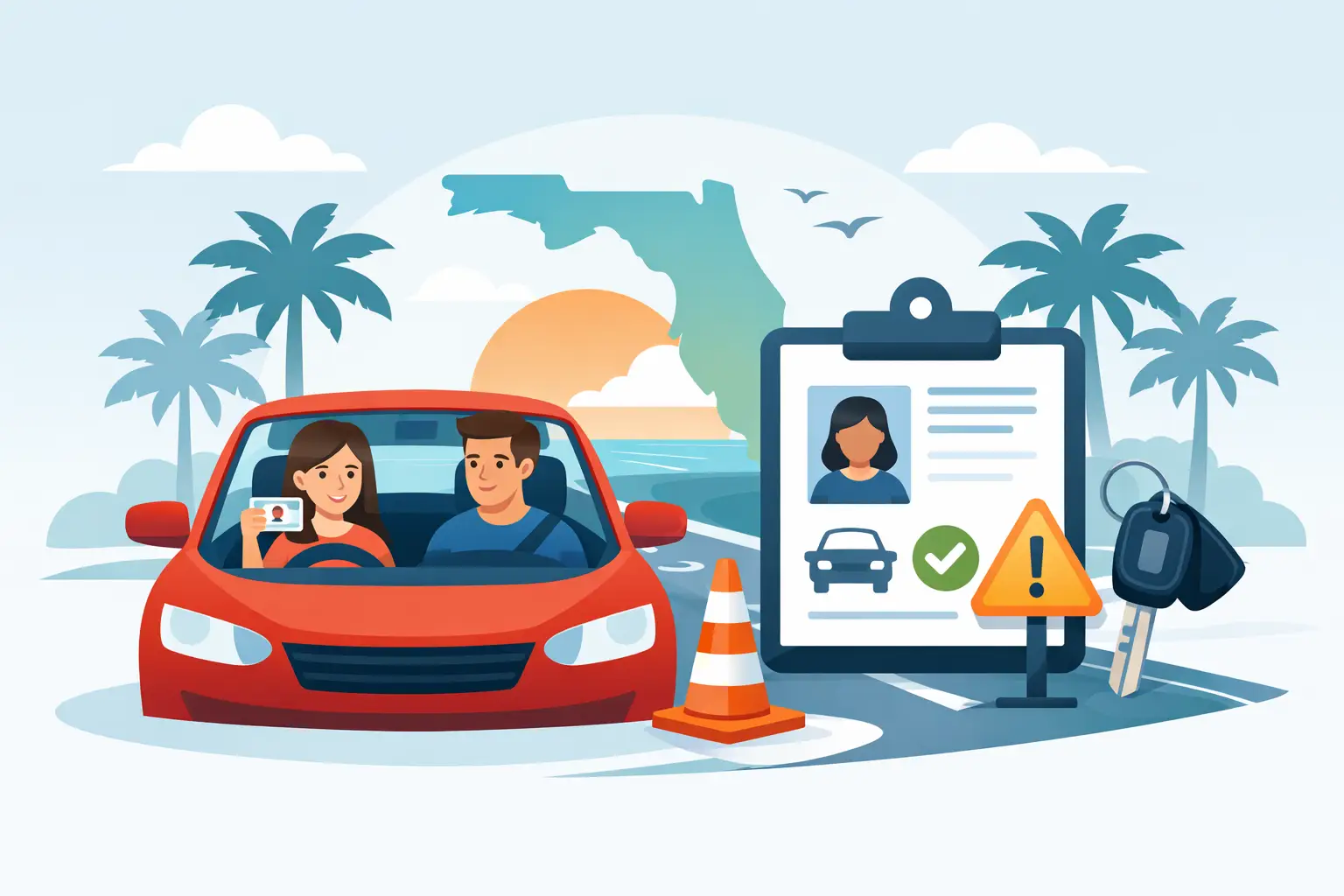
In Florida, a teen can apply for a learner’s license at age 15. Before that license is issued, the student must complete the state-required traffic law and substance abuse education course, often called TLSAE. The teen must also pass the vision and hearing screening, complete the knowledge exam, and provide the required identification and parental consent documentation.
That sounds simple on paper, but families often get delayed by paperwork or by assuming the permit works like a junior license. It does not. A learner’s license allows a teen to practice driving only under specific conditions, and the supervising driver matters.
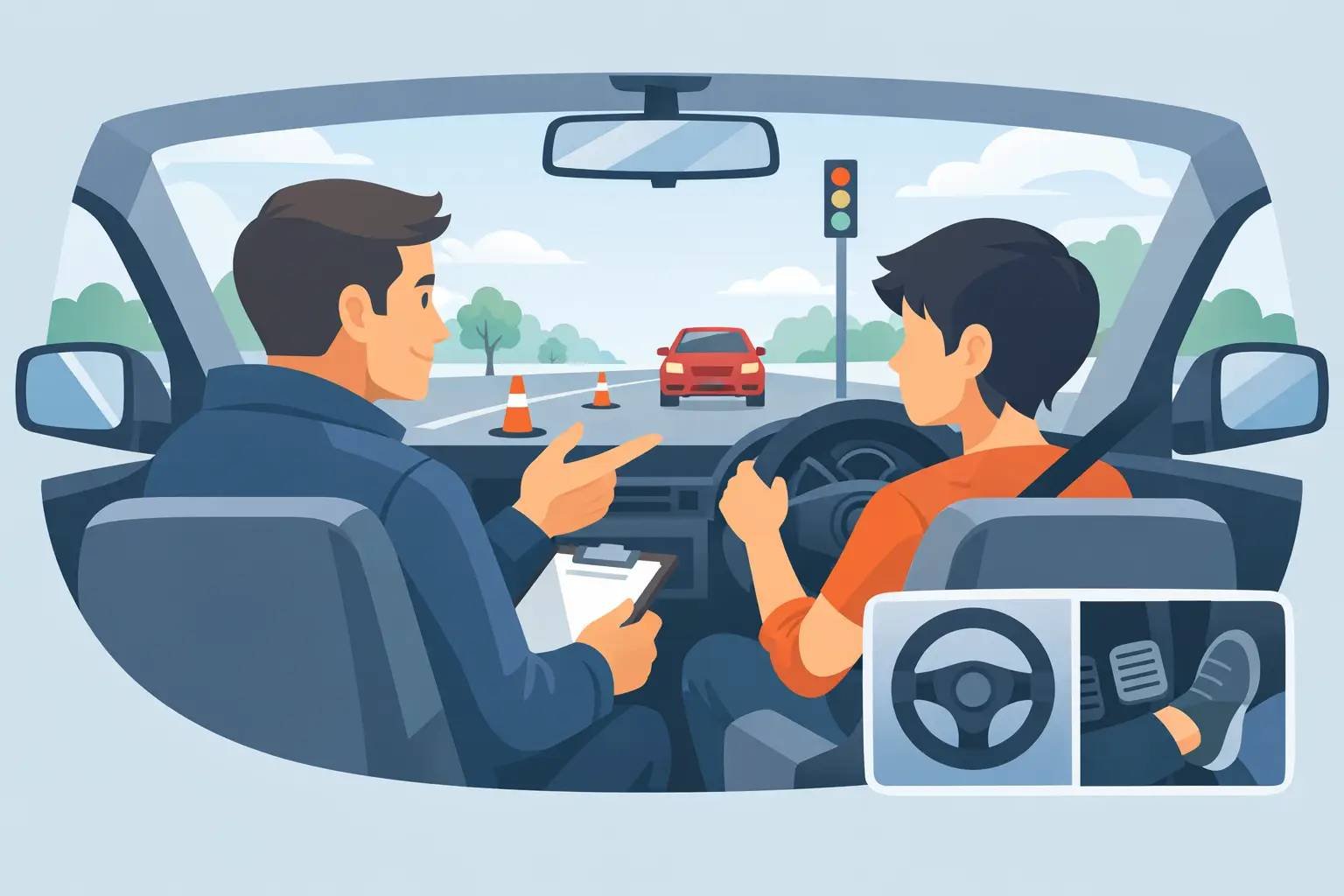
The supervising driver must be a licensed driver age 21 or older and must occupy the front passenger seat at all times. Florida does not allow a teen with only a learner’s license to drive friends around independently, even for short local trips. That includes the common situations families try to treat casually, like a quick drive through the neighborhood or a run to school parking lots without a qualified adult in the passenger seat.
The core requirements before a Florida teen gets a permit
Florida requires several steps before the permit is approved. Teens must complete a 6-hour TLSAE course, which covers traffic laws, substance abuse risks, and how impaired judgment affects safe driving. They must then pass the written knowledge test on road rules and signs. The state also requires a vision and hearing screening.
In addition, the teen must provide proof of identity, Social Security number, and residential address, and a parent or guardian generally must sign the consent portion for a minor. If one piece of documentation is missing or mismatched, the appointment can stall. That is why organized families tend to have an easier time with the process than families trying to assemble documents at the counter.
A practical point here is that passing the knowledge test does not mean a teen is road-ready. It means the teen has met the legal threshold to begin supervised practice. That distinction matters because many new drivers feel confident long before their judgment is consistent.
Florida permit driving restrictions teens need to know
This is where the rules become especially important. With a learner’s license, a teen may drive only during daylight hours for the first three months after the permit is issued. After those first three months, the teen may drive until 10 p.m. – still only with a licensed driver age 21 or older in the front passenger seat.
Those time restrictions are not random. Night driving raises the workload quickly. Visibility drops, speed perception changes, fatigue becomes a factor, and other drivers are less predictable. Florida limits those hours because inexperienced drivers need to master lower-risk conditions first.
Parents should also understand that a permit does not erase responsibility for violations or collisions. A teen can still receive citations, and poor early habits can affect the path to licensure. If a teen treats permit practice casually, the consequences can follow them into the licensing stage.
How many hours of driving practice are required?
Florida requires a teen to hold the learner’s license for at least 12 months, or until turning 18, before moving to an operator license. During that time, the teen must log at least 50 hours of supervised driving experience, including 10 hours at night.
That requirement is often underestimated. Fifty hours is enough time to expose a new driver to different traffic speeds, parking situations, lane changes, neighborhoods, multilane roads, weather changes, and nighttime conditions. But the value of those hours depends on how they are used.
A teen who spends most of those hours driving the same familiar route may technically meet the number while still lacking range. A better approach is progressive practice: quiet streets first, then busier roads, then complex intersections, then parking, then higher-speed roads, then controlled night practice. The safest learning curve is gradual, documented, and skill-based.
What changes at 16 and 17?
Once a teen has held the learner’s license for at least 12 months without any traffic convictions and has completed the 50 supervised hours, the teen may apply for an intermediate license. At that point, age matters.
At age 16, a licensed teen may drive between 6 a.m. and 11 p.m. Any driving outside those hours requires a licensed driver age 21 or older in the front passenger seat, unless the teen is driving to or from work. At age 17, those hours extend to 5 a.m. to 1 a.m., with the same general exception for work-related travel.
These restrictions are still part of Florida’s graduated licensing system. The state is signaling that more freedom comes in stages. A 16- or 17-year-old may have more independence than a permit holder, but not the same freedom as an unrestricted adult driver.
What can delay or complicate the process?
The most common issue is not legal confusion. It is inconsistency. Teens may complete the course but delay the exam, get the permit but practice too infrequently, or rack up hours without enough variety. Parents may assume school pickup routes count as solid training when the student still has weak scanning habits, poor speed control, or limited experience in traffic.
Another issue is anxiety. Some teens are eager but sloppy. Others are cautious to the point of freezing at left turns, merges, or lane changes. Both situations require coaching, not pressure. A nervous teen does not become safer by being rushed, and an overconfident teen does not become safer by being left uncorrected.
That is why structured training matters. Families in the Orlando area often want a calm, documented progression rather than random practice sessions. A professional program can help identify which skills are truly ready and which still need repetition under controlled conditions.
What are Florida permit rules for teens when parents are supervising?
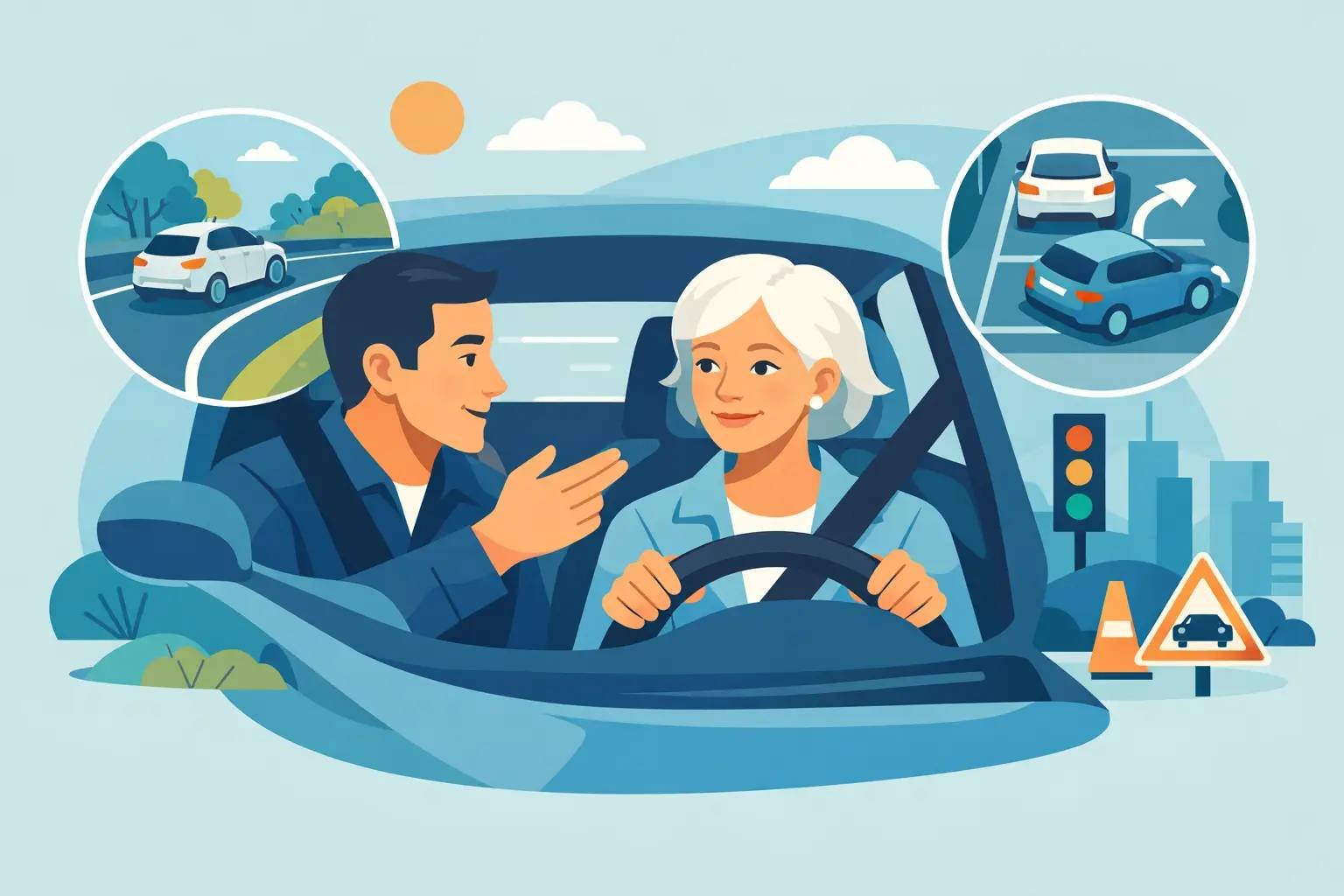
Parents play a bigger role than many realize. Legally, the front-seat supervising driver must be at least 21 and licensed. Practically, that adult is setting the tone for the entire training period.
If supervision turns into criticism, last-second instructions, or distracted phone use, the teen’s learning quality drops fast. If supervision is calm, specific, and consistent, teens build better habits. Good supervision means giving instructions early, limiting unnecessary conversation in complex traffic, correcting one issue at a time, and practicing in conditions the teen can reasonably handle.
It also means not overestimating readiness. A teen who can steer through a subdivision is not automatically ready for I-4 interchanges, tourist traffic, sudden lane shifts, or heavy rain. Florida roads can become demanding quickly, especially in Central Florida. Experience needs to be built in layers.
Where professional lessons fit into the permit stage
Professional instruction is not required for every hour of practice, but it often helps families avoid gaps. A trained instructor can spot safety issues that a parent may miss, especially with scanning, lane position, braking pressure, mirror use, and hazard response. More importantly, the instruction should build skill in a sequence that makes sense.
At Pinnacle Driver Safety Orlando, that safety-first approach is built around state-licensed instructors, commercially insured training vehicles, dual-control brakes, and a documented Training Action Plan so families can see exactly what has been covered and what still needs work. For many teens, that kind of structure lowers anxiety because expectations are clear.
There is also a practical benefit for busy households. When instruction includes scheduled pickups and drop-offs, practice is easier to maintain. Consistency is a major part of safe progress.
The rule behind the rules
Florida’s teen permit laws are not there to make the process harder. They are there because inexperience shows up in predictable ways – poor hazard recognition, delayed braking, weak judgment at intersections, and risky decisions when friends, fatigue, or distractions are involved.
The permit stage gives families a controlled window to slow that down. If teens follow the legal requirements, practice consistently, and build skill with real supervision, they reach licensing with more than just eligibility. They reach it with better habits, better awareness, and a much stronger chance of staying safe when no one else is in the car.
The best next step is not to rush the permit. It is to use it well.