A parent usually knows the moment this becomes real. It is not when a teen asks for a permit. It is when they pull out of a neighborhood, glance once in the mirror, and you realize that basic car control is only a small part of safe driving. Good teen driving lessons are not about getting through a road test with the fewest mistakes. They are about building habits that still protect a young driver six months later in rain, traffic, and pressure.
That difference matters in Central Florida, where teens may face fast multilane roads, sudden storms, school traffic, tourists who brake late, and distracted drivers who do not leave much room for inexperience. A beginner needs more than encouragement. They need structure, repetition, and calm instruction that turns nervous reactions into deliberate decisions.
What teen driving lessons should actually teach
A lot of families start with the same goal – help a teen pass the test. That goal is understandable, but it is too narrow. A road test checks for minimum competence. Daily driving demands much more. A safe lesson plan should cover observation, speed control, lane positioning, timing at intersections, mirror use, backing, parking, and defensive responses when another driver makes a poor choice.
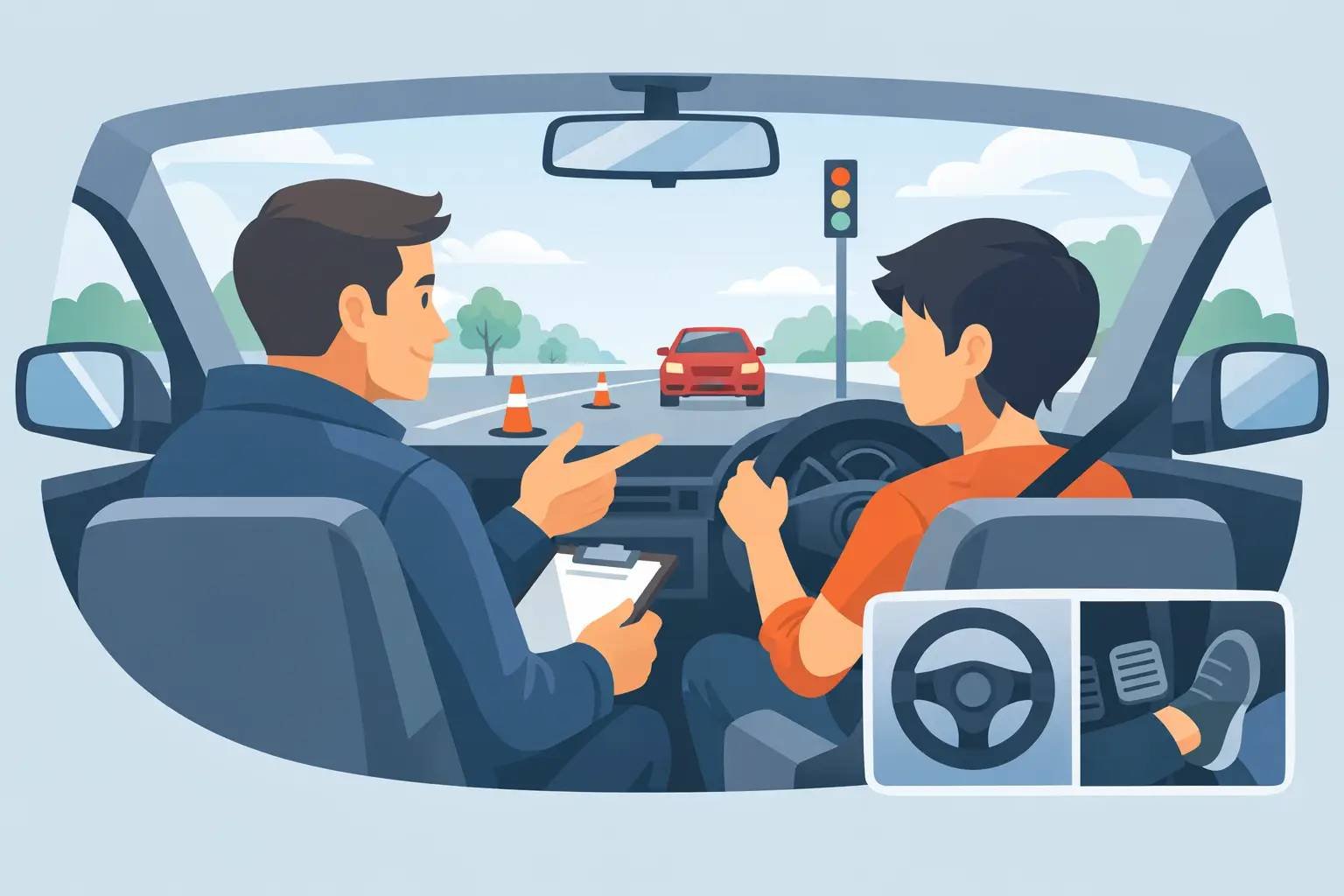
This is where quality instruction stands apart. A trained instructor does not just tell a student what went wrong. They break driving into manageable steps, explain why a decision was unsafe, and build correction into the next repetition. That coaching process is especially important for teens who either get overwhelmed quickly or become overconfident after a few smooth drives.
In practice, the strongest programs move in stages. Early lessons focus on vehicle familiarity, steering control, braking pressure, scanning, and simple turns. Later sessions add heavier traffic, lane changes, complex intersections, parking lots, and route planning. By the time road-test preparation begins, the student should already have a foundation. Test skills should be the final layer, not the entire program.
Why structured teen driving lessons matter more than casual practice
Practice with a parent is valuable. It also has limits. Parents often teach from experience, which can be helpful, but experience does not always translate into a clear teaching method. Some parents correct too late. Others give too many instructions at once. Some understandably bring stress into the car, especially after a close call.
Structured teen driving lessons give families a system. The student works through skills in a sequence instead of guessing what to practice next. There is also accountability. When lesson coverage is documented, parents can see whether the student has worked on lane changes, uncontrolled intersections, parking, backing, and defensive scanning rather than simply logging hours.
That documentation becomes even more useful when a teen is progressing unevenly. It is common for a student to feel fine on neighborhood roads but struggle with left turns in traffic or merging at speed. Without a plan, those weak areas may be avoided. With a documented training approach, they are identified and revisited until performance becomes consistent.
Safety equipment and instructor standards are not small details
Families sometimes compare driving schools by price alone. That can be shortsighted. When a student is learning in live traffic, the quality of the training environment matters. Florida state-licensed instructors, commercially insured training vehicles, and dual-control brakes are not marketing extras. They are practical safety standards.
Dual-control brakes matter because teenagers make beginner mistakes in real time. They may hesitate at the wrong moment, press the accelerator too hard, or misjudge stopping distance. A properly equipped training vehicle gives the instructor another layer of control when immediate correction is necessary.
Commercial insurance matters for a different reason. It reflects that the vehicle is being used as a professional training vehicle, not casually repurposed for instruction. Families should expect that kind of operational professionalism, along with clear scheduling policies, reliable communication, and lessons that are designed around measurable skill development.
Florida requirements are only the starting point
For teen drivers in Florida, legal requirements and training mandates are part of the process. They are important, but compliance alone does not produce a safe driver. Meeting the 6-hour requirement is one step. It does not replace repeated, on-road coaching in varied conditions.
That is an important distinction for parents. Some students are naturally cautious and need help becoming more decisive. Others are comfortable very quickly and need help slowing down, scanning better, and respecting risk. Both may satisfy minimum requirements, but neither is necessarily prepared for independent driving without stronger on-road development.
A serious training program treats compliance as the floor, not the finish line. It uses each lesson to strengthen judgment, not just familiarity with the exam route or checklist items.
What parents should look for in teen driving lessons
The best fit depends on the student. A nervous beginner may benefit from shorter, carefully paced lessons at first, while a focused teen may do well with longer sessions that combine foundational skills and moderate traffic exposure. What should stay consistent is the instructional quality.
Look for a school that explains how lessons progress, what skills are covered, and how performance is tracked. Ask whether instructors are state licensed. Ask whether vehicles are commercially insured and equipped with dual controls. Ask how the school handles pick-up and drop-off, and whether lesson scheduling works for school, sports, and family commitments.
It also helps to ask how they coach anxious students. Anxiety is common, and it should be handled with patience, not pressure. At the same time, calm instruction should still be firm about consequences. Teen drivers need reassurance, but they also need to understand that poor scanning, rolling stops, distracted driving, and speeding are not harmless habits.
The right lesson package depends on the driver, not just the calendar
Some teens do well with a smaller package because they already have meaningful supervised practice and only need professional refinement. Others need a larger package because they are true beginners, highly nervous, or have had inconsistent practice opportunities. There is no honest one-size-fits-all answer.
That is why structured package options can be useful when they are matched to actual needs. A student who needs confidence-building, road-test preparation, and broader traffic exposure will likely require more than a few lessons. Another student may need targeted work on parking, lane changes, and test readiness. The point is not to buy the biggest package by default. The point is to choose enough instruction to build reliable, repeatable skill.
A documented plan such as a Training Action Plan can make that decision clearer. Instead of guessing whether a teen is ready, families can review what has been taught, what has improved, and what still needs work.
Convenience matters when it supports consistency
Busy families often postpone lessons because logistics get in the way. That delay can stretch out training and reduce momentum. Door-to-door pick-up and drop-off from home, school, or work can make a real difference, especially for Orlando-area households balancing classes, activities, and jobs.
Convenience should never replace quality, but it does help keep training consistent. Consistency matters because skill retention is better when lessons happen on a steady schedule. A student who drives regularly with focused coaching will usually progress more smoothly than one who has long gaps between sessions.
For local families looking for that combination of structure, safety equipment, and practical scheduling, Pinnacle Driver Safety Orlando reflects the standard serious driver training should meet.
A safer start changes what happens later
The first months of independent driving are when habits harden. If a teen has learned to rush yellow lights, turn without enough scanning, or treat speed limits as suggestions, those patterns can become normal quickly. If they have learned to check mirrors early, maintain space, anticipate risk, and stay calm under pressure, that becomes their baseline instead.
That is the real value of careful instruction. It reduces the chance that a teenager will learn through avoidable mistakes, close calls, citations, or crashes. No lesson program can remove every risk. Experience still takes time. But solid training can lower the odds of bad decisions and raise the odds of a controlled response when traffic becomes unpredictable.
Parents do not need perfection from a young driver. They need evidence that the student is developing judgment, discipline, and safe habits strong enough to hold up when no one else is in the passenger seat. That is what teen driving lessons should be built to do, and it is worth insisting on nothing less.