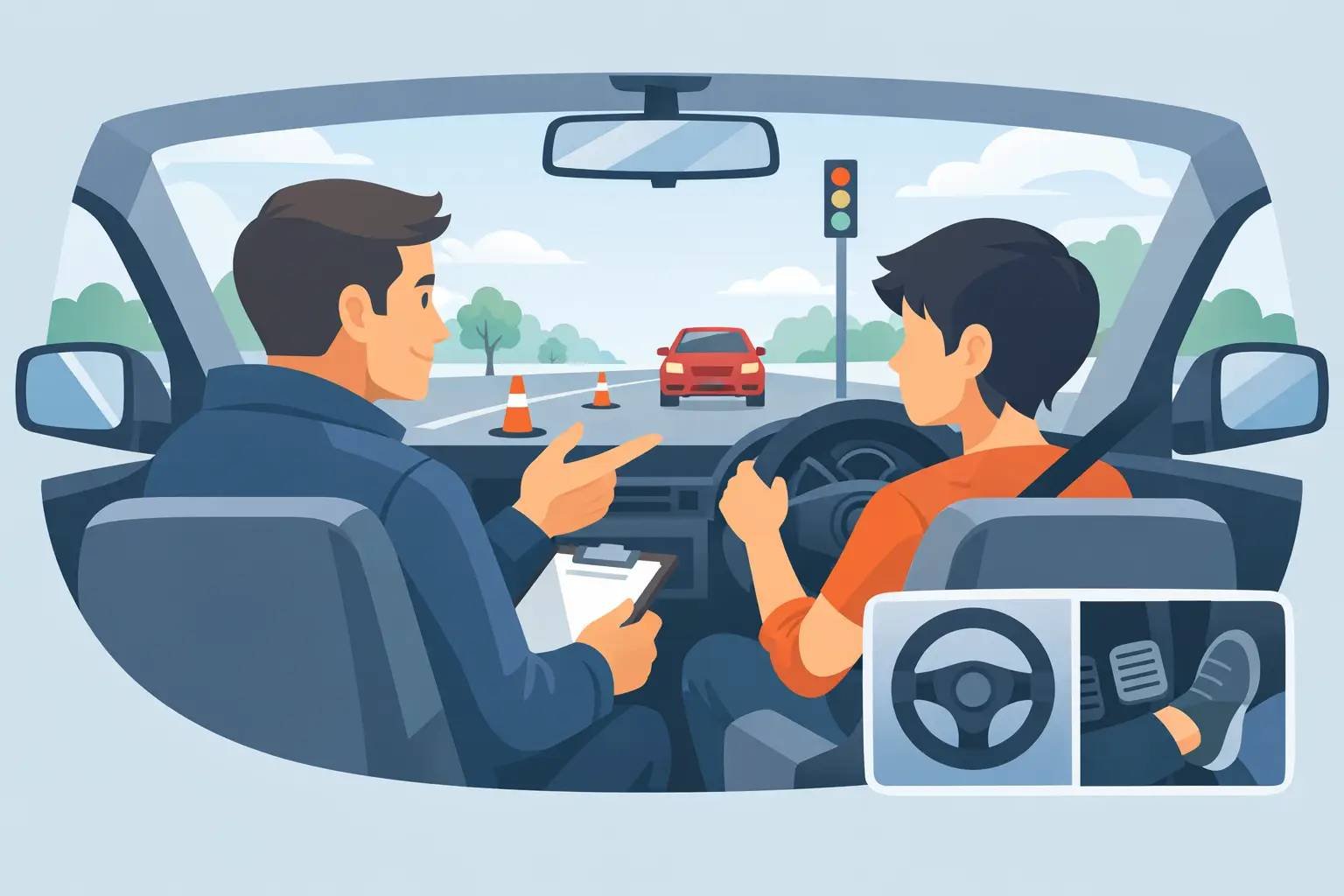
A teen turns left on a stale yellow near Colonial Drive. A delivery van is close behind, a driver in the next lane accelerates, and suddenly the “simple” decision becomes a chain reaction. Orlando traffic does that. It takes normal situations and adds speed, unfamiliar drivers, heavy tourism, and complex intersections.
That is why defensive driving lessons Orlando families look for should not be framed as “extra practice.” Defensive driving is a specific skill set: scanning earlier, planning space, recognizing patterns, and making calm decisions that reduce risk before anything looks like an emergency. It is also what separates someone who can steer and stop from someone who can handle real Orlando roads with consistency.
What “defensive driving” actually means on Orlando roads
Defensive driving is not timid driving. It is disciplined driving: moving with purpose while building time and space to respond. In Orlando, that mindset matters because traffic is mixed – local commuters, new residents, rental cars, rideshare drivers, and visitors looking at their phones for directions. Your safest plan is to assume the traffic flow will change quickly and to drive in a way that keeps options open.
For a new driver, the biggest shift is learning to think in “seconds,” not “feet.” You are training your eyes to look 12-15 seconds ahead, not just at the bumper in front of you. You are also training your brain to identify the most likely conflict points: the car drifting toward the lane line, the pedestrian near the crosswalk, the vehicle creeping at a driveway, the sudden brake lights three cars up.
A defensive driver does not wait for the surprise. They spot the setup.
Why defensive driving lessons Orlando teens need are different from “test prep”
Passing a road test is a milestone, but it is not the same thing as being ready for everyday driving. Road tests check basics: safe turns, lane control, stopping, and compliance. Real-world driving adds distraction, impatience from other drivers, complex timing, and decisions under pressure.
Defensive training focuses on behaviors that do not always show up on a short test route. It emphasizes how you manage following distance on I-4 ramps, how you protect yourself at multi-lane left turns, and how you recover when someone else makes a poor choice. The trade-off is that defensive training can feel slower at first because you are building a habit of planning. That “slower” feeling is often just the student noticing more and making fewer last-second moves.
For parents, defensive instruction is also about predictability. You want to know that your teen is not only practicing, but practicing the right things in the right order – and that the instructor is tracking what is covered so nothing important is skipped.
Skills that should be covered in on-road defensive driving
A quality defensive curriculum is not a single lecture about “be careful.” It is coached repetition, in real traffic, with measurable standards.
Scanning, threat recognition, and decision timing
Students need a simple system: far scan, mirrors, speed check, and “what could happen next?” The goal is to reduce surprise. If the student cannot describe what is around them without looking, they are not scanning consistently.
This is also where timing gets trained. Many mistakes happen because a driver waits too long to decide. Defensive coaching pushes earlier decisions – easing off the accelerator sooner, choosing the correct lane earlier, and avoiding abrupt steering that triggers instability.
Space management: following distance and escape routes
In Orlando, tailgating is common, especially during peak commuting hours. A defensive driver still keeps a safe following distance, even if another car fills the gap. Students learn that the “gap” is not a reward someone stole. It is their safety buffer, and it needs to be rebuilt calmly.
Escape routes matter just as much. A student should be able to answer: “If the car in front stops hard, where can you go?” Sometimes the answer is “brake in a straight line.” Sometimes it is “open space to the right.” But the habit is always the same: know your options before you need them.
Intersections: the highest-risk classroom
Most serious mistakes for new drivers happen at intersections because there are too many things to judge at once. Defensive driving lessons should spend real time on:
- Protected vs unprotected left turns and how to judge gaps without rushing.
- Stale greens, yellow-light timing, and why trying to “beat the light” is a common crash setup.
- Right-on-red decisions with pedestrians and cyclists, especially near shopping centers and campus areas.
This is where “it depends” is legitimate. There is no single speed or single gap size that fits every intersection. Defensive training teaches students to assess visibility, traffic speed, and lane complexity, and then choose a decision that stays within a safe margin.
Lane changes, merging, and freeway entry
Orlando drivers often experience a pressure spike during lane changes and merges. A defensive approach uses structure: mirror check, signal early, shoulder check, then a smooth move when the gap is confirmed.
For highway entry, students should learn to match speed on the ramp. The defensive point is simple: entering too slowly forces other drivers to brake or swerve, raising risk. Entering at an appropriate speed and with a clear plan is safer and more predictable.
Handling distractions and anxious moments
Defensive driving is also emotional control. Students are coached to keep hands steady, breathe, and follow a process when they feel overwhelmed. For nervous drivers, small wins matter: repeating the same route, building complexity gradually, and using clear instructions so the student can focus on execution.
A good instructor will correct firmly but calmly. The goal is not to “toughen up” a student. The goal is to train correct responses that hold under stress.
Who benefits most from defensive driving lessons in Orlando
Teens and first-time drivers are the obvious fit, especially those who need a structured path from parking lots to busy roads. But defensive lessons are just as valuable for adults who are licensed and “technically fine,” yet feel rusty or uncertain.
Drivers over 50 often want refreshers for modern traffic patterns, faster roads, and heavier distractions. Relocating drivers – whether from another state or another country – often need help translating what they already know into Florida-specific habits: right-on-red norms, school zone expectations, multi-lane turn behavior, and the general pace of Orlando traffic.
The common thread is not age. It is the desire for coached, real-world risk reduction.
What to look for when choosing defensive driving lessons Orlando offers
Start with professionalism and safety controls. On-road instruction should be delivered by Florida state-licensed instructors, in commercially insured vehicles designed for training. Dual-control brakes are not a luxury. They are a safety standard that allows the instructor to intervene if a situation develops faster than a student can respond.
Next, look for documentation and a structured plan. Defensive driving is not random practice. You want visible progression: fundamentals, controlled environments, moderate traffic, then complex routes. A documented plan also helps parents understand what was covered and what is next – and it helps the student stay motivated because progress is concrete.
Finally, consider logistics. Orlando families are busy. Door-to-door pick-up and drop-off can be the difference between consistent training and weeks of delays. Scheduling matters because long gaps between lessons slow skill retention, especially for anxious or brand-new drivers.
How lesson packages should work (and why more lessons is often the safer choice)
Many schools offer packages like 4+, 6+, 10+, or 20+ lessons. The right number depends on the student’s baseline and the goal.
If the student is already practicing regularly with a safe adult driver, a smaller package may focus on defensive refinement: intersections, lane changes, and test readiness. If the student is new, anxious, or not practicing outside lessons, more lessons are typically a better investment because defensive habits require repetition across different roads and traffic conditions.
A common trade-off is budget vs depth. A shorter package can help a motivated learner sharpen quickly, but it may not expose them to enough scenarios to build consistent judgment. A longer package creates room for the instructor to introduce complex driving only after fundamentals are stable, which reduces overwhelm and reduces the chance that a student “passes” while still lacking readiness.
For families seeking a structured, documented approach with dual-control vehicles and on-road coaching across the greater Orlando area, Pinnacle Driver Safety Orlando is built around defensive driving and a Training Action Plan (TAP) that tracks skill coverage and measurable progress.
Florida requirements and how defensive training supports compliance
Florida has specific requirements for teen drivers, including mandated education components. Families often feel pressure to “check the box,” especially around the common six-hour training expectation tied to teen licensing pathways. Defensive driving lessons can support that requirement while still keeping the focus where it belongs: real-world safety.
The key is making sure the program aligns the required training time with on-road outcomes. Time alone does not produce safer drivers. Coached practice, with standards and documentation, does.
How to know a student is actually improving
Progress is not just fewer mistakes. It is earlier decisions, smoother control, and better awareness.
You should see the student checking mirrors without prompting, adjusting speed before hazards, and communicating intentions with signals early. You should also hear better self-talk: “That car might pull out,” “This light has been green a while,” or “I’m going to stay in this lane because the merge is coming.” When a student starts predicting, not just reacting, defensive training is working.
If a student keeps making the same error, the solution is not always “more driving.” Sometimes it is slowing the lesson down, isolating the skill, and rebuilding confidence with a repeatable process. Defensive driving is patient work, and the best results come when the instructor is willing to revisit fundamentals until they are automatic.
A helpful closing thought: the goal is not to raise a driver who never feels nervous – it is to raise a driver who knows exactly what to do when they feel nervous, and does it the same safe way every time.