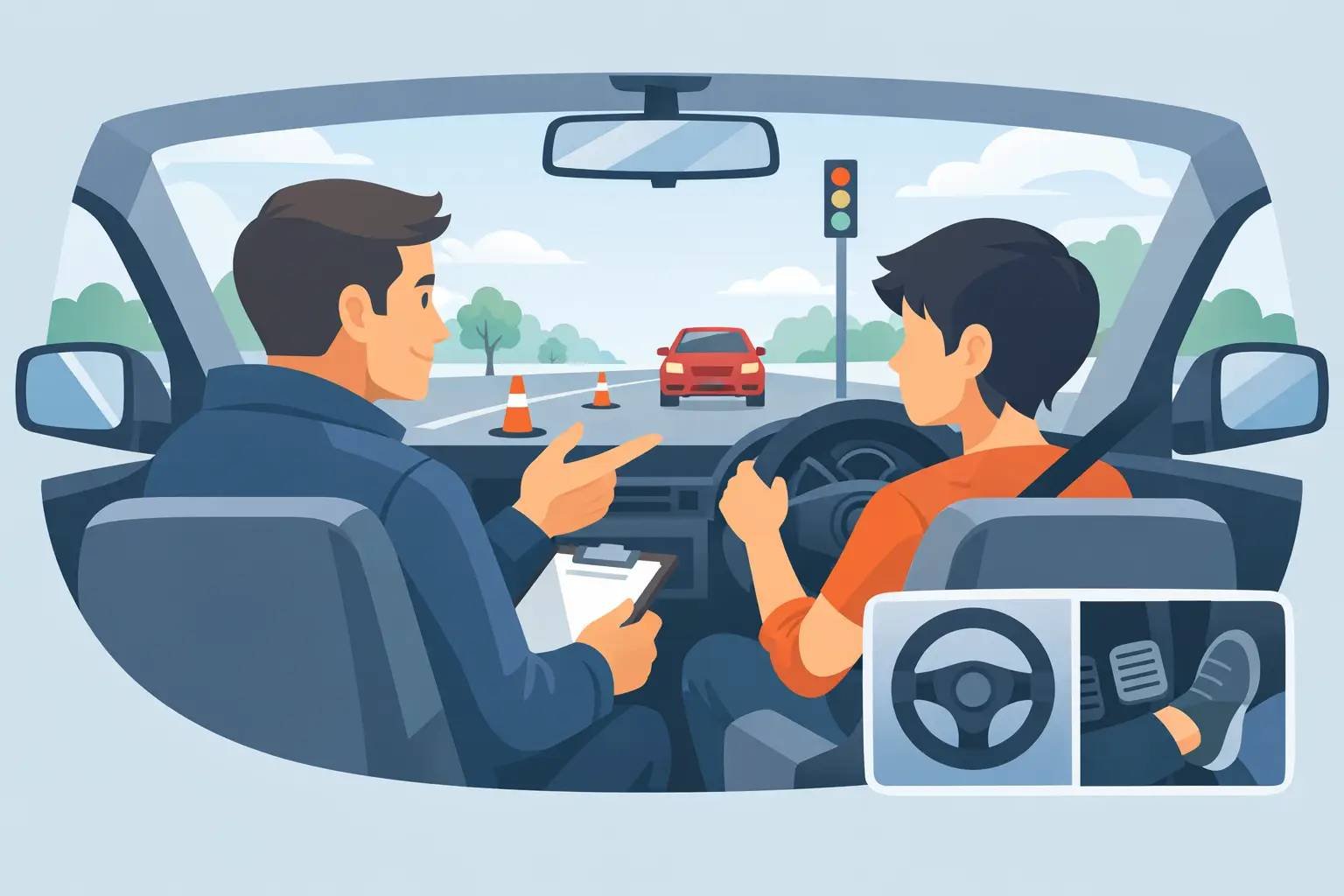
For many adults, driving anxiety does not look dramatic. It looks like avoiding I-4, circling a parking lot instead of backing into a space, or putting off a license update because Florida traffic feels like too much all at once. In Orlando, that stress is understandable. Roads are busy, tourist traffic is unpredictable, and intersections can demand fast decisions. Nervous drivers do not need pressure. They need structure.
That is what makes driving lessons for nervous adults Orlando different from basic test-prep instruction. The goal is not simply to get through one exam or one drive. The goal is to build stable habits that hold up when conditions change – during rush hour, in rain, around aggressive drivers, or on unfamiliar roads.
Why adult driving anxiety is different
Adults usually arrive with more than a skill gap. They often carry a specific reason for the fear. Some have had a crash or a near miss. Some learned years ago but stopped driving after moving to a walkable city. Others are licensed but avoid highways, lane changes, or nighttime driving because they never felt fully in control.
That matters because anxious adult drivers rarely benefit from being rushed through a standard lesson plan. A teenager who is starting from zero may accept mistakes as part of learning. Adults tend to judge every mistake more harshly. One rough turn or one missed gap in traffic can feel like proof that they are not capable, when in reality it only shows that a particular skill needs more guided practice.
A good instructor recognizes that difference. Calm coaching works better than criticism. Clear explanations work better than vague encouragement. Measurable progress matters because nervous drivers need evidence that they are improving, not just reassurance.
What good driving lessons for nervous adults in Orlando should include
The best adult lessons are organized, gradual, and safety-centered. That does not mean overly soft or casual. It means the instruction is disciplined enough to reduce uncertainty.
A nervous adult driver should know what will be practiced, why it matters, and what success looks like for that session. If the lesson starts with residential turns and right-of-way decisions, that should be intentional. If the next step is busier multilane roads, there should be a reason for the progression. Anxiety tends to drop when the process feels controlled.
Professional standards matter here too. State-licensed instructors, commercially insured training vehicles, and dual-control brakes are not small details. For a nervous learner, those safeguards change the experience. They create a setting where mistakes can be corrected safely and where the student does not feel alone in the vehicle.
Documented instruction also helps. A written training plan gives adult learners something concrete to measure. Instead of leaving a lesson thinking, “I did badly in traffic,” they can see that they practiced mirror checks, lane positioning, speed control, protected turns, and parking with specific coaching targets for next time.
The Orlando factor: why local road conditions matter
Orlando is not one kind of driving environment. A nervous driver may do reasonably well in a quiet neighborhood, then feel overwhelmed near major retail corridors, theme park traffic, or dense college-area activity. Add afternoon storms, construction patterns, and heavy lane shifts, and confidence can disappear quickly.
That is why local instruction matters. Adult drivers need practice that reflects the actual roads they will use. If someone commutes near UCF, works around downtown, or needs to manage everyday driving near Winter Park, Lake Nona, or surrounding areas, lessons should prepare them for those patterns. Skills transfer best when they are practiced in realistic conditions.
There is also a practical convenience issue. Adults often delay lessons because scheduling feels difficult. Door-to-door pick-up and drop-off can remove one more obstacle, especially for busy households, working adults, or students who do not want another complicated errand added to the week.
How confidence is actually rebuilt
Confidence is often misunderstood. It is not positive thinking. It is repetition with correction.
A nervous adult becomes more confident when the same skill is practiced enough times to become predictable. Merging improves when the driver learns how to scan early, judge speed, and commit at the right time. Left turns become less stressful when the driver understands lane placement, timing, and what to do when traffic pressure builds. Parking gets easier when the process is broken into steps rather than treated like a talent you either have or do not have.
This is why structured lesson packages are usually more effective than one or two isolated sessions. Some adults need four lessons to regain basic control and confidence. Others need six, ten, or more to work through avoidance patterns and build comfort across neighborhoods, major roads, test routes, parking, and higher-speed driving. It depends on starting point, history, and goals.
There is no value in pretending all nervous drivers need the same amount of instruction. A school that treats the process as customized rather than generic is usually the better fit.
What a first lesson should feel like
A well-run first lesson should lower uncertainty, not raise it. That means clear orientation, straightforward expectations, and no attempt to push the driver into conditions they are not ready for.
Often, the first session is about assessment and control. The instructor observes how the student steers, brakes, checks mirrors, judges space, and responds to routine traffic situations. From there, the lesson can begin at the right level. For one driver, that may mean neighborhood routes and simple intersections. For another, it may mean refreshing basic parking and lane changes before moving into busier corridors.
The key is progression. Nervous adults do not gain much from being thrown directly into their most feared situation. At the same time, lessons should not stay too comfortable for too long. Avoidance can become its own habit. The right approach builds one layer at a time and then expands the challenge once the previous step is stable.
When refresher training makes sense
Many adults assume lessons are only for brand-new drivers. That is not true. Refresher training is often the right choice for licensed drivers who have had a long gap, experienced a medical or life transition, relocated from another state or country, or simply developed anxiety over time.
Florida roads may feel very different from what a driver previously knew. Traffic density, speed patterns, signaling habits, and road design can all affect confidence. A driver who was comfortable elsewhere may still need guided adaptation here.
Older adults can benefit as well, especially if they want a professional assessment rather than relying on family feedback. Family members often mean well, but instruction from a relative can raise tension. A trained instructor provides calmer, more objective coaching and can identify exactly which skills need work.
Choosing a school without adding more stress
If you are comparing options, do not focus only on price or the promise of fast results. Nervous adult drivers need instruction that is safe, documented, and professionally delivered.
Ask whether instructors are Florida state-licensed. Ask whether the vehicles are commercially insured and equipped with dual controls. Ask how lesson progress is tracked and whether the school follows a documented training plan. Ask how they handle adults who are fearful, not just inexperienced.
You should also ask how scheduling works and whether lessons are taught on real Orlando roads that match your needs. Convenience matters, but so does instructional quality. A lower-cost lesson is not a better value if it leaves the driver just as anxious afterward.
At Pinnacle Driver Safety Orlando, this kind of instruction is approached as a long-term safety investment, not a quick pass-the-test service. That distinction matters for adults who want real driving independence, not temporary reassurance.
A realistic expectation for progress
Most nervous adults improve faster once they stop measuring themselves against confident drivers and start measuring against their own last lesson. Progress may look small at first. Better braking. Smoother turns. Fewer delayed decisions. One successful lane change without panic. Those are not minor wins. They are the building blocks of safe, repeatable driving.
There may still be hard days. Rain, heavy traffic, or a mistake during a lesson can shake confidence. That does not mean the process is failing. In skill-based training, temporary setbacks are normal. What matters is whether the instruction stays organized, corrective, and calm.
If driving has become something you avoid, the right lesson plan can change that. Not by forcing confidence, but by earning it one controlled decision at a time. And for most nervous adults, that is the first point where driving starts to feel manageable again.