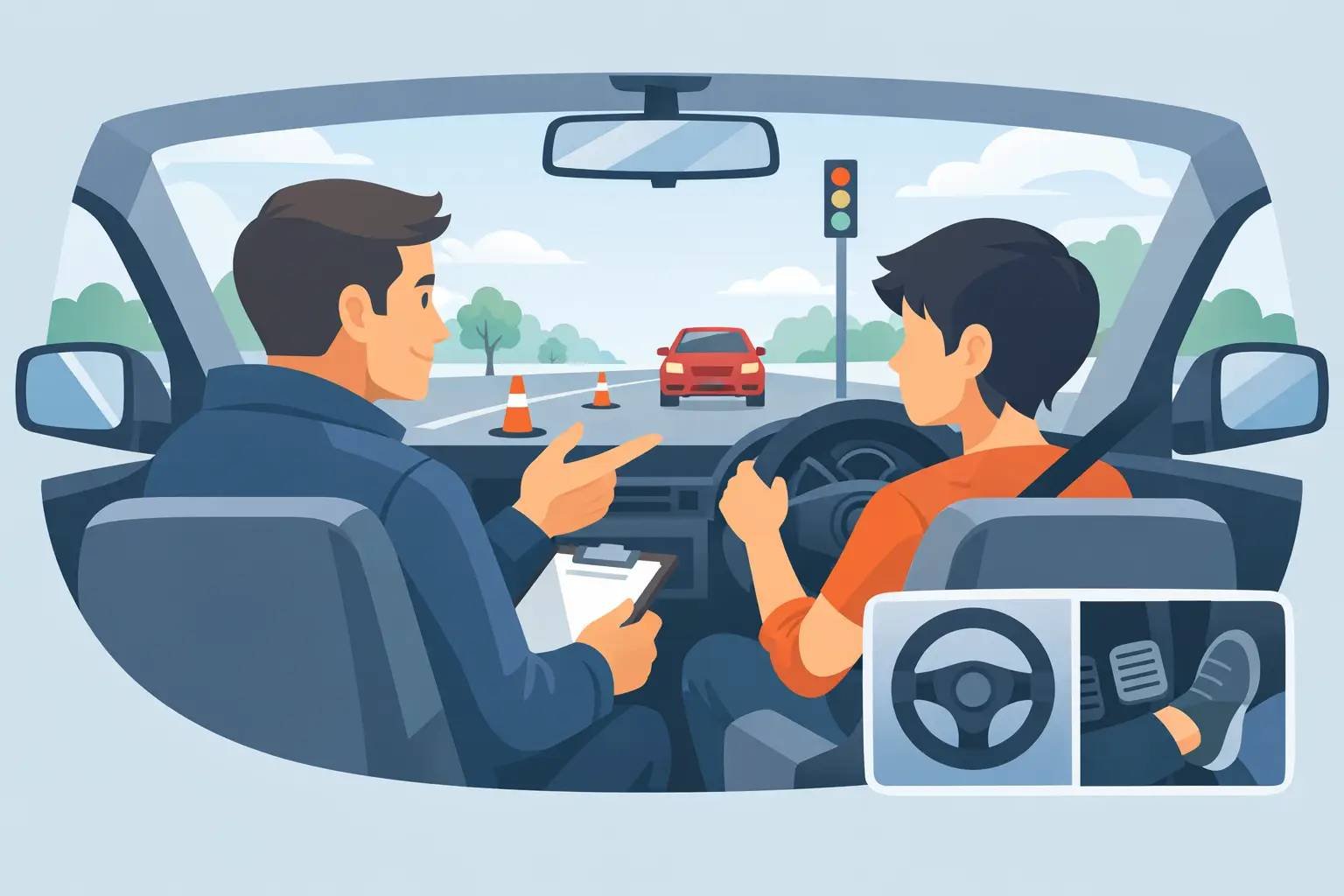
A teen merges onto I-4 for the first time and goes quiet. Not because they do not know what a turn signal is, but because speed, blind spots, and unpredictable lane changes all hit at once. This is the moment most families actually care about, even if they booked lessons for a road test. Real success in driver training shows up when the pressure is real, the traffic is moving, and the driver can still think.
When people talk about driving school success stories, the best ones are not miracle makeovers. They are measurable shifts – fewer panic reactions, better scanning habits, smoother braking, and decision-making that stays disciplined when another driver does something unsafe. Those changes are not flashy. They are life-protecting.
What “success” looks like after the road test
Passing the Florida road test is a milestone, but it is not the finish line. A newly licensed driver who can parallel park but tailgates in traffic is still high-risk. A nervous adult who “gets through” a lesson but avoids left turns for months is still not free.
The success stories that matter usually include three outcomes.
First, the driver starts making earlier decisions. You see it in lane positioning, timing at intersections, and braking that begins sooner and stays controlled. Second, they develop a scanning routine that does not fall apart under stress – mirrors, speed checks, forward searching, and blind-spot checks become patterned, not random. Third, they learn to recover without spiraling. A missed turn becomes “signal, check, re-route,” not a sudden swerve.
It depends on the student how quickly that happens. Teens often learn vehicle control fast but need repetition to build judgment. Adults often have judgment but need time to rebuild confidence or update habits that no longer match today’s traffic.
Driving school success stories, explained by the habits behind them
The most common “before and after” we see is not from zero skill to perfect driving. It is from inconsistent skills to repeatable skills.
A repeatable skill is one you can do on a bad day in heavy traffic. That is why defensive-driving training spends so much time on fundamentals that feel basic. Space management, speed control, and visual discipline are what keep a driver out of other people’s mistakes.
Many drivers show improvement in the same sequence.
They start by stabilizing the car – steering smoothness, controlled stops, and predictable acceleration. Then they learn to anticipate – identifying stale green lights, spotting aggressive lane-changers early, and watching for pedestrians near crosswalks. After that, their confidence becomes quieter. They stop performing and start driving.
That is also why quick, minimal training can be a trade-off. If lessons only target the checklist for the exam, the driver may pass but still lack the repetition needed for real-world risk reduction.
Story pattern 1: The anxious beginner who learns to manage stress
A lot of teens begin lessons with a specific fear: high speeds, turning left across traffic, or being honked at. Nervous adult drivers often carry a different layer – fear of making an expensive mistake, fear of looking incompetent, or fear after a past collision.
The turning point is rarely motivational. It is procedural.
When an anxious driver is taught a consistent process – where to look, when to brake, how to choose a gap, how to reset after an error – the anxiety becomes more predictable. Their body relaxes because their brain has a script. They stop trying to “feel confident” and start doing the steps that produce safe outcomes.
You can watch the change in their shoulders and hands. The death-grip loosens. The steering becomes less jerky. They begin to speak in complete sentences while driving. That is not just comfort. It is cognitive bandwidth returning, which directly improves safety.
The trade-off is time. Anxiety does not respond well to being rushed. Some students need shorter, more frequent lessons. Others do better with longer sessions that let them settle in and practice recovery skills without feeling like the lesson ended right when they started improving.
Story pattern 2: The teen who “knows how to drive” but keeps taking risks
Families often call because their teen has practiced with a parent and can technically operate the vehicle. The issue is not mechanics. It is judgment.
These students may roll through stops, crowd the car ahead, or drift in the lane while talking. Sometimes it is overconfidence. Sometimes it is distraction. Sometimes it is simply not understanding consequences – not in a lecture sense, but in a physics sense.
Success here looks like a shift from impulsive driving to disciplined driving.
That shift usually happens when the teen is held to standards they cannot negotiate. Full stops are full stops. Following distance is measured, not guessed. Lane changes happen with a mirror check, a blind-spot check, and a signal – every time.
Teens respond well to objective feedback. When an instructor documents what was covered and what needs work, it removes the “you’re just being picky” dynamic that can happen at home. With a structured plan, the teen can see progress and also see what is still non-negotiable.
Story pattern 3: The road-test focused student who becomes genuinely road-ready
Some students come in with one goal: pass the Florida road test fast. We understand the urgency – schedules are tight, and families need independence for school and work.
The best success stories in this category happen when test prep is treated as a progression, not a cram session.
That means working backward from the exam skills while still training real safety habits. If a student is practicing three-point turns but still cannot maintain lane position under pressure, the order matters. If they can park but do not consistently scan, the habit matters more than the maneuver.
A step-by-step approach also prevents a common problem: a student who performs well in one neighborhood but falls apart in unfamiliar areas. Road readiness means they can generalize skills – different traffic densities, different intersection layouts, different signage.
Story pattern 4: The adult refresher driver who rebuilds confidence
Adults returning to driving after years off the road often have a clear reason: a new job, a family change, or the need to regain independence. Many are safe-minded but feel behind on today’s traffic pace, heavier congestion, and modern road designs.
A strong refresher success story is not about “driving like a teenager again.” It is about updating habits.
That can include re-learning lane selection for multi-lane roads, practicing unprotected left turns, adjusting to faster merges, and building comfort with navigation. Adults often benefit from coaching that respects their experience while still correcting unsafe patterns. A calm, professional tone matters here. If the driver feels judged, they tighten up and learn less.
Story pattern 5: The relocating driver who needs Florida-specific adaptation
Relocation success looks different. These drivers may already be competent, but Florida’s environment is its own training ground: aggressive tourist driving, sudden lane changes, frequent U-turns, afternoon storms that change visibility quickly, and high-speed corridors where mistakes escalate.
Success here is learning the local “rhythm” without copying bad behavior.
That includes understanding right-of-way realities at busy intersections, reading signage early, managing following distance when others cut in, and maintaining disciplined speed choices even when traffic around them is impatient.
It also depends on where the driver came from. Someone relocating from a walkable city may need foundational exposure to daily driving. Someone from another state may need targeted updates on Florida norms and test expectations.
Why the best success stories are documented, not guessed
Families feel better when progress is visible. So do students.
A documented training plan creates accountability and reduces confusion about what “ready” means. It also prevents overtraining one comfort zone. Without documentation, many learners repeat what feels good – driving the same roads, practicing the same easy turns, avoiding the hard scenarios.
When lesson coverage is tracked, the student is more likely to practice what is actually missing: complex intersections, busy merges, school-zone judgment, or controlled parking under time pressure. That is how confidence becomes earned.
For Orlando-area families who want structured, defensive-driving-focused coaching with documented progress and door-to-door lesson logistics, Pinnacle Driver Safety Orlando is built around that safety-first model: state-licensed instruction, commercially insured training vehicles, dual-control brakes, and lesson documentation through a Training Action Plan.
What families can do to create their own success story
Success is a team effort, but roles matter. The student’s job is to show up coachable and practice the assigned skills. The instructor’s job is to set standards, correct errors early, and introduce complexity at the right pace. The parent’s job is to support repetition without turning every drive into a debate.
If your teen is learning, prioritize practice that matches the lesson goal. If the week’s focus is smooth stops and scanning, do not spend the entire practice drive on parking tricks. If your new driver is nervous, keep practice sessions short enough that they end on a win, not on overload.
Also be honest about readiness. More hours can feel inconvenient, but rushing a driver into solo driving is a real trade-off. The cost of one preventable crash, one citation, or one panic decision in heavy traffic is higher than an extra set of structured lessons.
A helpful mindset is this: you are not buying a license. You are building a driver who can make safe decisions when no one is sitting in the passenger seat.
Close the laptop, pick one skill to improve this week, and let repetition do what motivation cannot – turn safe choices into automatic ones.