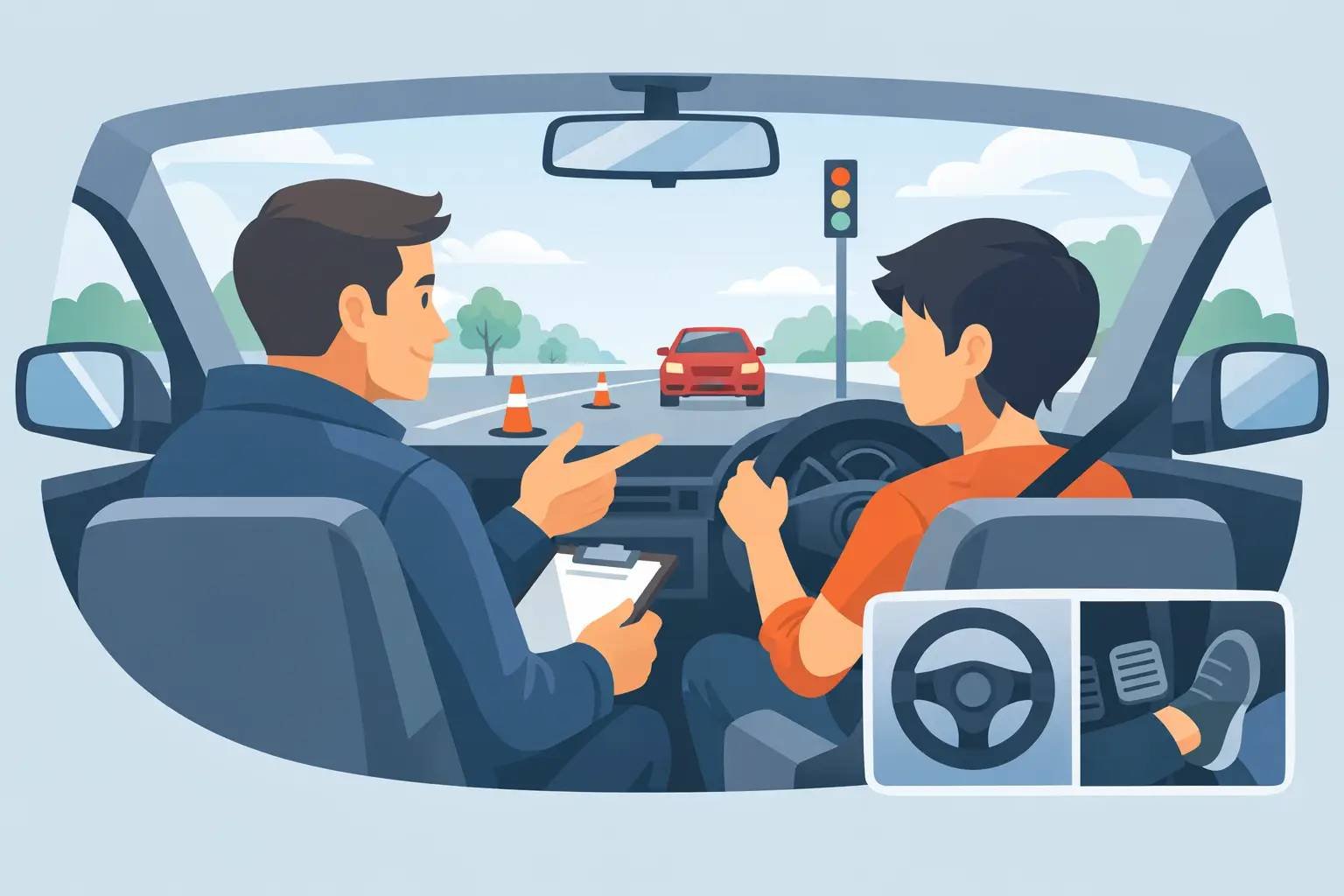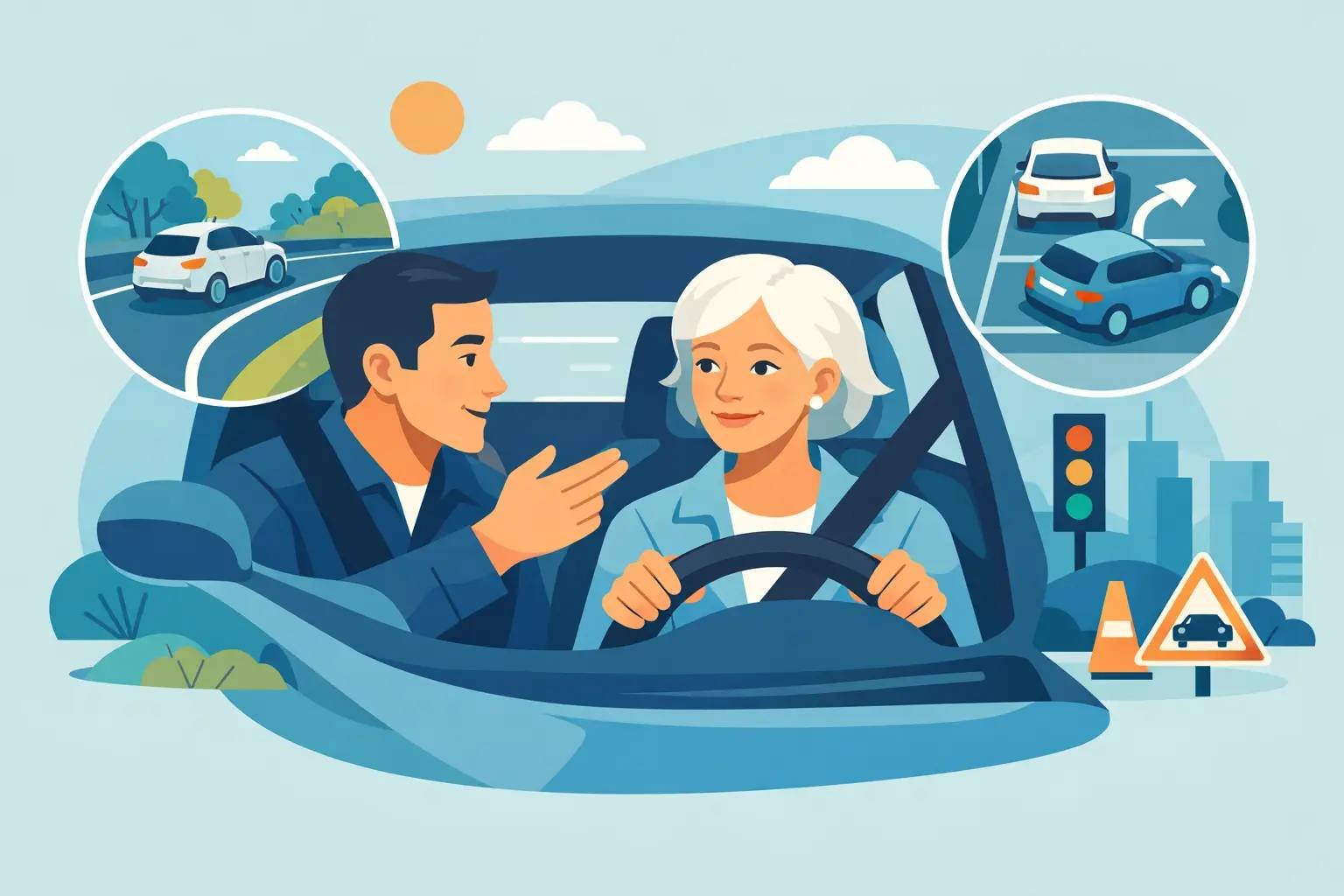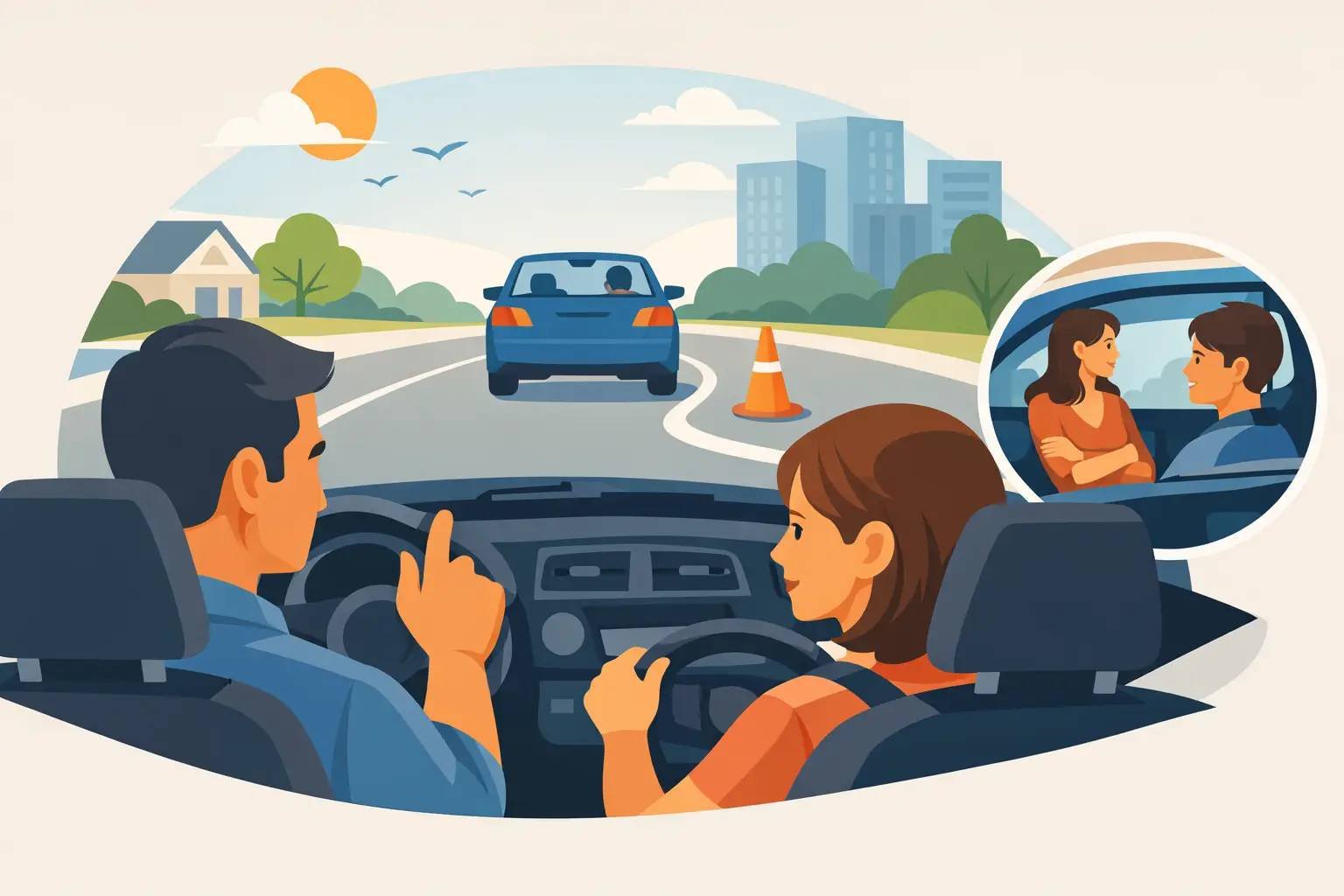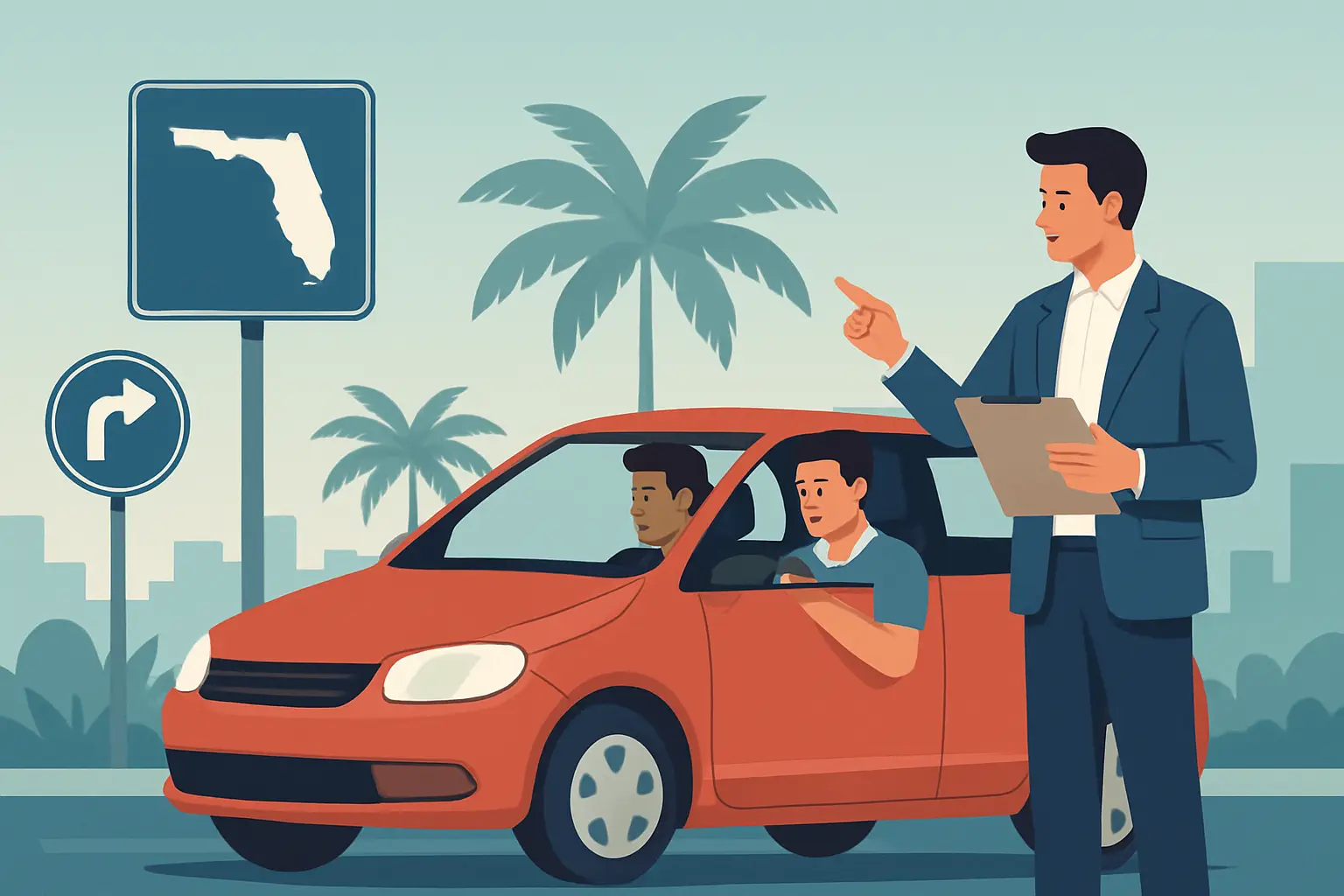
The first time you pull up to a stop sign with a line of cars behind you, it stops feeling like “practice.” It feels like real driving – because it is. Florida’s road test is designed to check basic control and judgment, but Orlando-area traffic has its own pressure: fast lane changes, distracted drivers, sudden slowdowns near school zones, and heavy flow around shopping corridors. Good preparation lessons should treat the test as a checkpoint, not the finish line.
Florida road test preparation lessons work best when they follow a clear progression: control the vehicle, communicate decisions, manage space, and stay calm under time pressure. If a program only drills a few maneuvers in a parking lot, you might pass, but you will not feel steady when you meet real-world risk. Safety-first instruction is not “extra.” It is what keeps a new driver from becoming a statistic after the license is issued.
What Florida’s road test is really measuring
Florida’s driving test is not trying to trick you. It is checking whether a new driver can operate a vehicle smoothly and predictably, follow directions, and show safe decision-making at low to moderate speeds. The details vary by location and examiner, but the underlying evaluation is consistent: basic control, proper signaling, lane position, observation, and rule compliance.
That said, “basic” does not mean “easy.” New drivers often fail for simple, preventable reasons: forgetting to check mirrors and blind spots, rolling through a stop, drifting in the lane, turning too wide, accelerating too quickly, or looking tense and reactive. These mistakes usually come from one issue – the driver is still using most of their attention to control the car, so they have little attention left for scanning, planning, and staying predictable.
Preparation lessons should be designed to reduce that mental overload. When steering, braking, and lane position become consistent, the driver can devote attention to risk detection: pedestrians at corners, sudden stops, bikes, aggressive merges, and the common Florida hazard of drivers who move first and signal later.
Why “just pass” training backfires in Florida
It depends on the learner, but a narrow “pass the test” approach tends to create two problems.
First, it can build a false sense of readiness. A teen might pass a simple route, then struggle the first time they drive in rain, at night, or near busy tourist traffic. Second, it increases anxiety. When learners feel they have to memorize a sequence of moves instead of understanding what the car is doing, they panic the moment the situation changes.
Florida road test preparation lessons should be structured to create transferable skill, not just repetition. If you can execute a correct right turn because you understand speed control, lane placement, and scanning, you can handle that turn on an unfamiliar road. If you can only do it in one neighborhood at one speed, your confidence will be fragile.
A step-by-step skills progression that actually builds readiness
A disciplined lesson plan typically moves through stages. You can rush these steps, but you will pay for it later in mistakes, nervous reactions, and inconsistent control.
Stage 1: Controls, braking, and smooth steering
Before an instructor pushes a student into complex traffic, the student needs consistent control. That means smooth starts, smooth stops, holding a steady speed, and steering that keeps the car centered. Many new drivers “saw” the wheel, drift, and then over-correct. The fix is not more pressure – it is coaching that ties hand position, vision (looking far ahead), and gentle inputs together.
This stage also includes understanding the vehicle’s turning path. Teens often turn too early or too wide because they do not yet sense where the rear wheels track. Getting this right early makes everything else easier, including parking and lane changes.
Stage 2: Scanning habits and communication
New drivers need a repeatable scanning routine that becomes automatic: mirrors, forward vision, and blind spot checks at the correct times. A road test examiner can see whether a driver is scanning. More importantly, other drivers can feel whether you are predictable.
Signaling is part of communication, but timing matters. A late signal is not helpful. In lessons, students should practice signaling early enough that surrounding traffic has time to react, and then canceling signals after the maneuver to avoid confusion.
Stage 3: Right-of-way, stop control, and intersection judgment
Intersections are where most beginner mistakes show up. Florida test routes often include stop signs and right turns because they reveal whether a driver controls speed, stops correctly, checks left-right-left, and proceeds only when safe.
A full stop is not negotiable. Rolling stops and “California stops” may be common in some neighborhoods, but they build dangerous habits and can fail a test. Good preparation lessons train drivers to stop behind the line, manage pressure from drivers behind them, and still make a safe decision.
Stage 4: Lane changes and space management
Lane changes are not just “check mirror, signal, go.” They are a space management decision. You need to judge speed differences, choose a safe gap, and move smoothly without drifting.
A solid lesson will teach a consistent sequence: check mirrors, signal, head check, move with controlled steering, then re-check traffic. It will also cover what to do when the gap is not there: stay patient, maintain your lane, and wait. That patience is one of the most important defensive driving habits a teen can learn.
Stage 5: Parking and low-speed precision
Parking is often where nervousness spikes because the car feels close to objects. Florida road tests may include straight-in parking and backing. Even when parallel parking is not tested, backing control matters because it shows whether the driver can move slowly, look where they are going, and keep the vehicle centered.
Students should practice at realistic speeds. “Creeping” is good, but stopping every half-second is not. The goal is controlled movement with continuous observation.
What to practice between lessons (without creating bad habits)
Practice time at home can help, but only if it is structured. Unstructured practice often repeats the same mistakes until they feel normal.
A strong approach is to practice short, focused drives. One day might focus on smooth stops and keeping space. Another day might focus on right turns and proper lane placement. If everything is practiced at once, the student’s attention gets scattered.
Also, keep practice routes realistic. Parking lots are useful early on, but they do not teach the timing of real intersections, the pressure of vehicles behind you, or how to read traffic flow. Once a student has basic control, neighborhood-to-collector-road practice is usually more valuable than another hour in an empty lot.
For parents supervising teen practice, the trade-off is real: coaching too much can increase stress, but saying nothing can allow risky habits. Agree on one or two “focus points” before the drive and keep feedback calm and specific. If the drive turns into an argument, the learning stops.
Equipment and professionalism matter more than most families realize
Road test preparation is not only about what is taught. It is also about how safely the instruction is delivered.
Look for Florida state-licensed instructors and training vehicles that are commercially insured. Dual-control brakes are a major safety factor for beginners because they allow an instructor to prevent a mistake from becoming a crash. This is especially important for nervous drivers and for teens who are still learning how to judge stopping distance.
Documentation matters too. When lessons are tracked in a written plan, families can see what skills have been covered and what still needs work. That reduces guesswork and prevents the common problem of “We think they’re ready” based on a few good drives.
Choosing the right lesson package for your situation
Lesson needs depend on starting point, schedule, and confidence level.
A beginner teen with limited driving time usually needs a longer runway because they are building everything from scratch: controls, scanning, and judgment. A nervous driver may need fewer total skills but more repetition with calm coaching to reduce panic responses. A relocating adult might drive confidently but need Florida-specific adjustment: signage, school zones, right-on-red judgment, and understanding how quickly traffic speeds change on multi-lane roads.
Many Orlando-area families choose structured packages because progress is more predictable when lessons are close enough together to build momentum. As a general rule, if a student only drives once every few weeks, they spend a large portion of each lesson “re-learning” instead of improving.
If you are looking for door-to-door, safety-centered instruction with documented progress, Pinnacle Driver Safety Orlando provides on-the-road lessons across the greater Orlando area with state-licensed instructors, commercially insured vehicles, dual-control brakes, and a Training Action Plan that tracks skills step by step.
Timing your preparation around the test date
Rushing is the most common planning mistake. If the test is two weeks away and the student has limited real-road experience, stress will be high and improvement will be uneven. On the other hand, scheduling lessons too far apart can slow progress.
A practical target is to begin lessons early enough that the student can build consistency before you ever talk about “test day.” Once they can drive with steady control and scanning, then you add test-style routes and practice under mild pressure: following directions, performing maneuvers cleanly, and recovering calmly from small errors.
If a student fails a test, it does not automatically mean they are unsafe, but it does mean something broke down under evaluation pressure. The fix is usually targeted coaching on the failure point and a return to fundamentals, not just “try again.”
The confidence piece: calm is a driving skill
Parents often ask how to help a teen who “gets nervous.” The answer is to treat calm behavior as part of the curriculum.
A calm driver makes better decisions because they have more attention available. Lessons should include coached breathing, slowing the pace of actions, and using a repeatable routine at each maneuver. When a student learns they can pause, scan, and proceed deliberately, they stop reacting to the environment and start managing it.
The helpful closing thought is this: aim for a license that feels like permission to keep learning, not a finish line. When preparation lessons build defensive habits and measurable control, the road test becomes one good day of driving – and the real benefit is every day after that.