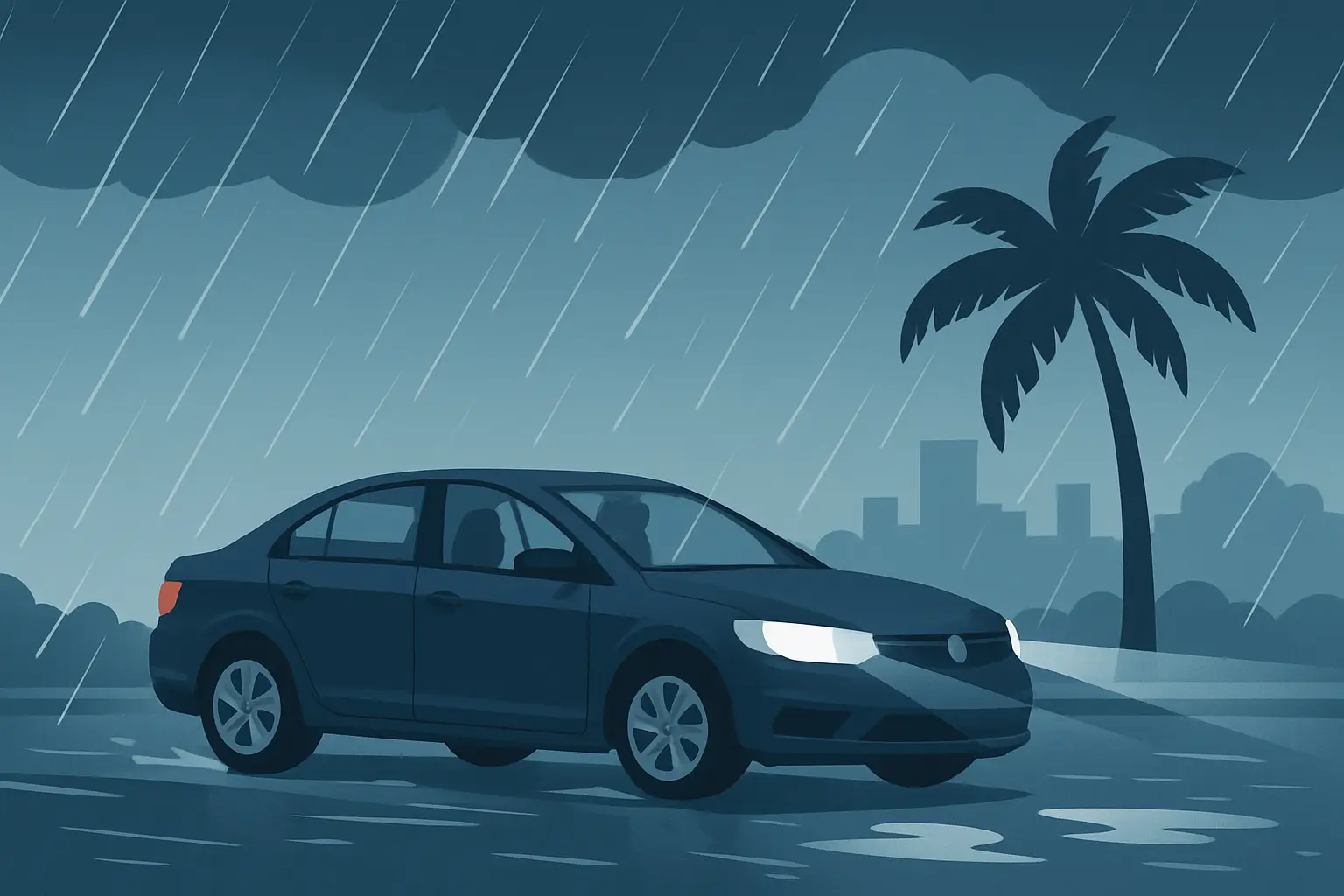
A Florida afternoon can go from bright to blinding in the time it takes to merge onto I-4. One minute the road looks dry, the next you are driving through a sheet of water with brake lights flickering ahead and standing water collecting where you least expect it – at low spots, on ramps, and in the right lane.
For new drivers and anxious drivers, that first real storm can feel like the car suddenly stopped “talking back.” Steering feels lighter, stopping takes longer, and the biggest hazard is often not you – it is the driver behind you who did not adjust. These rain driving tips for Florida storms are built around one goal: keeping traction and time on your side.
Why Florida rain is a different kind of risk
Florida storms are intense, fast-moving, and often paired with slick road surfaces. The first 10-20 minutes of rainfall can be especially hazardous because water lifts oil and grime to the surface, creating a low-friction film before it fully washes away.
Add Orlando’s high-speed corridors, frequent lane changes, and construction zones, and the margin for error shrinks. For teens, the problem is not “skill” as much as judgment under pressure: knowing when to slow early, when to pause a lane change, and when the safest choice is simply to wait.
Before you roll: set yourself up for traction and visibility
Safe storm driving starts before the storm. Tires and wipers are not “nice to have” in Florida – they are safety equipment.
Tires should have usable tread depth so water can channel out from under the tire. If tires are worn, the risk of hydroplaning jumps quickly, even at moderate speeds. Wipers should clear cleanly without smearing, and your windshield should be free of haze on the inside because humidity and A/C transitions can fog glass fast.
It also helps to simplify the cabin. Put the phone away, set your navigation before moving, and keep both hands available. Storm driving is not the time to juggle.
Use the right lights, and know what Florida expects
When rain reduces visibility, turn on your headlights. This is as much about being seen as it is about seeing. Many drivers rely on daytime running lights and do not realize their tail lights may not be on.
Florida law also ties wiper use to headlights – if your wipers are on, your headlights should be on. High beams are a common mistake in heavy rain because they can create glare and reduce your ability to see the roadway.
If you notice other cars “appearing” suddenly in your mirrors, that is a sign your visibility plan is not strong enough. Headlights on early is a disciplined habit.
Slow down earlier than you think, not later
The biggest storm-driving error we see from new drivers is waiting to slow down until the rain is already heavy. By then, traffic is compressing and stopping distances are already longer.
As rain starts, ease off the accelerator and let your speed drop gradually. Avoid abrupt braking, especially in the first few minutes of rainfall when the road is slickest. In a defensive driving mindset, smooth is not just comfortable – smooth is traction.
This is also where “it depends” matters. If you are on an open road with light traffic, a larger speed reduction is usually safer. If you are in tight, fast traffic, sudden large slowdowns can create a rear-end risk. The goal is controlled, predictable adjustments that give vehicles behind you time to react.
Increase following distance – and be realistic about stopping
In rain, your safe following distance should expand. Not by a car length or two, but by a full decision-and-reaction buffer that accounts for reduced traction.
A practical way to think about it: if you cannot see enough space to stop if the car ahead brakes hard, you are too close. Backing off also improves visibility because you can see around spray from the vehicle ahead.
If someone tailgates you, do not “teach a lesson” with braking. Keep your pace steady, increase your buffer in front, and if possible, change lanes to let them pass when it is safe. Defensive driving is about reducing conflict, not winning it.
Hydroplaning: what it feels like and what to do
Hydroplaning happens when your tires ride on top of water instead of gripping pavement. It often feels like the steering suddenly goes light or the car “floats” for a moment. Drivers may feel a brief loss of control, especially in pooled water.
If you hydroplane, your best move is calm and simple: ease off the accelerator and keep the steering pointed where you want the car to go. Avoid slamming the brakes. Braking hard can worsen the skid and reduce your ability to regain traction.
Traction usually returns as speed drops. Once you feel the tires bite again, continue at a reduced speed and reassess. If you hit standing water repeatedly, you are traveling too fast for conditions or driving in a lane that collects water.
Watch the roadway, not just the rain
Storm driving is a scanning game. In Florida, hazards multiply because water changes the road surface.
Standing water forms at low points, near clogged drains, and along the right edge where runoff gathers. Painted lines, arrows, and crosswalk markings can become slicker than surrounding pavement. Metal surfaces – utility covers and bridge joints – can also be slippery.
Construction zones deserve extra respect in storms because lane markings may be confusing, and water can hide uneven pavement. If you are unsure, reduce speed early and avoid last-second lane changes.
Choose lanes and routes with water in mind
Not all lanes drain equally. The far-right lane often collects more water because of roadway crown and runoff, and it also contains more debris washed into the lane. That does not mean the left lane is always safer, especially on multi-lane highways where faster traffic increases the severity of any loss of traction.
If conditions are poor, pick a lane that lets you drive steadily with fewer merges and fewer abrupt speed changes. Sometimes that means staying out of the fastest lane, even if it looks “clear.” A consistent, predictable lane with adequate spacing is usually the safer choice.
Route choice matters too. If a road is known to flood in heavy storms, it is not worth testing your luck. Turning around is a decision, not a failure.
Braking and turning: treat them like separate tasks
In rain, the tire has a limited amount of grip to “spend.” If you brake hard while turning, you ask the tire to do too much at once.
Start braking sooner and finish most of your braking before the turn. Enter turns more slowly than you would on dry pavement, then accelerate gently as you straighten out. For teen drivers, this one habit reduces a lot of storm-related loss-of-control incidents.
Also be cautious with cruise control in heavy rain. Maintaining speed automatically can mask subtle loss of traction and encourage steady throttle when you should be easing off.
Visibility: defog fast and cut the glare
When humidity is high and rain cools the glass, fogging can happen quickly. Use your defroster and A/C to dry the air and clear the windshield. If the inside of the windshield is hazy, clean it – that film turns oncoming headlights into a glare problem.
Night storms are especially demanding. If glare is severe, reduce speed, increase following distance, and use the right edge line as a guide without fixating on it. Fixation can pull your steering toward what you are staring at.
If visibility drops to the point where you cannot see lane markings reliably, that is a safety threshold. Your job is to get out of the travel lane safely and wait.
When to pull over – and how to do it safely
There are times when the safest decision is to stop driving. If you cannot see, you cannot make good decisions at speed.
Pulling over safely in a Florida storm means choosing a location away from moving traffic. Avoid stopping on the shoulder of a high-speed highway unless it is an emergency because other drivers may drift or hydroplane into the shoulder. A parking lot, a well-lit service area, or a safe side street is a better choice.
Turn on your hazard lights once you are slowing and moving out of traffic, not as a substitute for headlights while driving. Hazards can confuse other drivers about whether you are moving or stopped.
The Florida storm mindset: calm, predictable, and patient
Good storm driving is not aggressive and it is not timid. It is controlled.
Calm means you avoid panic braking and sudden steering. Predictable means you signal early, maintain steady spacing, and avoid surprise lane changes. Patient means you accept that you may arrive later, and that being late is always cheaper than a crash, a citation, or an insurance claim that follows a teen driver for years.
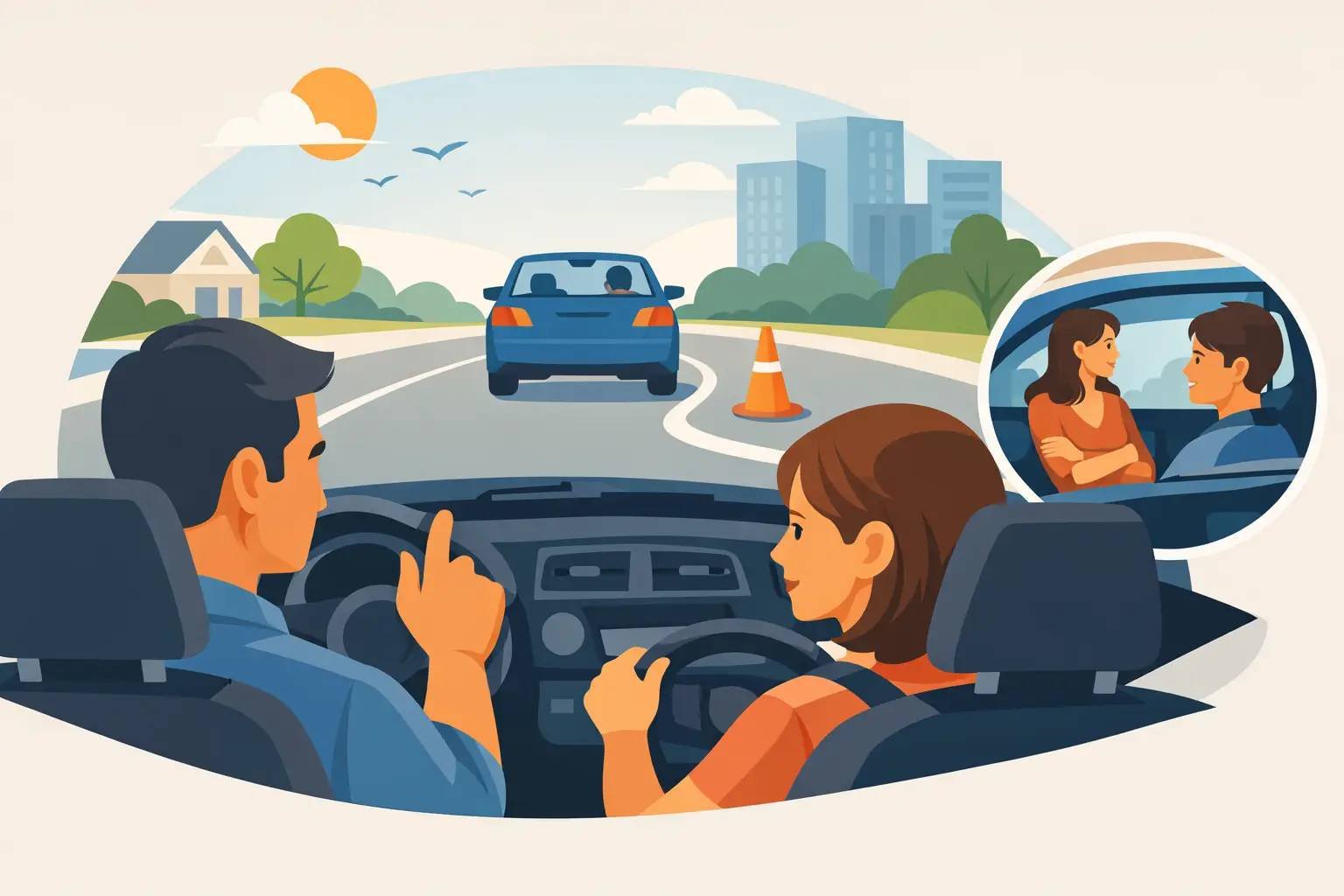
If you are a parent coaching a new driver, focus your feedback on the process: earlier speed reduction, larger following distance, and smoother braking. Confidence comes from repeatable habits, not from “pushing through” a storm to prove something.
For Orlando-area families who want a structured way to build these habits with professional oversight, Pinnacle Driver Safety Orlando incorporates real-world weather strategies into defensive driving lessons, with documented progress through a Training Action Plan so parents and students can see exactly what was practiced.
The next time the sky turns dark over Central Florida, aim for one standard: give yourself more time than the storm demands. That single decision makes every other choice easier.