A lot of Orlando families hit the same wall at the same moment: your teen is motivated, you are ready to help, and then the question lands – “Do we have to do that 6-hour training thing before the license?”
Yes, Florida does have a required six hours of behind-the-wheel instruction for many teens, and it is not just paperwork. It is the state’s way of putting an adult, trained set of eyes on a new driver before they start driving solo. When you understand what the state is asking for and why, planning gets easier and the training gets more effective.
What the Florida teen driver 6 hour training requirement actually is
Florida requires six hours of behind-the-wheel driver training for certain teen applicants as part of the path to a Class E driver license. The key words are “behind-the-wheel” and “training.” This is not the written knowledge exam, not the traffic law and substance abuse course, and not a parent signing a practice log. It is supervised driving instruction intended to cover real traffic situations.
Just as important: the state is focused on instruction, not simply seat time. A teen can technically spend six hours driving and still be unprepared if those hours are all in the same empty parking lot. The goal is controlled exposure to everyday risk – intersections, lane changes, speed control, judgment gaps, and decision-making under pressure.
If you are unsure whether your teen falls under the mandate, do not guess. Requirements can vary based on age, permit date, and rule updates, and the consequences of showing up unqualified are usually wasted time and delayed scheduling.
Who needs it and when it applies
Most families encounter this requirement when their teen is moving from a learner’s permit to a license and they are under 18. Florida’s licensing system is designed to add structure for younger drivers because their crash risk is higher during the first months of independent driving.
There are a few “it depends” scenarios that matter:
If your teen is close to 18, the rules can change based on whether they apply as a minor or as an adult. Waiting is not automatically the best solution, though. You may avoid a specific requirement, but you do not avoid the reality of inexperience. The first six months of solo driving are where mistakes have the biggest consequences.
If your teen already has out-of-state experience or a permit from another state, Florida may still expect certain steps to be completed before issuing a Florida license. This is where families relocating to Orlando often get tripped up. Prior driving time can be helpful, but it does not always count the way you assume it will.
If your teen has anxiety, attention challenges, or a history of near-misses in practice, the “minimum requirement” mindset can backfire. In those cases, six hours is often a starting point for professional coaching, not the finish line.
What counts as “behind-the-wheel training” in practice
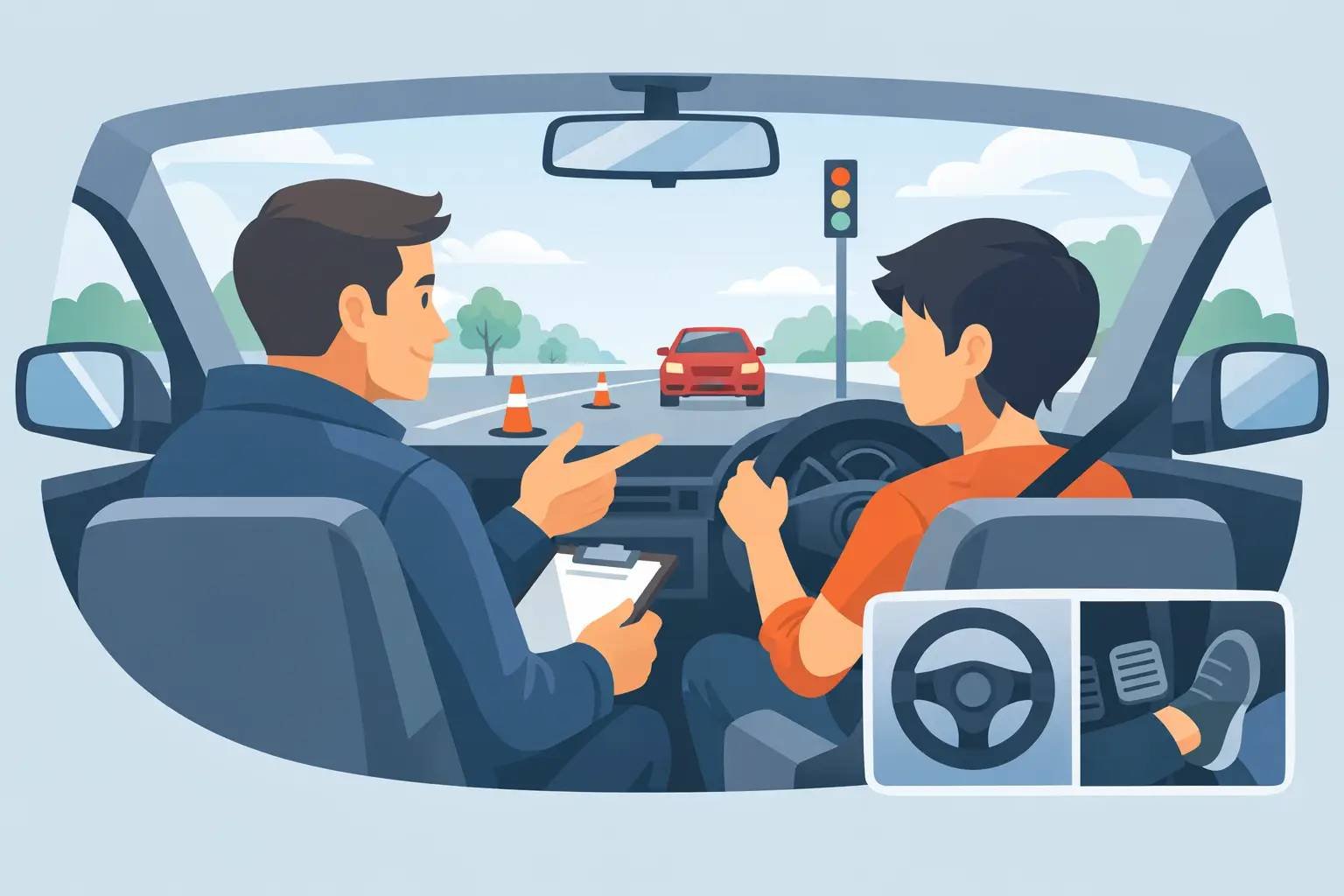
Parents often ask whether the six hours can be done with mom or dad in the passenger seat. The state’s intent is that the training is completed through a recognized driver education provider with qualified instruction. In other words, it is not the same as family practice, even though family practice remains essential.
The difference is accountability and coverage. Professional instruction is expected to include structured skill progression and safety-critical habits that many families simply do not think to teach. A trained instructor also catches patterns early – rolling stops, late braking, drifting in the lane, “polite” but unsafe yielding, or freezing when someone honks.
Also, when teens practice with family, the car and the relationship matter. Many parents are calm and effective coaches, but many are understandably tense. Teens feel it. Stress compresses attention, and attention is what keeps a new driver safe.
Why Florida cares about six hours, not just a permit log
Florida is not trying to make licensing harder for fun. The state is trying to reduce predictable crashes that happen because brand-new drivers do not yet have automated habits.
New drivers tend to struggle with three things that only come with guided repetition:
First, visual strategy. Teens often look too close to the hood and miss developing threats – a pedestrian approaching a crosswalk, a brake light chain reaction ahead, a car creeping at an intersection.
Second, speed and space management. Many teens either overdrive their visibility or leave themselves no “out.” This shows up as tailgating, rushed lane changes, and braking late.
Third, decision-making under social pressure. Passengers, phones, loud music, and the emotional pull to “keep up” are real. A six-hour training requirement is meant to put safety rules in place before those pressures show up.
What a high-quality 6-hour program should cover
Families sometimes ask, “What should we expect to learn in six hours?” A strong program will not pretend that six hours makes someone “experienced.” What it should do is create a safe foundation and identify what needs more work.
A well-run six-hour behind-the-wheel plan typically includes residential driving, neighborhood scanning habits, and controlled intersections early on. From there, it should progress to multi-lane roads, lane position, signaling timing, and safe lane changes with mirror checks and blind-spot verification that is consistent, not occasional.
It should also include real braking and turning technique – smooth stops, turn speed control, correct lane selection, and understanding how wide or tight turns create risk. Expect instruction on right-of-way decisions that match Florida law, not courtesy.
If your teen is nearing the road test, training should include test-style maneuvers like parking control and three-point turns, but a safety-first program treats those as tools, not the whole point. The more meaningful win is that your teen can drive calmly, predictably, and defensively in normal traffic.
How to plan the six hours so it actually helps
The biggest planning mistake is booking six hours right before a road test. That often turns professional instruction into emergency coaching, which is stressful for the teen and frustrating for parents.
Spacing matters. When lessons are spread out over a few weeks, teens have time to practice between sessions and return with questions. That practice does not need to be long to be effective. Even 30 to 45 minutes at a time, focused on one skill, can build confidence fast.
Time of day matters too. Orlando traffic changes dramatically between school zones, commuter peaks, and weekend congestion. If your teen only trains mid-day on quiet roads, the first time they face heavy traffic may be after they are licensed. That is the opposite of what you want.
Finally, match the route to the driver. A nervous teen may need a calm ramp-up and predictable environments first. A confident teen may need earlier exposure to complex traffic, because confidence without skill can become risk.
Common parent questions that affect scheduling
Families are busy, and logistics can make or break follow-through. Before you book training, clarify pick-up and drop-off options, lesson length, and whether the vehicle is equipped for instruction.
A professional school should be state-licensed, commercially insured, and using training vehicles that include dual-control brakes. Dual controls are not a gimmick. They change the entire safety profile of early training, especially when a teen makes a sudden decision or misjudges a gap.
Documentation also matters. When parents can see what was covered and what still needs work, practice at home becomes targeted instead of random.
For Orlando-area families who want safety-first coaching with documented progress, Pinnacle Driver Safety Orlando provides behind-the-wheel training that aligns with Florida teen requirements while emphasizing defensive driving habits that hold up after the road test.
What happens after the six hours: the part families should not rush
Completing the Florida teen driver 6 hour training requirement is a milestone, but it is not the finish line. The real risk window starts when teens begin driving alone.
That is why families should think in phases: foundation training, then supervised real-world practice, then targeted coaching for the hardest environments your teen will face. For Orlando, that often means high-density multi-lane corridors, fast-moving merges, rainstorms that reduce visibility in seconds, and the constant mix of tourists, delivery drivers, and impatient locals.
If your teen will be driving to school, work, or campus, practice those exact routes while they are still supervised. Drive them at the same time of day they will normally drive. Add one challenge at a time – first the route, then the traffic, then the weather, then passengers.
Trade-offs: minimal compliance vs. real readiness
Some families aim to do “exactly six hours” because they want to check the box and move on. That approach can work for a small subset of teens who already have strong judgment, calm temperament, and consistent practice at home.
For many teens, though, the trade-off is simple: fewer structured hours often means more near-misses later. Extra training costs more upfront, but it tends to reduce the expensive things – tickets, insurance hikes, collisions, and the stress of a teen who is scared to drive alone.
A good standard is this: if your teen still needs frequent reminders about scanning, speed control, or right-of-way, treat the six hours as the required baseline and plan additional coaching or practice before they drive independently.
The most helpful mindset for parents and teens is not “How fast can we finish?” It is “How calm and predictable can we make this teen behind the wheel?” When a new driver feels steady, they make better decisions, and when they make better decisions, the road gets safer for everyone.