The first missed sign usually does not feel serious until it creates a bad decision. A new driver rolls past a lane control sign, turns from the wrong lane, or treats a yellow warning sign like a suggestion instead of an early signal to slow down. That is why this guide to Florida road signs for new drivers focuses on more than memorization. The real goal is learning what each sign asks you to do, how quickly you need to respond, and why that response matters in everyday Orlando-area traffic.
For teen drivers, nervous adults, and families teaching at home, road signs can feel overwhelming because they appear fast and often in clusters. Florida roads also add their own challenges – school zones, toll roads, tourist traffic, heavy multilane corridors, and frequent construction. A safe driver does not wait until the last second to react. A safe driver scans early, identifies the sign type, and adjusts speed, lane position, and space before the situation becomes urgent.
How to read Florida road signs without panic
Most new drivers make better decisions once they stop seeing signs as random objects on poles. Florida road signs follow predictable patterns. Color, shape, and placement tell you what kind of message is coming before you read a single word.
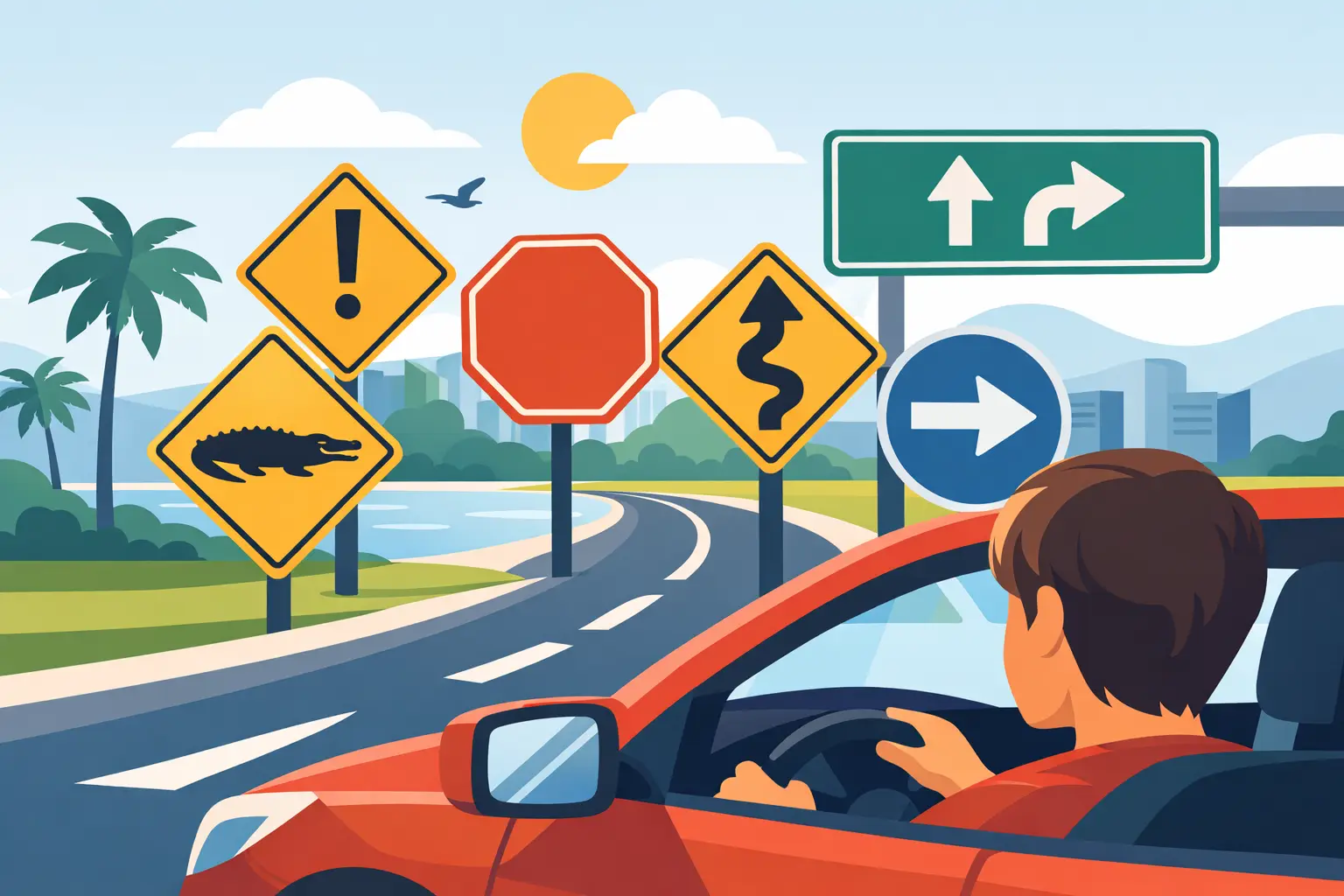
Red signs usually mean stop, yield, or prohibition. White signs typically state laws and rules, such as speed limits, turn restrictions, and lane-use requirements. Yellow signs warn you about changing road conditions ahead, including curves, merging traffic, or pedestrian crossings. Orange signs indicate work zones, where conditions can change daily and penalties may increase. Green signs provide direction and guidance, while blue and brown signs point to services or public recreation.
Shape matters too. An octagon means stop every time. An upside-down triangle means yield. A diamond is a warning. A rectangle usually gives regulations or information. A pentagon often marks school-related areas. A round sign warns of a railroad crossing ahead.
When drivers learn these patterns, they do not have to decode every sign from scratch. That lowers stress and gives them more time to make controlled decisions.
The road signs new drivers miss most often
The signs that cause the most trouble are not always the most complicated. They are often the ones drivers think they already understand.
Stop and yield signs
A stop sign requires a full stop at the marked line, crosswalk, or before entering the intersection. Rolling through is still a violation, even if the road looks clear. New drivers often focus only left and right, but a complete stop should also include checking for pedestrians, bicyclists, and late-moving traffic.
A yield sign is different. It does not always require a full stop, but it does require you to give the right-of-way when needed. If traffic, cyclists, or pedestrians are present, you slow and stop if necessary. Treating yield like a merge-without-looking sign is a common beginner mistake.
Speed limit and school zone signs
White speed limit signs are regulatory. They are not suggestions, and in school or active work zones, ignoring them can bring heavier consequences. The challenge for new drivers is that the safe speed may be lower than the posted speed when visibility, rain, traffic, or congestion changes.
School zone signs deserve special attention. Florida drivers should expect lower speeds, crossing guards, unpredictable pedestrian movement, and strict enforcement. Teens often concentrate on cars and forget that children may enter the road suddenly.
Lane-use signs
Signs that say LEFT LANE MUST TURN LEFT or RIGHT LANE MUST TURN RIGHT are easy to overlook until it is too late. On busy Orlando roads, missing one of these signs can force a sudden lane change or an illegal movement through the intersection.
This is where early scanning matters. If you see an intersection ahead, check signs over the lanes and roadside signs well in advance. Do not wait until the pavement arrows are directly under your vehicle.
A practical guide to Florida road signs by category
The simplest way to study is by driver action. Ask yourself: does this sign require me to stop, slow, move, choose a lane, or watch for a hazard?
Regulatory signs tell you the law
These signs are usually black, white, and red. They include stop, yield, do not enter, one way, no U-turn, no turn on red, and speed limit signs. If a regulatory sign applies to your lane or direction, compliance is mandatory.
Do Not Enter and Wrong Way signs are especially important for new and relocating drivers. They are often placed at highway ramps, divided road entrances, and restricted access points. Missing them can create an immediate high-risk situation.
One Way signs also deserve respect in downtown areas, parking exits, and side streets. A new driver who is nervous or distracted can make a wrong entry quickly if scanning habits are weak.
Warning signs tell you to prepare
Yellow warning signs should change your driving before the hazard arrives. Curve ahead, traffic signal ahead, pedestrian crossing, merging traffic, low clearance, slippery when wet, and divided highway signs all require early adjustment.
This is where defensive driving becomes visible. A skilled driver does not wait to see the sharpness of the curve before braking. They trust the sign, reduce speed smoothly, and keep the vehicle balanced. The same principle applies to traffic signal ahead signs. If the sign warns you, start planning for a possible stop.
Construction signs require extra discipline
Orange signs appear simple, but work zones are less forgiving than many new drivers realize. Lane shifts, narrowed lanes, uneven pavement, workers near traffic, and reduced speed zones all demand more space and lower speed.
It depends on the zone, but a common mistake is following normal traffic flow even when conditions have changed. In construction, the correct speed and lane position may feel slower than surrounding drivers prefer. Choose the safer decision anyway.
Guide signs help with lane planning
Green signs are often ignored by beginners because they do not seem urgent. In reality, they are one of the best tools for avoiding last-second moves. Exit signs, route markers, street-name signs, and destination signs give you time to plan.
For relocators and less confident adult drivers, this category matters a lot. If you use guide signs early, you will make fewer rushed lane changes and fewer sudden turns. Missing one exit is usually safer than forcing a correction across traffic.
Florida-specific situations that deserve extra attention
A strong guide to Florida road signs for new drivers should also prepare you for conditions that are common across the state.
Railroad crossing signs matter even if trains seem rare on your route. Toll road signs appear frequently around Central Florida and can affect lane choice far in advance. Pedestrian and bicycle crossing signs are especially important near schools, college areas, parks, and retail corridors. Hurricane evacuation route signs may also appear in parts of Florida and should be recognized, even if they are not part of your daily routine.
Beach-area and tourist-area driving can add another layer. Visitors may stop unexpectedly, cross outside marked areas, or react late to signage. That means a new driver must read not only the sign, but the behavior around it.
How to study signs so you remember them on the road
Flashcards and handbook review can help, but road-sign learning works best when tied to real driving decisions. Instead of asking, What color is this sign, ask, What would I do next if I saw it at 40 miles per hour?
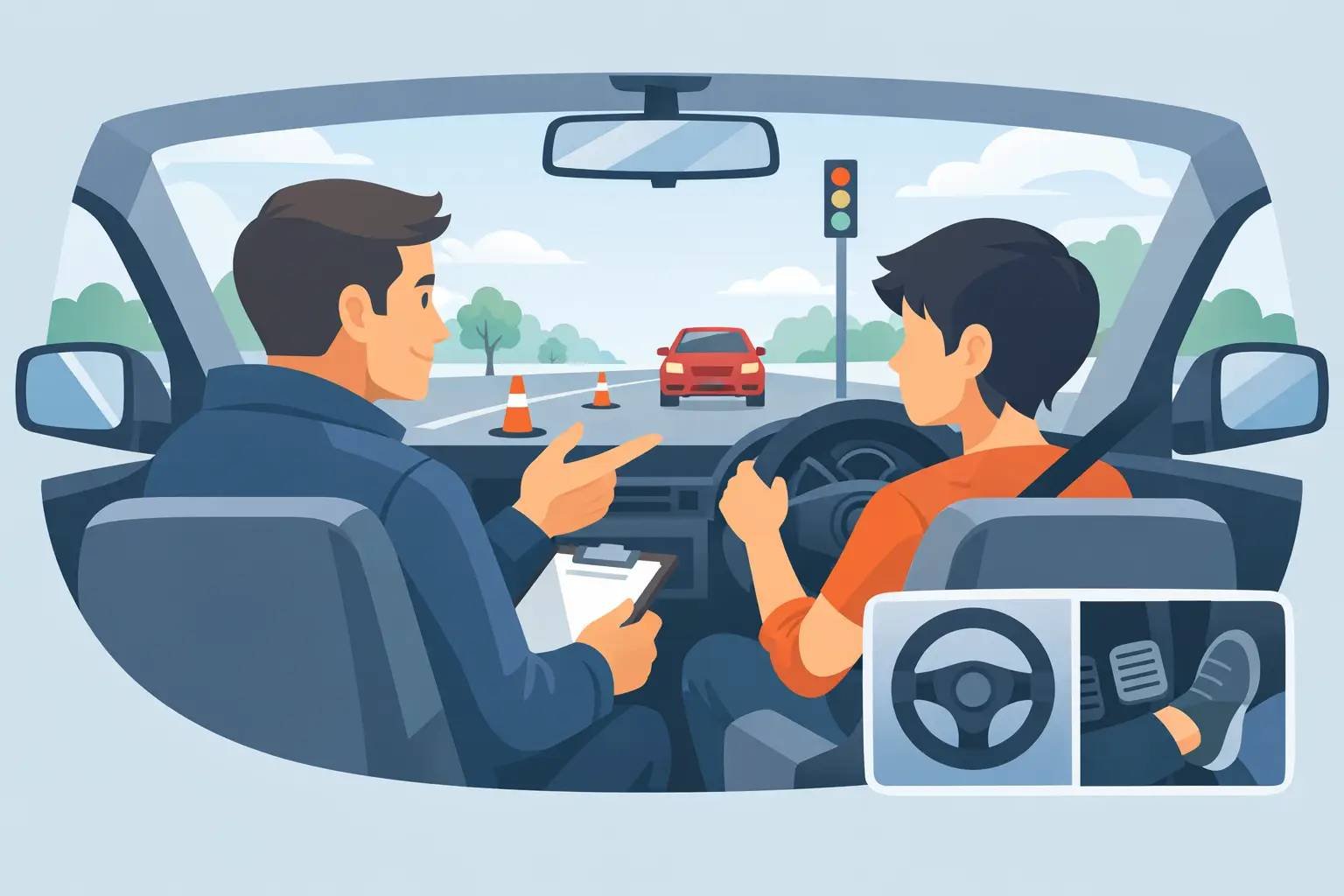
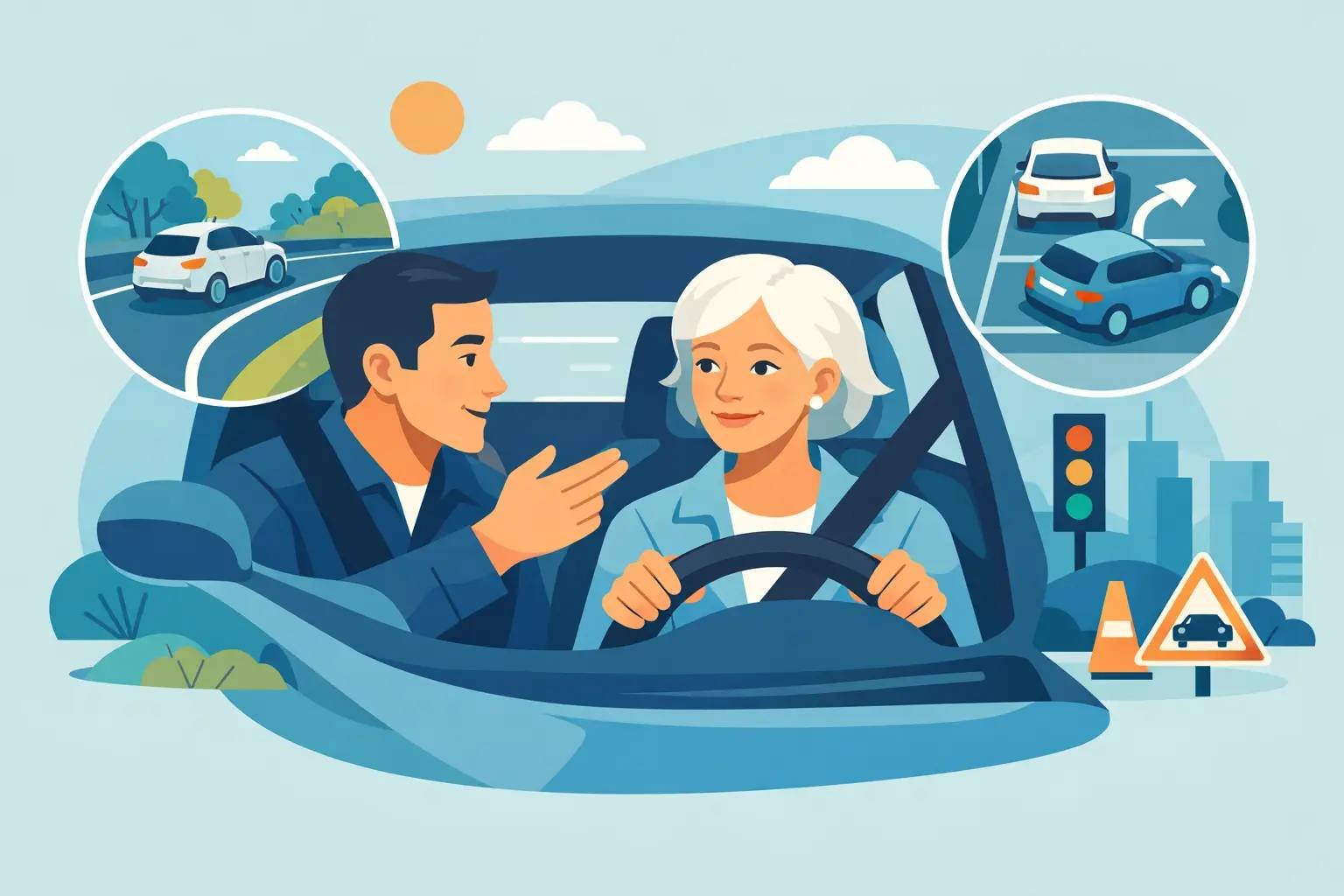
That question turns passive memorization into action training. You begin connecting signs to braking, mirror checks, lane choice, and scanning distance. This is also why coached driving lessons matter. An instructor can point out the sign, explain the hazard, and show you the timing of the response in real traffic.
At Pinnacle Driver Safety Orlando, that kind of step-by-step coaching is part of building road readiness, not just test preparation. For many new drivers, confidence improves once signs stop feeling like a quiz and start feeling like a repeatable system.
Common mistakes parents and new drivers should correct early
Some mistakes are easy to normalize, especially during casual practice. Rolling stops, late braking for warning signs, missing lane-control signs, and relying too heavily on GPS voice prompts all create weak habits.
GPS can help with navigation, but it should never replace sign reading. Devices do not always announce school zones, temporary lane changes, or every local restriction. Drivers still need to process the road environment for themselves.
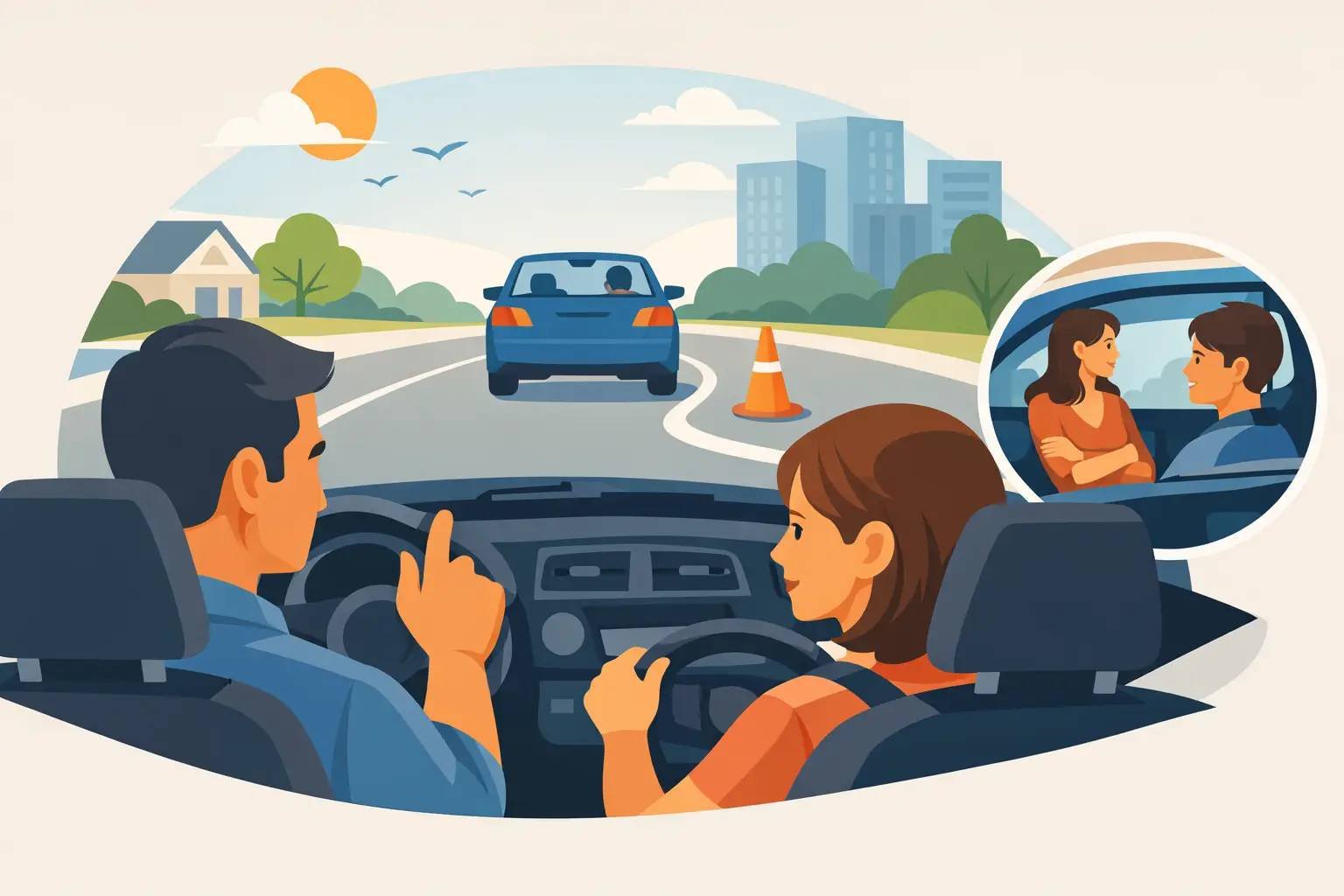
Parents should also watch for visual overload. If a teen freezes in busy corridors, the issue may not be steering skill alone. It may be that they are not scanning signs far enough ahead, so every decision feels sudden. That can be improved with structured practice and calm repetition.
A good target is simple: eyes moving, signs identified early, speed adjusted smoothly, and lane choice made with time to spare. That is what controlled driving looks like.
Road signs are not there to make driving harder. They reduce surprises, assign right-of-way, and give you time to stay out of trouble. The more clearly you read them, the calmer the road feels.