Most new drivers don’t get nervous because they can’t turn the wheel. They get nervous because traffic is unpredictable – and nobody wants their first real “moment” to happen with a parent in the passenger seat, a horn blaring behind them, and no plan for what to do next.
That’s the real purpose of a professional driving school. Yes, you’ll learn parking, lane changes, and how to pass a road test. But the way a driving school works, when it’s done correctly, is more like a structured safety program: controlled exposure to real roads, coached decision-making, and measurable progress from lesson to lesson.
How does a driving school work in real life?
A reputable driving school is built around four things: compliance, safety equipment, a step-by-step curriculum, and a system for tracking progress.
Compliance means the school and its instructors operate under Florida requirements, and you are trained in a way that supports the licensing process (especially for teens). Safety equipment includes professionally maintained vehicles, commercial insurance, and – ideally – dual-control brakes so an instructor can intervene if a situation develops faster than a new driver can process.
The curriculum is what turns driving from “random practice” into skill building. And progress tracking is what keeps lessons from becoming repetitive. A strong program documents what was covered, what needs reinforcement, and what comes next, so you can see forward momentum instead of guessing.
Enrollment and scheduling: what starts the process
Most families begin with a phone call or online request to match the right lesson package to the student. A first-time teen driver typically needs more structure and repetition than an adult who simply hasn’t driven in a few years, so the school may recommend different pacing and lesson counts.
Scheduling is usually organized around 1-2 hour lessons (exact length varies by school), with sessions spaced closely enough to maintain continuity. Once-a-month lessons can be tough for brand-new drivers because early skills fade quickly without repetition. On the other hand, cramming too many lessons into a short window can overload an anxious student. The best schedule is consistent and realistic.
Many Orlando-area schools offer a mobile model where the instructor picks up and drops off at home, school, or work. For busy households, this is not a luxury – it’s often the difference between completing training and letting it drag on for months.
The intake lesson: evaluation, comfort, and a baseline
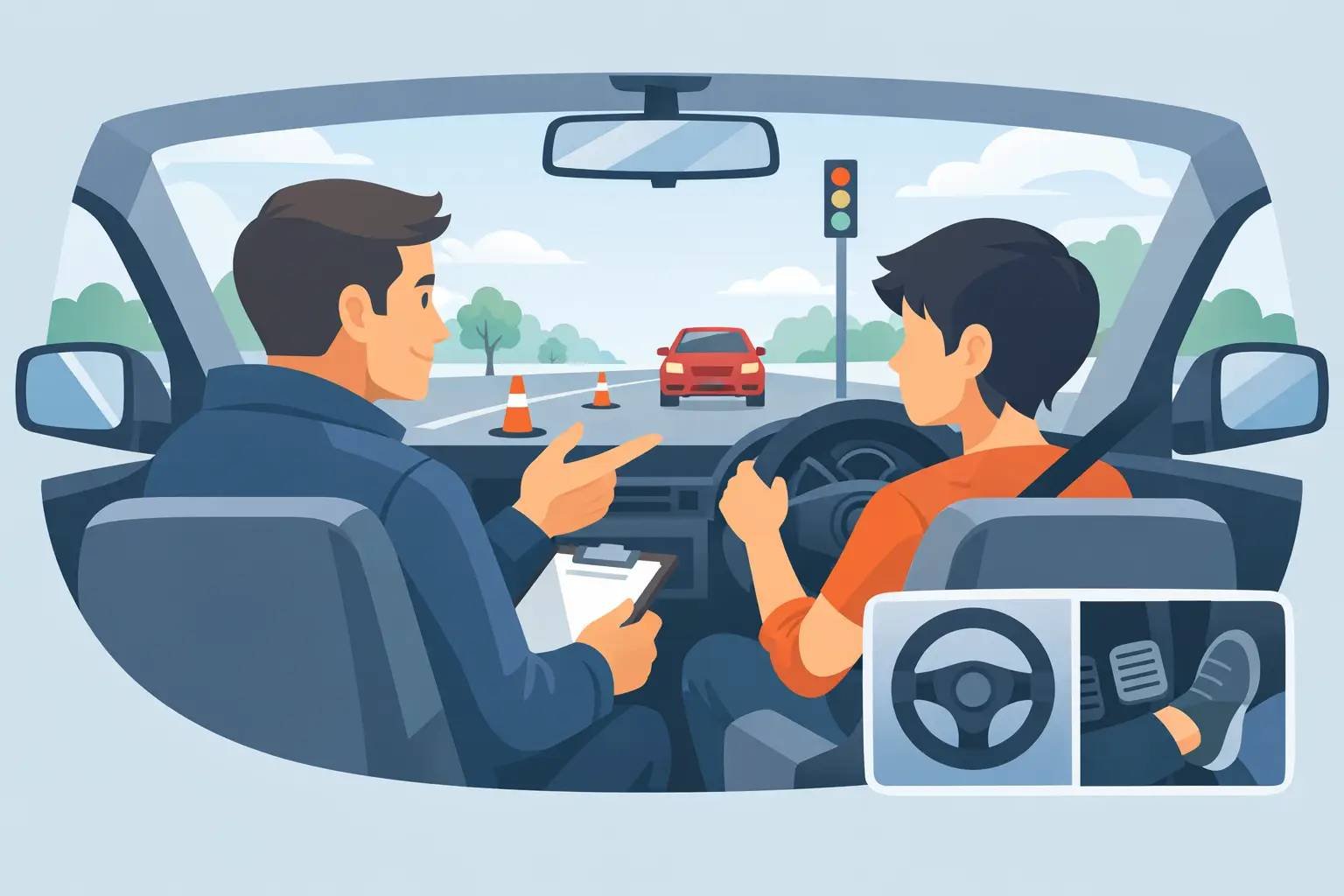
A driving school’s first on-the-road lesson is usually a blend of evaluation and instruction. The instructor is looking for baseline behaviors that affect safety right away: how the student adjusts the seat and mirrors, whether they understand dashboard indicators, how they use the brakes, and whether their eyes are scanning or locked onto one point.
For nervous drivers, that first session should also set expectations. A calm instructor will explain what the dual controls are, how coaching will work, and what to do if the student feels overwhelmed. Anxiety tends to drop when the student realizes the lesson has structure and the instructor has a plan.
If the student already has some practice with a parent, the instructor may identify habits that need to be corrected early. That is not criticism – it’s risk control. Small patterns like rolling stops, coasting through turns, or inconsistent lane position can become test failures later, but more importantly they can become collision risks now.
What happens during each driving lesson
A professional lesson isn’t just “drive around.” It follows a progression: preparation, a focused skill goal, coached practice, and a short debrief.
Preparation includes a quick walk-around and checks: seatbelt, mirrors, steering position, and confirming the day’s objective. The objective matters because it keeps the lesson measurable. “Today we’re working on lane changes with blind-spot checks” produces better outcomes than “let’s see how it goes.”
During coached practice, an instructor will give short, timed cues that match the student’s speed of processing. Early on, that might sound like, “Ease off the accelerator… cover the brake… check right mirror.” Later, the cues become higher-level: “Look two blocks ahead. What’s the risk developing?”
The debrief is where progress gets locked in. A disciplined school documents what was covered and assigns a clear next step. Schools that use a Training Action Plan (or similar documentation) can show families exactly which skills were introduced, practiced, or mastered, and which need reinforcement.
Skills progression: from basics to real-world complexity
Driving schools generally train from low-risk environments to higher complexity, but the pace depends on the student.
A true beginner typically starts in quiet neighborhoods or empty lots to learn the fundamentals: smooth braking, steering control, lane position, and scanning. Then the student moves to low-speed surface streets where they must manage intersections, right-of-way decisions, and speed control.
Once those basics are stable, lessons introduce the “decision layers” that cause most teen collisions: gap selection, left turns across traffic, reacting to aggressive drivers, and understanding what to do when someone else breaks the rules.
Eventually, training expands to multi-lane roads, heavier traffic, and – when appropriate – highways. Highway driving is not just about speed. It’s about space management: following distance, merging strategy, blind-spot awareness, and resisting panic when traffic compresses.
Parking and backing skills fit into the progression as well. Students usually learn angle parking and straight-line backing early, then move into reverse parking and tighter scenarios. In Florida road tests, precise control and observation are graded, but in real life, backing collisions in parking lots are common and expensive.
Defensive driving: the part many families underestimate
A safety-first school treats defensive driving as a core thread, not a one-time lecture. Defensive driving is not “driving slow.” It’s scanning, predicting, and creating time to respond.
That means students learn to identify conflict points: uncontrolled intersections, driveways where a car could pull out, pedestrians near crosswalks, and lane changes happening two cars ahead that could ripple back.
They also learn to manage following distance and avoid “packing” next to other vehicles where escape options disappear. This is especially relevant around Orlando traffic patterns: tourist drivers who miss turns, sudden stops near attractions, and heavy congestion during school and work commutes.
There’s a trade-off here. Defensive driving can feel mentally tiring at first because students are asked to think ahead instead of reacting late. But that mental workload drops as the habits become automatic – and the payoff is fewer near-misses and far better composure under pressure.
Florida requirements: where driving schools fit
For teen drivers, Florida has specific education requirements that families must follow. Many teens complete the state-required drug and alcohol course early, then move into behind-the-wheel training.
Florida also has a 6-hour behind-the-wheel training requirement for certain teen situations, and families often choose a driving school because it provides documented, compliant instruction rather than informal practice that’s hard to verify.
For the road test, a driving school helps in two ways: building the underlying skill so the test is not a gamble, and making sure the student understands how examiners score common items like observation, lane position, signaling, speed control, and right-of-way.
Vehicles, safety controls, and why they matter
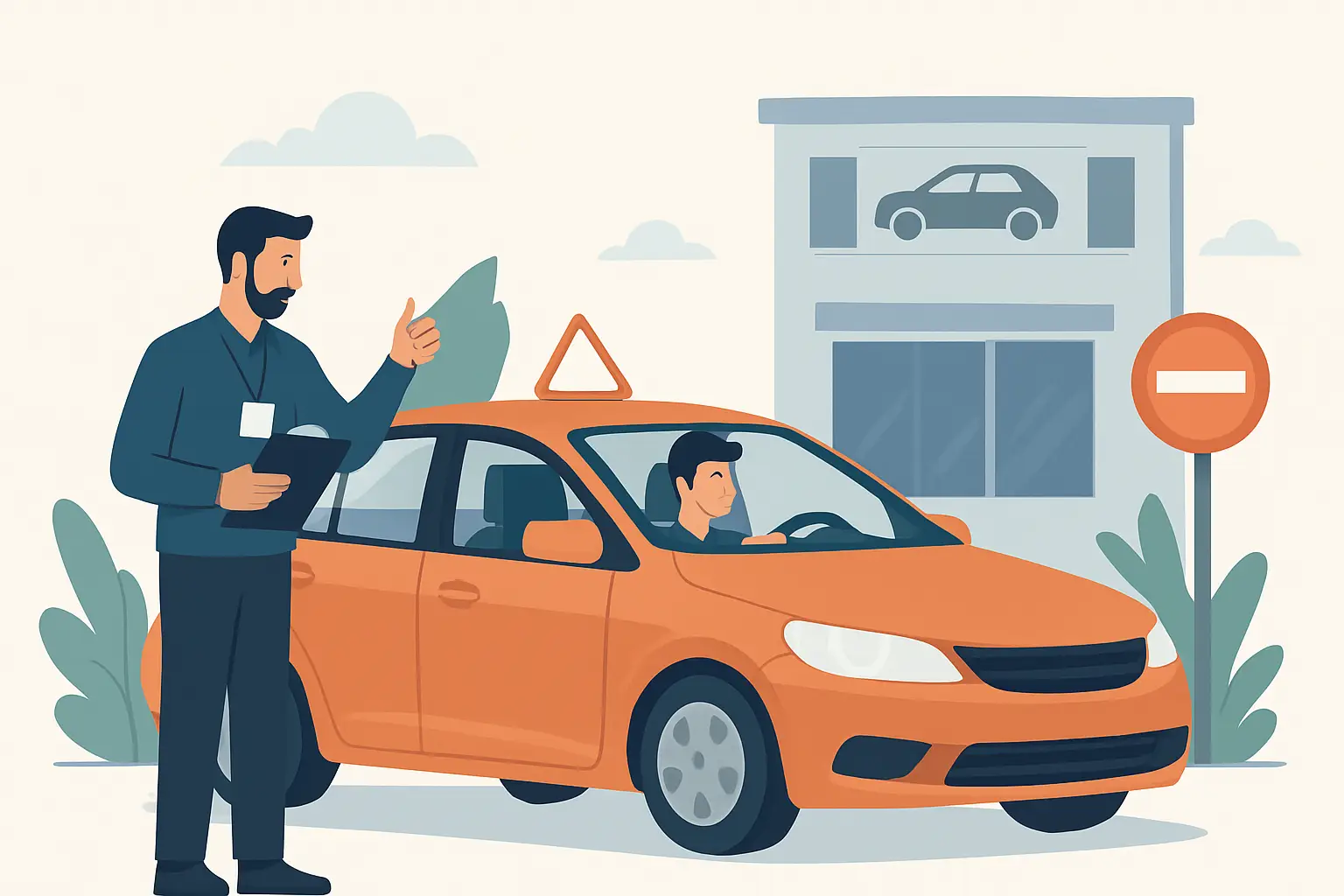
Families sometimes assume all driving lessons happen in a basic car with an instructor “just coaching.” A professional school typically uses training vehicles that are commercially insured and equipped for instruction.
Dual-control brakes are one of the most meaningful safety features. They allow the instructor to intervene if a student misjudges stopping distance, freezes, or is surprised by another driver’s behavior. That doesn’t replace learning – it creates a safer boundary while learning happens.
A well-run program also maintains vehicles carefully because the student is learning what “normal” feels like. If brakes are inconsistent or tires are worn, the student’s feedback loop is distorted.
Parents’ role: support without taking over
Parents are a huge part of a teen’s success, but it’s easy to unintentionally increase stress. When parents practice with teens, they often correct too many things at once, or they wait until the last second and then raise their voice – which teaches panic, not judgment.
A driving school helps by giving parents a clear structure: what the student is working on right now, what language to use for coaching, and what situations to avoid until the student is ready. If the school provides written lesson coverage, parents can reinforce the same standards rather than improvising.
Adult and relocating drivers: a different use case
Driving schools are not just for teens. Adults who have a license but haven’t driven in years often need confidence-building and updated habits. The focus is less on “rules of the road” and more on re-entering traffic calmly: merging, multi-lane positioning, and handling distractions.
Relocating drivers – whether from another state or another country – often need Florida-specific adaptation. That includes signage patterns, right turns at red lights (when permitted), school zone expectations, and the speed and density of local traffic. The goal is to shorten the adjustment period and reduce the risk of an early citation or collision.
Choosing lesson packages: what affects the number you need
Driving schools often offer structured packages such as 4, 6, 10, or 20 lessons. The right number depends on three things: starting experience, anxiety level, and how frequently the student practices between lessons.
A confident teen with regular supervised practice might use fewer professional lessons for polishing and road-test readiness. A nervous beginner, or a student who doesn’t practice outside lessons, often needs more sessions for repetition and true independence.
One approach that matches a safety-first philosophy is to treat lessons as an investment in lifetime crash avoidance, not just a sprint to the road test. That’s the difference between a driver who can pass on a good day and a driver who can stay safe on a bad one.
If you’re looking for that kind of structured, documented, on-the-road training with state-licensed instructors, dual-control vehicles, and mobile pick-up across Orlando, Pinnacle Driver Safety Orlando is built around defensive driving and measurable progress.
A helpful way to think about driving school is this: you’re not paying for someone to sit next to you while you drive. You’re paying for a controlled environment where mistakes become coaching moments instead of consequences – and where confidence is earned one decision at a time.