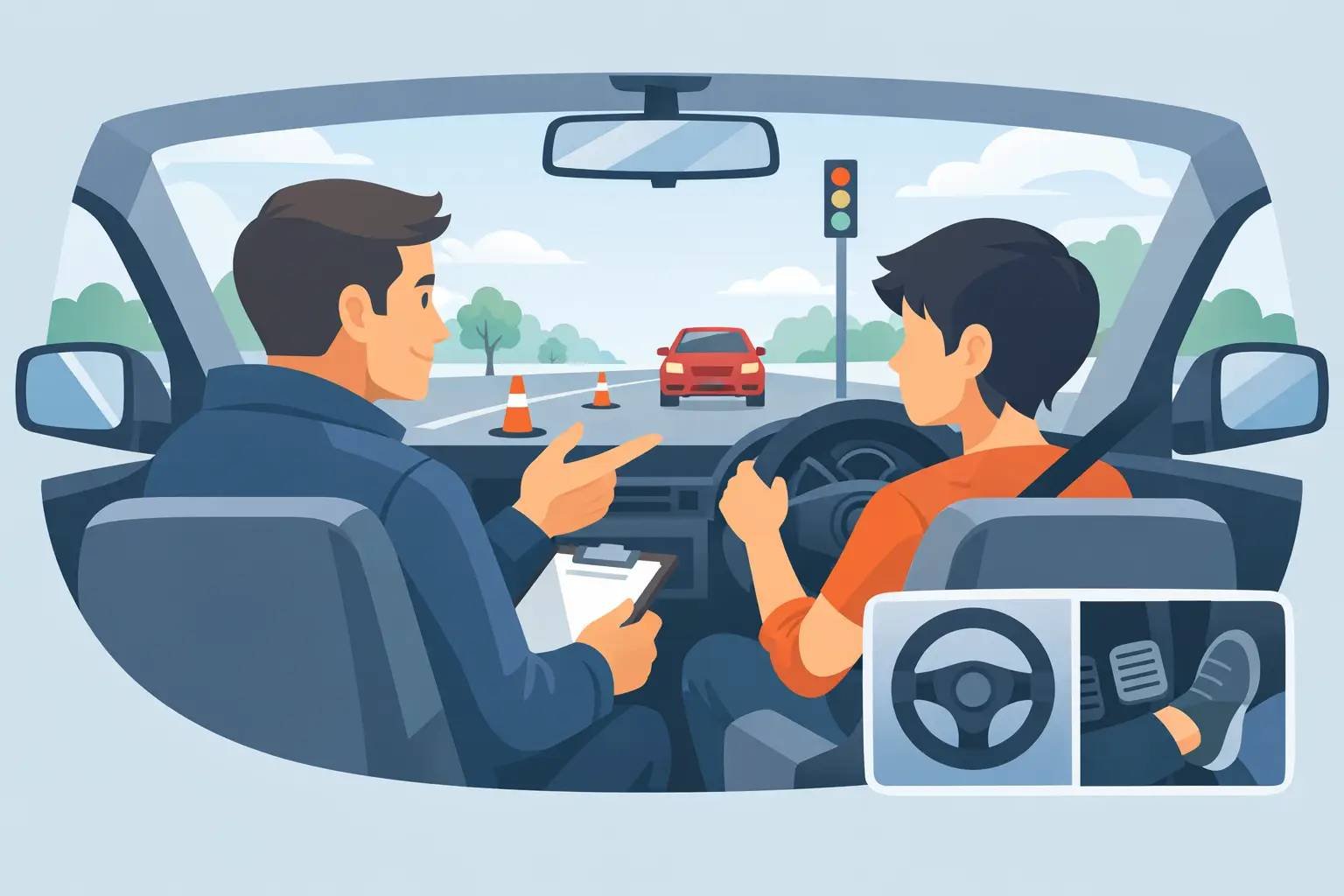
The first hard brake at a busy Orlando intersection can shake a new driver more than any written test ever will. That is why learning how to build driving confidence cannot be treated as a motivational issue alone. Confidence behind the wheel comes from skill, repetition, and calm decision-making under real traffic conditions.
For teens, nervous adult drivers, and people adjusting to Florida roads after moving from another state or country, the goal is not to feel fearless. The goal is to become steady, alert, and capable. Real confidence is built when a driver knows what to do, has practiced it correctly, and can recover when traffic does something unexpected.
What driving confidence actually means
Many people confuse confidence with comfort. They are not the same. A driver may feel comfortable in an empty parking lot and still freeze during a lane change on Colonial Drive or misjudge speed entering a major intersection. Confidence means you can perform the right action with control, even when conditions are less than ideal.
That matters because overconfidence is a safety problem, especially for teens. A new driver who believes they are “fine” after only a few easy trips often takes on more risk than their skill level supports. On the other hand, a driver with too little confidence may hesitate, stop unpredictably, or miss safe openings in traffic. Both extremes create danger.
The right target is controlled confidence. That comes from structure, not guesswork.
How to build driving confidence step by step
The safest way to approach how to build driving confidence is to train in layers. Each layer should be practiced enough that it starts to feel manageable before adding a more complex environment.
Start where the driver can succeed
A nervous driver does not need to begin on the busiest road available. Starting too big often creates panic, and panic teaches the wrong lesson. Instead, begin in low-pressure settings where the driver can focus on basic control – steering smoothly, braking progressively, accelerating evenly, checking mirrors, and keeping proper lane position.
This early stage is not wasted time. It creates the foundation for every later skill. If a driver is still fighting the steering wheel or braking too late, city traffic will only magnify those problems.
Add one variable at a time
Once basic vehicle control is consistent, increase difficulty gradually. Move from empty lots to quiet neighborhood streets. Then add moderate traffic, multi-lane roads, controlled intersections, parking practice, and lane changes. After that, work on higher-speed roads, complex turns, and heavier traffic flow.
This progression matters. If a learner is trying to process speed, mirrors, signals, blind spots, traffic lights, pedestrians, and navigation all at once, confidence usually drops fast. A better method is to isolate skills, practice them until they improve, and then combine them.
Repeat skills in real conditions
Confidence does not transfer automatically from one road to another. A teen may do well near home and still become anxious in unfamiliar areas, school traffic, or afternoon congestion. That is normal. Practice must include different times of day, different road types, and common local challenges.
For Orlando-area drivers, that may include busy multilane corridors, tourist traffic, sudden braking patterns, frequent construction changes, and weather-related visibility issues. A driver who has only practiced under ideal conditions is not truly prepared.
Why nervous drivers lose confidence
Most anxious drivers are not weak drivers. Usually, they are overloaded drivers. They are trying to think about every detail at once, and the brain starts to treat driving as a threat rather than a skill.
Sometimes the trigger is a previous mistake, a close call, or a failed road test. Sometimes it is pressure from a parent or family member in the passenger seat. Adult drivers returning after a long gap may also feel embarrassed that something which once felt ordinary now feels difficult.
The solution is not to “just relax.” The solution is to reduce overload through organized instruction and predictable repetition. When a driver knows what skill is being practiced, why it matters, and what success looks like, anxiety usually starts to decrease.
Safety habits that create confidence
A surprising amount of confidence comes from simple routines. Drivers feel more in control when they stop improvising the basics.
Before moving the vehicle, seat position, mirror setup, hand placement, and visual readiness should be checked the same way every time. During the drive, scanning habits should also become consistent. Mirror use, intersection checks, following distance, speed control, and lane position should not depend on mood.
Defensive driving is especially important here. A driver becomes more confident when they stop assuming others will do the correct thing. If you expect sudden stops, late turns, poor merges, and distracted behavior from nearby drivers, you leave yourself more time and space to respond safely. That reduces panic.
This is one reason safety-first instruction matters. Confidence built on shortcuts is fragile. Confidence built on disciplined habits holds up much better under stress.
How parents can help without making it worse
Parents have a major influence on how quickly a teen improves. They can also, without meaning to, slow progress. If every practice drive turns into a stream of warnings, corrections, and visible panic, the teen often becomes tighter and less consistent.
Good support is calm, specific, and limited. Give one correction at a time. Avoid grabbing the dash, gasping, or issuing late instructions. If the driver makes a mistake, address it after the immediate situation is under control. During the drive, the priority is safety and clear direction.
It also helps to keep expectations realistic. Passing a permit test or completing a few lessons does not mean the learning phase is over. Driving confidence grows over time through monitored exposure to more challenging situations. Families usually get better results when practice is scheduled and purposeful rather than rushed between errands.
When professional coaching helps most
There is a point where family practice alone may not be enough. That is especially true when the driver is very nervous, has picked up inconsistent habits, or needs a clear path toward road-test readiness.
A professional instructor brings several advantages. First, the teaching is structured. Skills are introduced in a sequence, not randomly. Second, feedback is objective. The learner hears corrections from someone trained to teach, not from a stressed family member. Third, safety controls matter. In a properly equipped training vehicle with dual-control brakes, the student can practice with less fear and the coach can intervene if needed.
Documented lesson planning also makes a difference. A step-by-step training plan gives the learner and family a clear record of what has been covered, what still needs work, and where confidence is improving. That kind of measurable progress tends to calm both teens and parents because it replaces vague impressions with facts.
At Pinnacle Driver Safety Orlando, that structured, safety-first approach is central to confidence-building. For many learners, especially nervous beginners and adults returning to the road, calm repetition with licensed instructors is what changes driving from stressful to manageable.
It depends on the driver
There is no fixed timeline for how to build driving confidence because not all learners start in the same place. A teen with no driving history may need time to build basic judgment from the ground up. An adult with prior experience may regain confidence more quickly but still need help adjusting to Florida traffic patterns, signage, and local road behavior.
Some drivers need more work on parking and vehicle control. Others are comfortable with control but struggle with speed management, left turns, lane changes, or merging. That is why one-size-fits-all training often falls short. Confidence improves faster when practice targets the actual weak point instead of repeating what the driver already does well.
Progress also is not perfectly linear. A driver may handle neighborhood streets with no problem, then feel rattled on a busy arterial road. That does not mean training failed. It means the next layer of practice has been identified.
Signs confidence is becoming real
A driver is building healthy confidence when their actions become more consistent, not just more relaxed. They scan earlier, brake more smoothly, leave better following distance, and make decisions with less delay. They recover from minor mistakes without spiraling. They ask better questions because they understand the situation more clearly.
Another good sign is that the driver starts to self-correct. Instead of waiting for someone else to point out every issue, they notice when a turn was too wide, when a stop was rushed, or when mirror checks were late. That kind of awareness is what leads to long-term improvement.
The best confidence is quiet. It does not need bravado. It shows up in good spacing, steady steering, patient judgment, and safe choices when the road becomes unpredictable.
If driving still feels intimidating right now, that does not mean you are not capable. It usually means you need a clearer process, enough repetition, and the right level of challenge at the right time. Confidence follows competence, and competence is built one safe, well-practiced decision at a time.