You search “contact driving school near me” because something is time-sensitive. A teen’s permit just came in. A road test slot opened up. A nervous driver finally said, “I’m ready,” and you do not want to lose that moment. The fastest way to get a real answer (not a vague quote or a week of phone tag) is to know what to ask, what to listen for, and what a professional school should be able to confirm in plain language.
This is a practical guide to contacting a local driving school the right way – especially in the Orlando area, where traffic patterns, school zones, tourism congestion, and high-speed corridors can turn “basic driving practice” into a high-stakes learning environment.
When “contact driving school near me” is the right next step
Many families wait until the road test is on the calendar. That can work, but it can also force rushed lessons and shortcuts that show up later as near-misses, tickets, or panic behind the wheel.
Contacting a school earlier makes sense if the driver is brand new, if confidence is low, if parents cannot consistently practice due to work schedules, or if you want training that is documented and structured rather than “we drove around until it felt okay.” It is also the right move for adults returning to driving after a lapse, and for out-of-state or international drivers who need Florida-specific adjustment.
The goal of the first call or message is not to “buy lessons.” It is to confirm you are speaking with a team that can train safely, legally, and predictably – with an actual plan.
What to have ready before you contact a driving school near me
If you want accurate scheduling and pricing on the first interaction, give the school enough information to place the student correctly.
Start with the student’s age and current status (no permit yet, learner’s permit, or licensed). Mention the main goal: beginner foundations, mandatory teen requirements, road-test prep, confidence building, refresher driving, or relocation support. Then share your general availability (after school, weekends, mornings) and where pickups would occur (home, school, work, campus).
One more detail matters more than most people expect: the learner’s comfort level. If the driver is anxious, has had a previous scare, struggles with speed control, or freezes at left turns, say so. A safety-first program will adjust the progression and environment to prevent overwhelm.
The questions that reveal a professional school fast
Most driving schools can tell you their hourly rate. Fewer can clearly explain how they keep students safe, how they measure progress, and what happens during each lesson. That is where your questions should focus.
Are your instructors Florida state-licensed?
This is not a “nice to have.” Licensing requirements exist for a reason: instruction is a safety service. You should hear a direct, confident yes. If the answer is unclear, changes subject, or sounds like “we’ve been doing this a long time,” treat that as a warning.
Are your training vehicles commercially insured, and do they have dual controls?
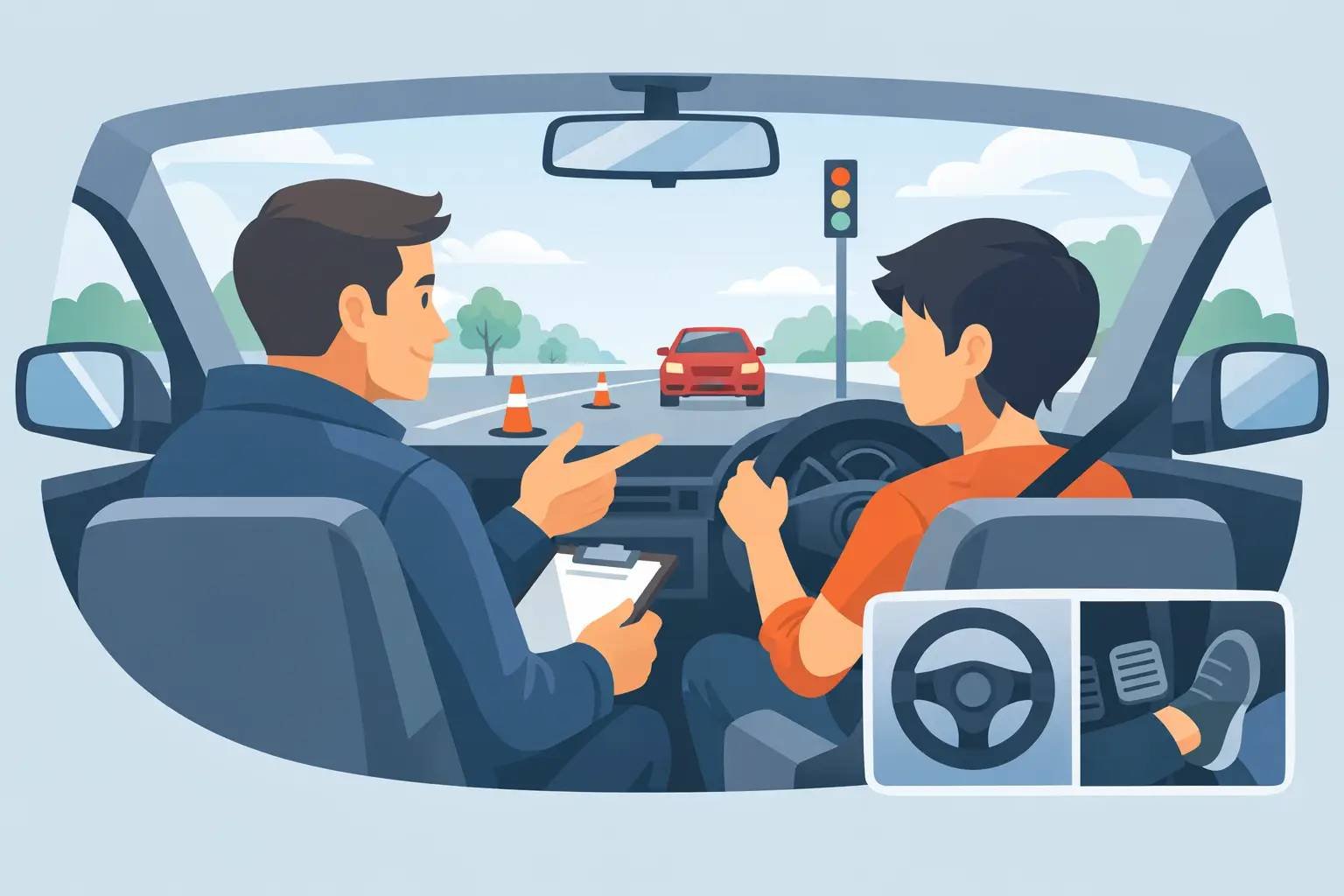
For parents of teens, this is one of the most important protections available. Dual-control brakes allow the instructor to intervene when a student misjudges a gap, accelerates unintentionally, or fails to respond quickly enough. Commercial insurance is part of operating professionally, not an add-on.
If the school uses the student’s family car, ask what that means for safety and liability, and whether the instructor can still provide an intervention system. Sometimes training in the family vehicle is a reasonable later-stage option, but early lessons often benefit from a purpose-equipped car.
How do you structure lessons, and do you document what was covered?
A legitimate training program can tell you exactly how skills progress. New drivers need step-by-step development: starting, stopping, steering control, lane position, scanning, right-of-way decision making, intersections, parking, and then higher complexity like merges, multi-lane traffic, and night or rain conditions.
Documentation matters because it creates continuity between lessons and gives parents visibility. Ask if the school tracks skills covered and skills still in progress. You want something more concrete than “we’ll see how they do.”
Do you offer pickup and drop-off?
For Orlando families and students, door-to-door service is not just convenience. It reduces missed lessons, eliminates the scramble to meet at a lot across town, and allows training to happen in the student’s real driving environment – neighborhood exits, nearby school zones, and the actual routes they will drive.
Confirm the pickup radius, any travel fees, and how scheduling is handled.
What packages do you recommend, and why?
A school that cares about safety will not push a one-size-fits-all number. Expect a range: many programs offer 4+, 6+, 10+, or 20+ lesson options because drivers develop at different speeds.
This is where trade-offs show up. A smaller package can be enough for an experienced permit holder who mainly needs road-test polish. For a true beginner, too few lessons can create a dangerous mismatch: the student may “know what to do” but cannot do it consistently under pressure.
How do you prepare students for the Florida road test?
Road-test prep should not be random practice. A professional answer includes step-by-step progression and practice on the specific skills tested: controlled stops, proper lane usage, turning accuracy, scanning habits, parking maneuvers, and calm compliance with instructions.
Also ask how the school handles nerves. Many otherwise capable drivers fail because anxiety disrupts basics like speed control and observation. Coaching for calm, consistent execution is part of legitimate preparation.
How to contact a driving school and actually get a response
If you call during business hours and get voicemail, leave a message that is easy to return. State the student’s age, permit status, the goal (beginner lessons, road test, confidence), and the neighborhood or pickup location. Then give two time windows when you can answer.
Text and online forms can be efficient, but only if the school replies with specific next steps. A quality response should include available lesson windows, how pickup works, what to bring, and what the first lesson covers. If you get a generic “we’ll contact you soon,” follow up once, then move on.
Email works well when you want documentation about policies, cancellations, and what is included in a package. If a school avoids written answers to basic operational questions, that is useful information.
Red flags that should make you pause
Some issues are minor preferences. Others indicate a risk you do not want with a teen driver.
Be cautious if the school will not confirm licensing and insurance, cannot explain whether they use dual controls, or cannot describe a skill progression beyond “we’ll drive around.” Be cautious if pricing is quoted but lesson length, pickup logistics, and cancellation terms are unclear.
Also listen for the “pass the test fast” pitch with no mention of defensive driving, scanning, or decision-making. Passing the test is a milestone. Staying crash-free is the mission.
What “safety-first” training should sound like
When you contact a serious driving program, you should hear language about risk management and building habits: scanning far ahead, managing following distance, identifying conflict points at intersections, and making decisions early instead of late.
You should also hear patience, because anxiety is common. Teens often fear making a mistake in front of a parent. Adult drivers may fear traffic speed or complex intersections. A disciplined instructor is calm, clear, and consistent – and sets standards without shaming the learner.
One local option that operates this way is Pinnacle Driver Safety Orlando, which focuses on defensive driving, structured lesson packages, documented progress through a Training Action Plan, and professionally equipped training vehicles with dual-control brakes.
Picking the right package without overbuying or underbuying
Families often ask, “How many lessons do we really need?” The honest answer is: it depends on the student’s starting point, practice time outside of lessons, and how quickly they can make safe decisions under pressure.
If the driver is truly new, expect that confidence and competence will come in layers. Early lessons build basic vehicle control. Mid-stage lessons build consistency in traffic. Later lessons focus on judgment: gap selection, lane changes with proper checks, and managing distractions.
If the driver already practices regularly with a parent and mostly needs professional correction and test readiness, a shorter package may be reasonable. If home practice is limited, or the driver is nervous, a longer package often costs less in the long run because it prevents the cycle of failed tests, rushed make-up lessons, and unsafe independent driving.
After you make contact: what to ask before you book the first lesson
Before you commit, confirm lesson length, pickup location rules, and what the student should bring. Ask how instructors communicate progress to parents (especially for teens) and whether you will receive notes or a skills checklist after each session.
It is also fair to ask how the school handles weather and heavy traffic days. In Florida, rain is not rare, and learning in rain can be valuable when managed correctly. A thoughtful school will explain when they train in wet conditions for skill building and when they reschedule for safety.
Finally, ask how they match instructors to students. Some learners need a slower pace and extra reassurance. Others want direct correction and a faster tempo. The best programs can adapt while maintaining firm safety standards.
A good driving school interaction should leave you feeling calmer, not more uncertain. If the school can answer clearly, schedule predictably, and explain how they build safe habits step by step, you are not just booking lessons – you are putting structure around one of the highest-risk transitions a young driver will make.
Choose the team that treats driving as a lifetime responsibility, because that mindset tends to show up later at the exact moment it counts: a quick decision, a controlled response, and a safe ride home.