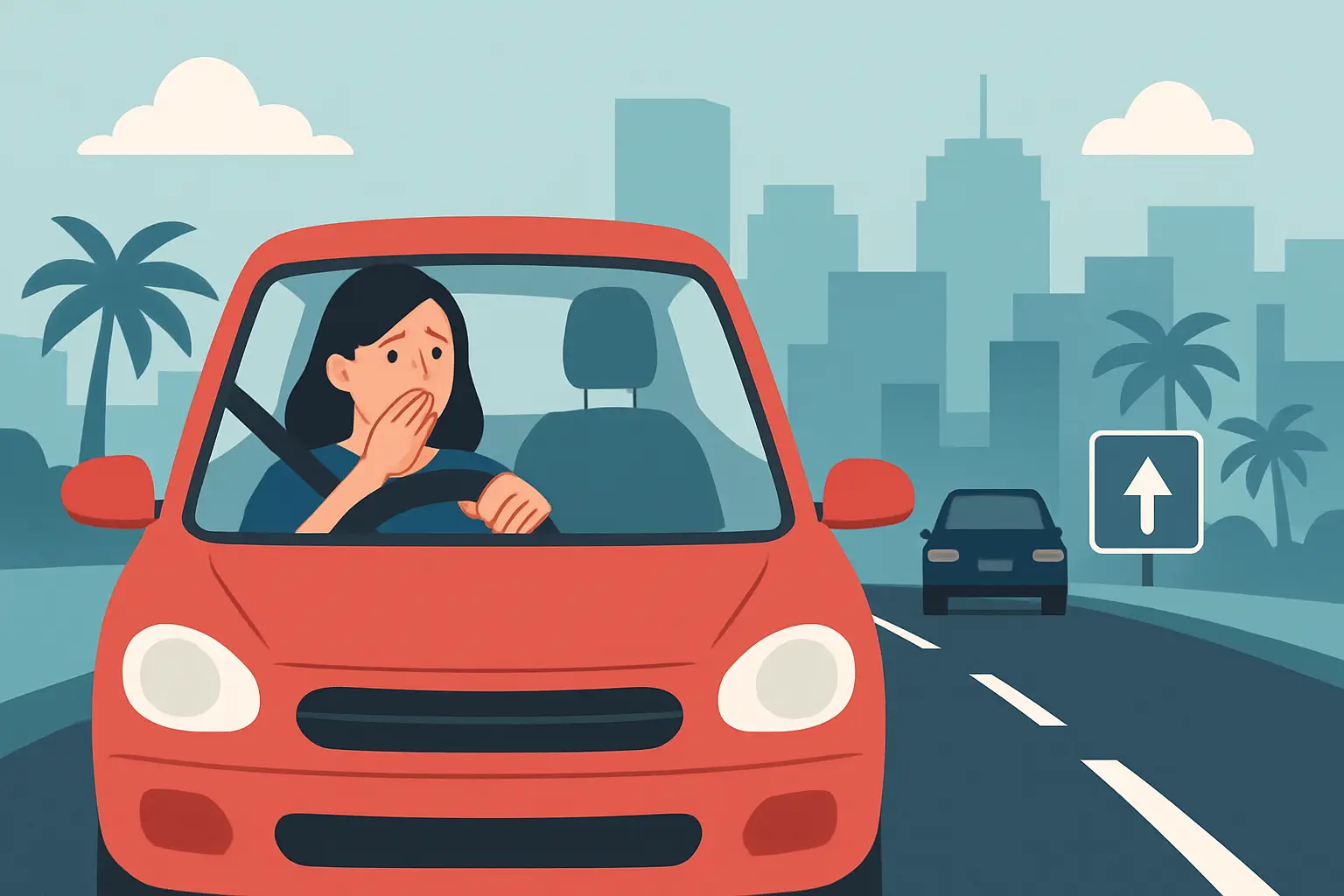
If your stomach drops every time you picture I-4, a busy left turn on Colonial, or a quick merge near the theme parks, you are not being dramatic. Orlando traffic is fast, crowded, and unpredictable – and nervous drivers feel that pressure sooner and louder than everyone else.
Anxiety behind the wheel is also rarely about “not knowing the rules.” Most nervous drivers know what they should do. The problem is the moment-to-moment load: scanning signs, judging speed, reading other drivers’ intent, and making decisions with consequences. The right instruction lowers that load on purpose, then rebuilds it in controlled steps.
This guide explains what driving lessons for nervous drivers Orlando should look like when safety is the priority, not just getting through a road test.
Why Orlando can trigger driving anxiety
Orlando asks drivers to do a lot at once. You have heavy commuter corridors, constant construction patterns, and a mix of local drivers, tourists, and commercial traffic sharing the same lanes. That mix creates uncertainty – and uncertainty is gasoline for anxiety.
Many nervous drivers are reacting to specific scenarios: multi-lane lane changes, unprotected left turns, roundabouts, sudden braking, or getting honked at when they hesitate. Some are carrying a past event – a near-miss, a crash, or a panic episode – and their body treats driving like a threat even when their mind says it should be fine.
A good lesson plan doesn’t argue with that feeling. It builds proof. Repetition in a controlled setting teaches your brain, “I can handle this situation safely,” and that’s what reduces the physical stress response over time.
What “nervous driver” lessons should actually include
Not every driving program is designed for anxiety. Nervous-driver instruction needs two things at the same time: calm coaching and high standards. If you only get reassurance, you may feel better for a day but still lack the skills that prevent mistakes. If you only get pressure, you may comply short-term and avoid driving later.
Here’s what to look for.
A staged route progression (not random errands)
A productive first lesson usually starts in lower-demand environments, then expands outward. Think residential streets and lightly traveled roads first, then busier arterials, then more complex intersections, then highway work when you are ready.
A nervous driver improves fastest when the instructor can explain the “why” behind each step and keep the challenge level just above comfortable – not so easy that you stall out, and not so hard that you shut down.
Defensive driving as the foundation
For anxious drivers, defensive driving is not a bonus topic. It is the system that replaces panic with process.
That includes following distance you can defend, speed choice that matches conditions, early hazard recognition, and decision rules that prevent last-second moves. Defensive driving turns “anything could happen” into “I know what to do if it happens.”
Real coaching language in the car
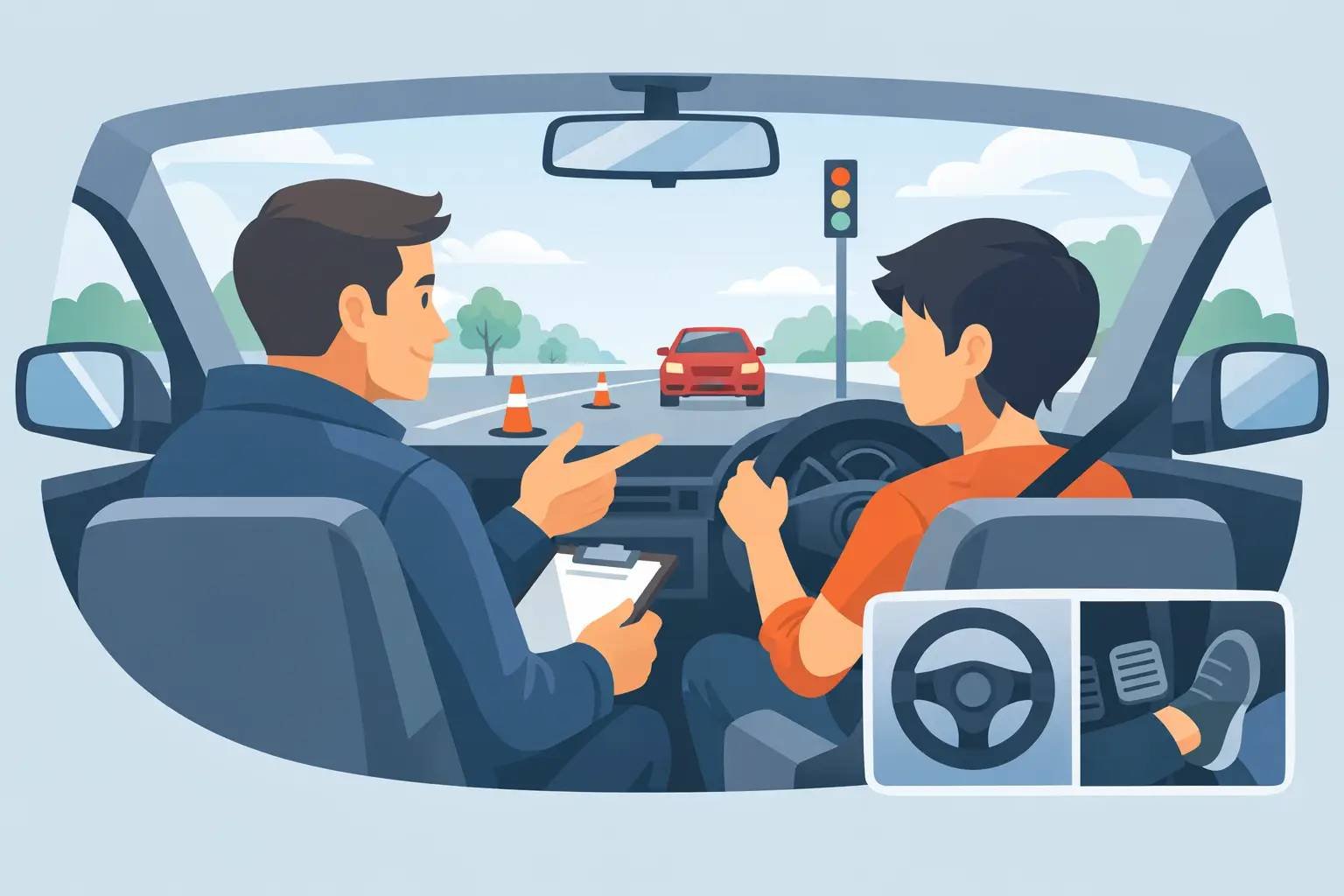
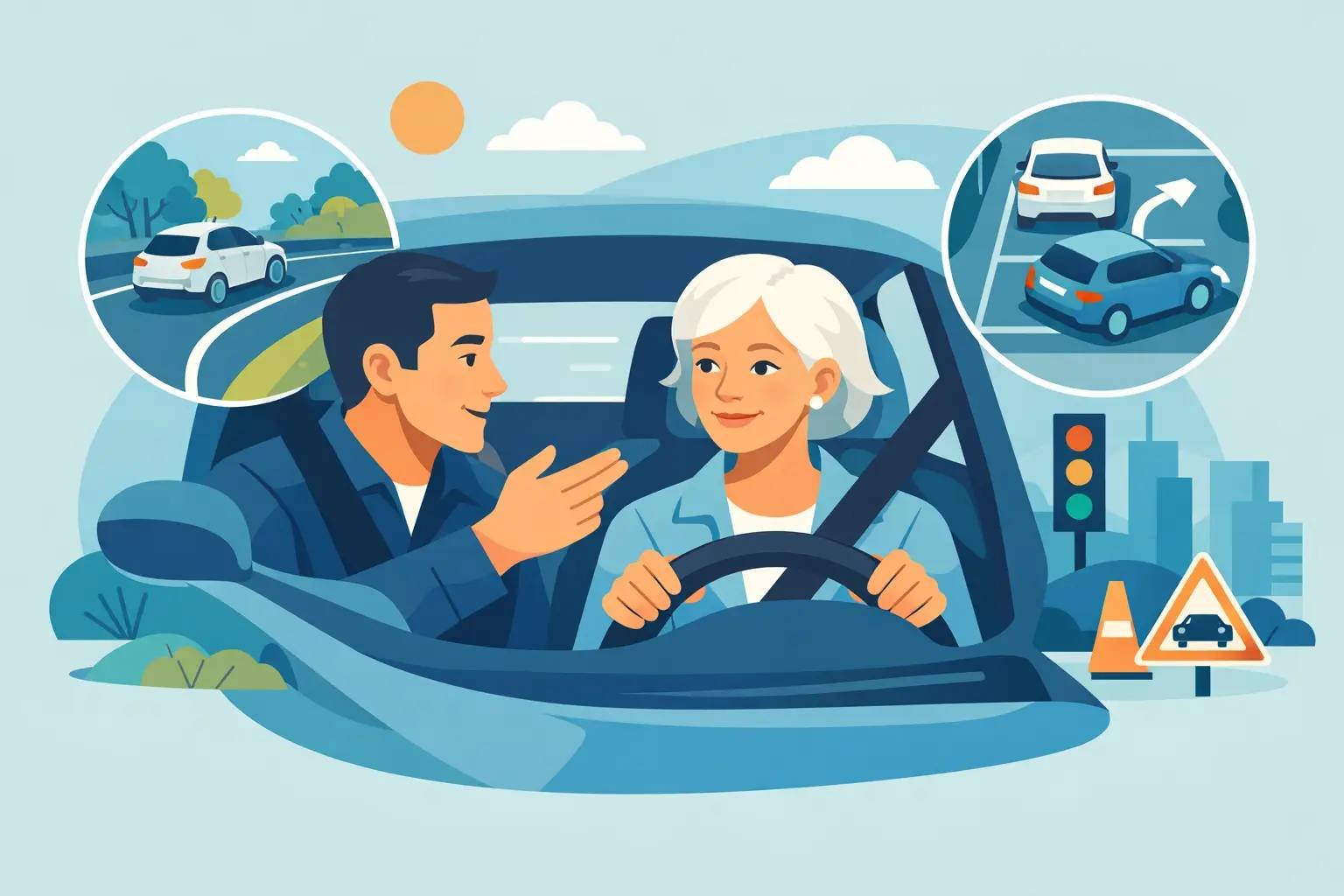
Nervous drivers don’t need a lecture. They need short, clear instructions at the right time, and then a brief debrief afterward.
During a maneuver, the coaching should be simple and immediate: where to look, what to check, when to brake, when to commit. Afterward, you should hear what went well and what gets adjusted next time. That structure keeps emotions from taking over the lesson.
Measurable documentation
Anxiety thrives in vague progress: “I guess I’m getting better?” Documentation replaces that with facts.
A written plan that tracks what you covered, what you practiced, what the instructor observed, and what’s next is more than paperwork. It’s a confidence tool for the driver and a transparency tool for parents.
Safety equipment matters more when you’re nervous
A nervous driver’s biggest fear is losing control – of the car or the situation. Training vehicles with the right safety features help reduce that fear because the instructor can actively support safety if something goes wrong.
Dual-control brakes are a prime example. They do not replace instruction or make driving “easy,” but they reduce the perceived and real risk during early lessons and complex situations. That safety net lets the driver focus on the process instead of spiraling into “what if.”
Commercial insurance and properly maintained training vehicles are also part of this. Nervous drivers should not feel like they are practicing in a setup that cuts corners.
How a step-by-step lesson plan builds confidence
Confidence isn’t a pep talk. It’s the result of repeated, successful decision-making under gradually increasing demand.
A strong progression typically looks like this:
First, you establish cockpit routine and vehicle control: seating position, mirror setup, steering control, smooth acceleration and braking, and low-speed turns. Then you add scanning patterns and lane discipline: keeping position, checking mirrors with a purpose, and understanding where risk actually comes from.
Next comes intersection management: stops, right-of-way decisions, timing, and controlling the approach speed so you have options. After that, you tackle lane changes and merges with a system: signal, check mirrors, head check, manage speed, choose a gap, and commit smoothly.
Only once those systems are stable should you layer in higher-speed environments like highways or complex corridors. If you rush to the “scary stuff” too soon, you may survive the lesson but you won’t retain calm.
Driving lessons for nervous drivers Orlando: what to practice first
The fastest confidence wins usually come from skills that reduce surprise.
Start with space management. Following distance and early braking give you time – and time is what your nervous system is asking for. Then practice looking farther ahead. Many anxious drivers stare at the bumper in front of them, which makes everything feel sudden. When your eyes move up the road, your decisions feel slower and more controlled.
Next, practice calm lane positioning and predictable signaling. Nervous drivers often fear other drivers’ reactions, so being predictable is a powerful safety move. Finally, rehearse a few high-frequency Orlando situations in a controlled way: multi-lane lane changes, busy intersections, and merges.
If you’re a teen driver, this progression should also align with Florida requirements and road test readiness. If you’re an adult returning to driving or new to Florida, you may need additional time on signage, right turns on red rules, school zones, and local traffic patterns.
Picking the right lesson package (and why “more” is often safer)
Nervous drivers usually improve best with continuity. One or two lessons can help you get started, but anxiety reduction typically needs repetition across different days and traffic conditions.
A 4-lesson package can be a strong beginning for building comfort and establishing routines, especially if you have some prior experience. A 6-lesson package often gives enough runway to stabilize lane changes, intersections, and test-prep fundamentals. For drivers with high anxiety, long gaps between attempts, or limited real-world exposure, 10 or 20 lessons can be the difference between “I passed” and “I can drive safely when it’s busy, raining, or unfamiliar.”
It depends on your starting point. A teen who has never driven may need a longer progression than a licensed adult who simply hasn’t driven in a few years. What matters is that the package supports mastery, not just exposure.
What parents of nervous teen drivers should know
If your teen is nervous, pressure usually backfires. But permissiveness can also backfire because driving is not optional in terms of responsibility. Teens need clear standards, coached practice, and accountability.
Ask for visibility into what’s being taught, what your teen is doing well, and what needs work. Also ask how the school handles risk management during lessons, especially in higher-traffic environments. The goal is not to “toughen them up.” The goal is to teach them to make safe decisions when other drivers are impatient.
A strong program will also set expectations about practice outside lessons. If your teen only drives during professional instruction, progress will be slower. A good plan coordinates professional lessons with supervised practice in low-risk settings.
How door-to-door lessons reduce friction for busy families
For nervous drivers, consistency matters. For families, logistics can be the obstacle that breaks consistency.
A mobile model with pick-up and drop-off from home, school, or work helps keep lessons regular. It also reduces the pressure of having a parent “teach” every session, which can be emotionally loaded for both sides.
If you’re balancing school, sports, or work shifts, predictable scheduling and clear lesson structure can keep progress steady instead of restarting every few weeks.
What high-integrity instruction looks like
When you’re anxious, you want someone patient. When you’re learning to drive, you also need someone disciplined.
Look for state-licensed instructors, commercially insured vehicles, and a training process that documents what was covered. Ask how the instructor handles a student who freezes, over-brakes, or hesitates at turns. The best answer is not “we push them through.” It’s “we slow the scenario down, teach a decision rule, and rebuild confidence through repetition.”
If you’re looking for a local option built around defensive driving, documented progress, and dual-control training vehicles, Pinnacle Driver Safety Orlando offers structured on-the-road lessons across the greater Orlando area, including confidence-building coaching for nervous drivers.
A final practical note: progress is rarely a straight line. Some days will feel easy and others will feel loud again. Stay with the process, measure your skills rather than your emotions, and keep your standard simple – every drive is a chance to make the next safe decision.