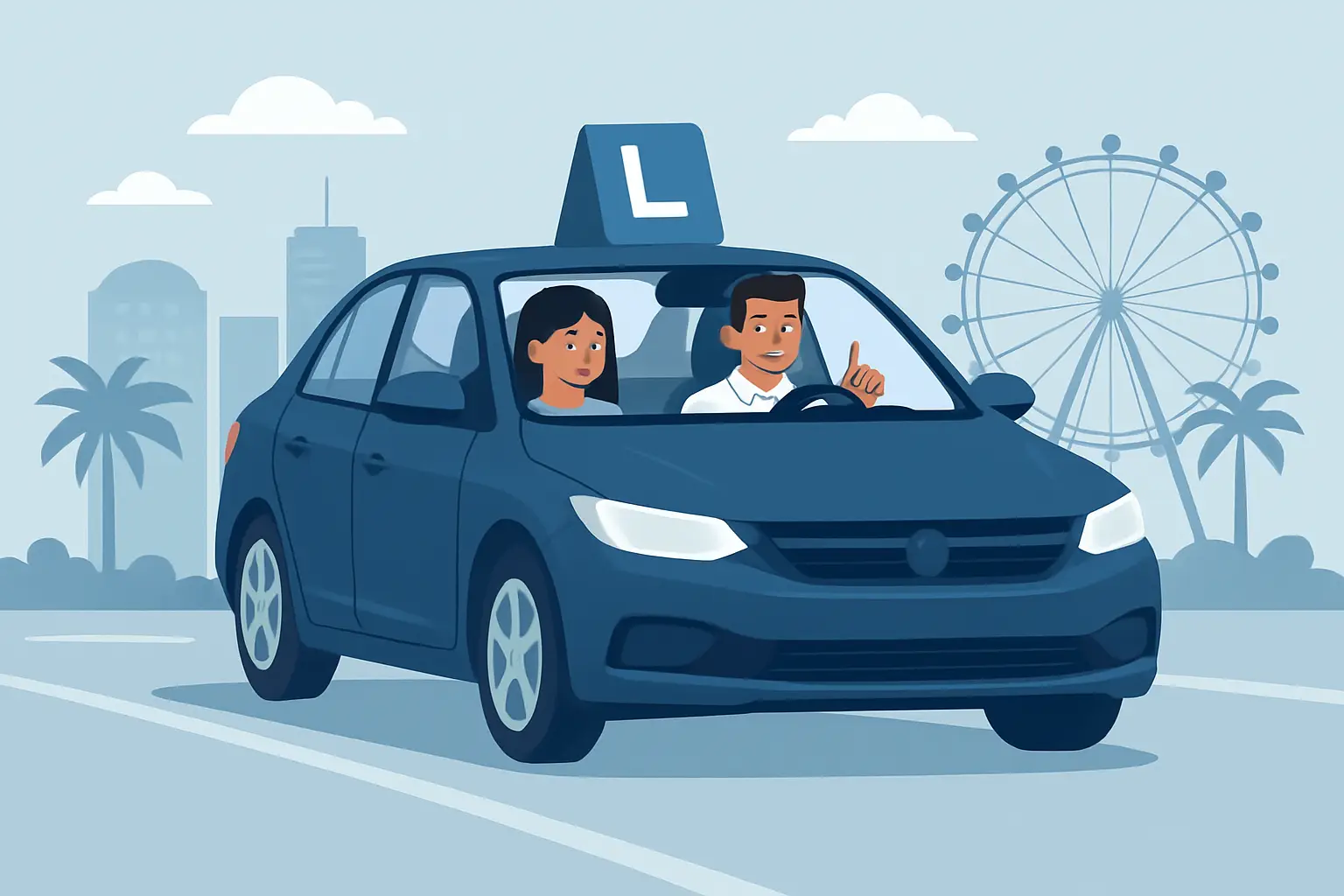
You can read every handbook page twice and still feel your stomach drop the first time you merge onto a fast Orlando road with real traffic around you. That moment is exactly why on-the-road instruction matters. Parking-lot practice is a start, but it does not teach timing, judgment, scanning, or how to recover calmly when another driver does something unpredictable.
On the road driving lessons Orlando students take should do more than “get you ready for the test.” They should build a repeatable decision-making process that holds up on I-4, in tourist traffic near the parks, during sudden rain, and in the tight, stop-and-go patterns around school zones and shopping centers. Safety-first training is not slower training – it is structured training with clear standards.
What “on-the-road” should actually include in Orlando
On-the-road lessons are most valuable when they are planned, not improvised. Orlando has a mix of environments that expose gaps quickly: multi-lane arterials, confusing intersections, aggressive lane changes, and frequent pedestrians and cyclists in certain corridors.
A strong program moves a student through environments in a deliberate progression. Early lessons might focus on low-speed neighborhoods to establish steering control, braking smoothness, and right-of-way decisions. As competency builds, lessons should expand to busier roads, then complex intersections, then higher-speed roads where space management becomes non-negotiable.
The biggest difference between casual practice and professional instruction is the coaching lens. In a quality car lesson, the instructor is not just telling the student what to do. They are teaching the “why” behind each choice: where to look, when to slow early, how to create space, and how to avoid being forced into last-second reactions.
Why Orlando is a demanding classroom
Orlando drivers face conditions that can overwhelm a new driver who has only practiced in quiet areas.
Tourist traffic is a real factor. Visitors make sudden turns, drift across lanes, and stop unexpectedly for navigation. New drivers need to learn defensive spacing and how to anticipate confusion without getting pulled into it.
Weather is another reality. Florida rain can reduce visibility quickly and change braking distance in seconds. On-the-road lessons should include strategies for reduced traction, longer following distance, and recognizing when visibility is too limited for normal speeds.
Then there is road design. Construction zones, lane shifts, and short merge lanes can turn into panic points. A safety-first instructor teaches what to do before the merge, not during it – early mirror checks, signal timing, speed matching, and an “exit plan” if the gap is not there.
The safety-first skills that matter most
Most parents and students think first about parallel parking or three-point turns because those are obvious “test skills.” Real-world safety is built from less flashy habits that need repetition.
Good on-the-road coaching will spend time on visual discipline. That means consistent mirror checks, proper blind spot checks, and scanning far enough ahead to spot brake lights, pedestrians, and stale green lights before they become emergencies.
Space management is the next layer. Students learn how to maintain a safe following distance, how to avoid sitting in another driver’s blind spot, and how to keep an escape route in traffic. Defensive driving is not timid driving. It is confident driving with room to maneuver.
Intersections are where many new drivers struggle. A structured lesson teaches speed control on approach, how to choose a safe gap when turning left, how to handle yellow lights responsibly, and how to recognize when another vehicle’s body language signals they might run the light.
Finally, communication matters. Signals, brake timing, lane positioning, and even simple decisions like “do I go now or wait” should be predictable to other road users. Predictability reduces conflict, and reduced conflict reduces crashes.
What to expect from a professional driving school
Not every provider offering “on-the-road lessons” is operating at the same safety standard. If you are investing in instruction, it is reasonable to ask for concrete operational details.
Florida state-licensed instructors should be the baseline. Licensing does not guarantee a perfect experience, but it does signal training, oversight, and a legal framework.
Training vehicles should be commercially insured and equipped for instruction. Dual-control brakes are a major safety feature because they allow the instructor to intervene if a student freezes or misjudges a situation. That matters most in early lessons, and it matters again when students begin driving in heavier traffic.
You should also expect documentation. A written plan that shows what was taught, what needs work, and what comes next helps parents and students see progress. It also prevents the common problem of “we drove around” without clearly building skills.
A structured school will ask questions before lesson one: the student’s experience level, comfort level, schedule needs, and whether there are specific goals like a road test date, anxiety behind the wheel, or a recent relocation.
Packages, pacing, and the “it depends” reality
Families often ask, “How many lessons do we need?” The honest answer is that it depends on the student’s starting point, how often they practice between lessons, and how quickly they can apply feedback.
Some beginners benefit from a shorter package to establish safe fundamentals and reduce anxiety. Others need more hours to build consistency before they are ready for complex traffic. Many schools offer structured options such as 4+, 6+, 10+, and 20+ lessons so families can choose a pace that matches the student, not a one-size approach.
There is a trade-off to consider. Fewer lessons can reduce upfront cost, but it often increases the time between guided coaching moments, which can slow progress if the student practices incorrect habits at home. More lessons can feel like a bigger commitment, but it usually produces smoother, safer performance because the instructor can layer skills in a controlled sequence and correct issues early.
If a student is nervous, pacing matters even more. Pushing too fast can create avoidance and tension. Going too slow can also backfire if the student never experiences real traffic with a coach present. A disciplined school will find the middle path: steady challenge, predictable structure, and measurable wins.
Road test prep versus lifetime-safe driving
Road test preparation is a real need, especially when a teen has a deadline or a family schedule built around a test appointment. The mistake is treating the test as the finish line.
A step-by-step progression should cover the tested maneuvers, but the bigger goal is decision-making: speed choice, intersection judgment, lane change process, and hazard recognition. Those are the skills that protect a new driver when there is no instructor in the passenger seat.
If your goal is “pass once,” you can sometimes get there with narrow practice. If your goal is “drive safely for years,” you need repetition across different roads and conditions. That is the mindset shift that keeps families out of the cycle of test anxiety, last-minute cram sessions, and risky solo driving right after licensing.
Teen requirements and the 6-hour mandate
Florida has specific requirements for teen drivers, and families want compliance without confusion. Many teens must complete state-required training, including a 6-hour training mandate in certain scenarios.
The practical value of meeting requirements through a professional school is that the training is organized, documented, and aligned with safe driving outcomes, not just box-checking. Parents also get clearer insight into what their teen is learning and what still needs practice.
If you are unsure what applies to your teen, a reputable school will explain the requirement in plain language and help you schedule training in a way that does not overload school and extracurricular life.
Adults, refreshers, and relocation coaching
Orlando is not only a teen-driver market. Adults often seek on-the-road instruction for reasons that deserve the same respect.
Some licensed drivers simply want a refresher after years of limited driving. Others are over 50 and want coaching to rebuild confidence, update habits, or adjust to new traffic patterns and modern road designs.
Relocating drivers have a different challenge. Even experienced drivers can feel off-balance when signage, right-of-way norms, and traffic flow differ from what they are used to. A few targeted lessons can reduce stress quickly by translating Florida rules into real routes and real decisions.
Convenience matters, but safety standards come first
Door-to-door pick-up and drop-off can be the difference between “we’ll schedule later” and consistent training. Busy families and students often need lessons that start at home, school, or work, with predictable scheduling windows.
Convenience should never replace safety controls. The right choice is a school that combines both: professional vehicles, licensed instruction, documentation, and a calm coaching style – plus a mobile model that respects your schedule.
If you are looking for a program built around defensive driving, structured lesson packages, dual-control training vehicles, and a documented Training Action Plan, Pinnacle Driver Safety Orlando is one local option designed for families and adults who want long-term safe driving, not shortcuts.
How to choose the right on-the-road program in Orlando
When you are comparing providers, focus on signals of discipline rather than promises.
Ask how lessons progress from simple to complex roads, and whether the instructor teaches a consistent lane-change routine and intersection approach rather than giving last-second commands. Ask what vehicle safety equipment is used, whether the car is commercially insured, and how progress is documented. If the answer is vague, your training may be vague too.
Also pay attention to the emotional side. A good instructor corrects firmly without escalating fear. For nervous drivers, the best coaching is calm, specific, and repeatable. You should leave a lesson with two or three clear takeaways you can practice, not a general feeling of “I did okay.”
The right on-the-road driving lessons are not about perfection. They are about building a process you can trust when something unexpected happens – because in Orlando traffic, eventually it will.
Closing thought: choose training that makes you slightly more prepared than you feel you need, and you will drive with options instead of pressure when the road gets complicated.