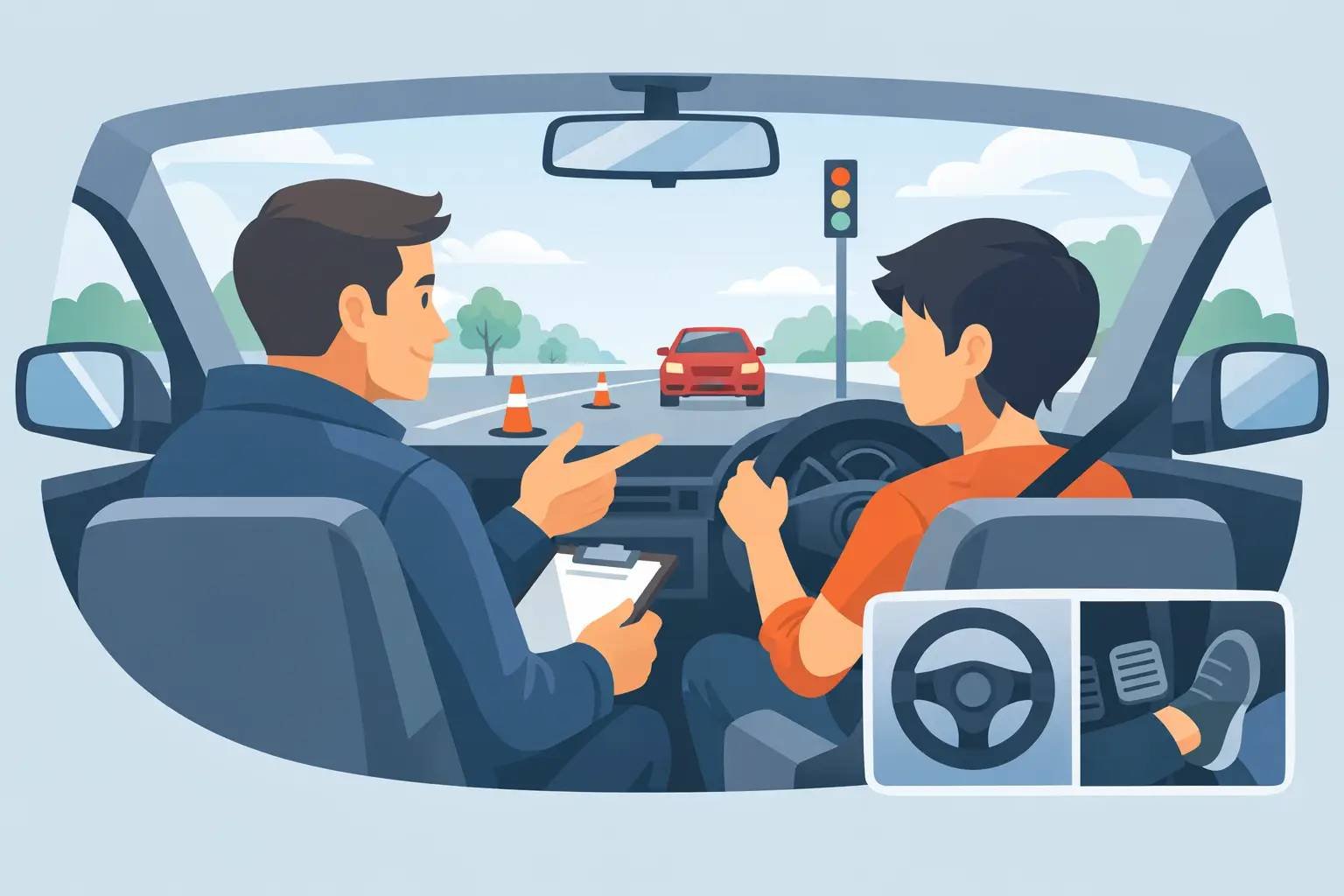
If you have a Florida road test scheduled, you do not need “more confidence.” You need a repeatable routine that holds up when an examiner is quiet, traffic is unpredictable, and your hands feel a little shaky on the wheel.
This is exactly how to pass Florida driving test first try: build the habits the examiner can see in 20 minutes – scanning, speed control, complete stops, smart gaps, and calm corrections. In Florida, unsafe decision-making is what fails people, not imperfect parking.
What the Florida driving test is really measuring
The road test is not designed to see if you drive like a professional. It is designed to confirm you can operate a vehicle safely, legally, and predictably with basic maneuvers.
“Predictably” matters. Examiners look for clear signals, smooth lane position, steady speed, and consistent checking of mirrors and blind spots. If you make other road users guess what you will do next, that is when points disappear quickly.
They are also watching your judgment. Two drivers can execute the same turn, and only one passes – because one chose a safe gap and the other forced traffic to react.
Before you practice: handle Florida requirements and logistics
A first-try pass often comes down to what you did days before the appointment.
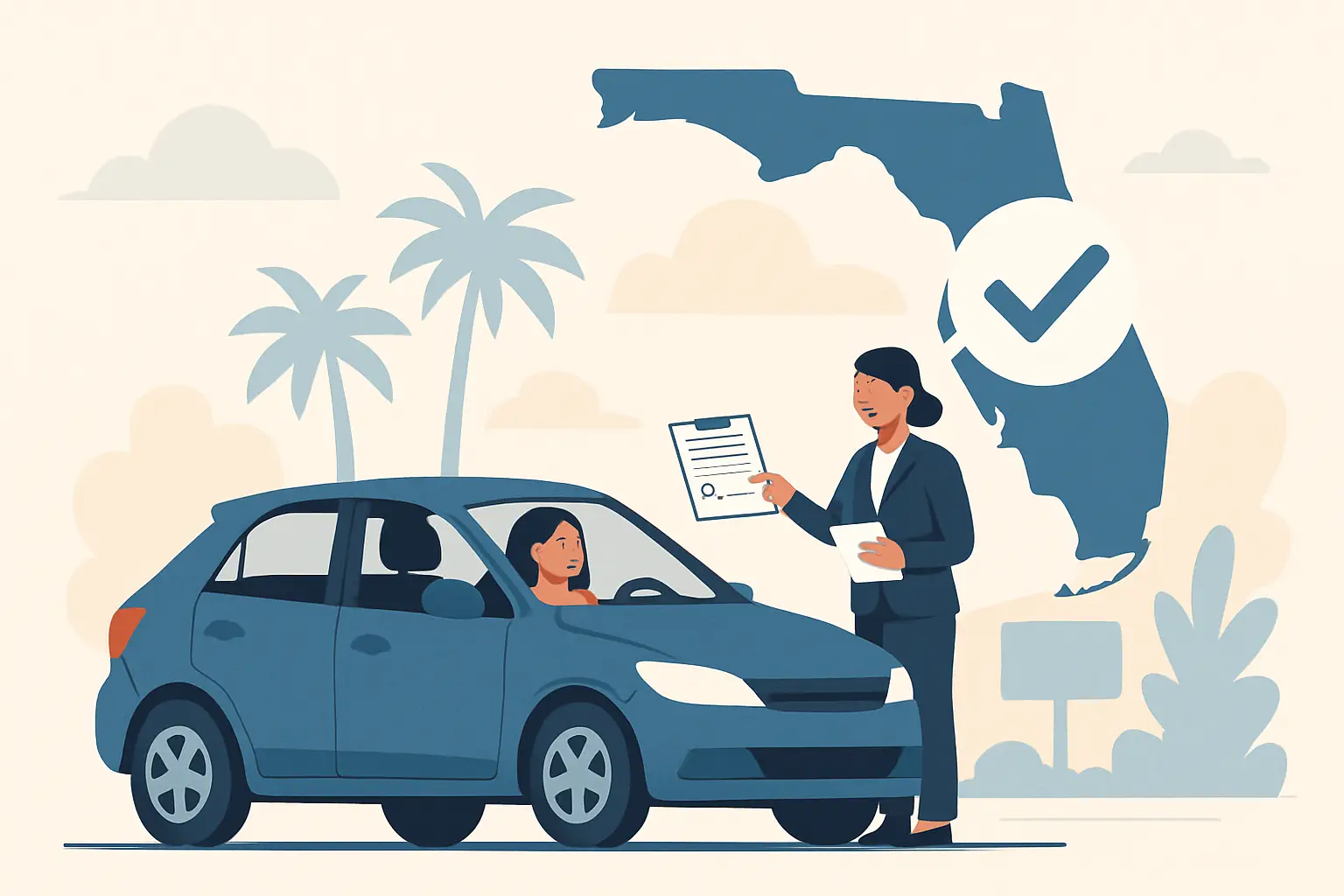
If you are a teen, make sure you have completed the required education steps for your license path. Florida’s 6-hour driver education requirement is real, and missing documentation can stop the test before it begins.
Confirm your appointment time, location, and what vehicle you are using. The car should be the same one you practiced in whenever possible. New vehicle, new brake feel, new mirrors, and new turning radius – those small changes show up as hesitation.
Documents and vehicle basics that can derail test day
This part is not glamorous, but it is common: people arrive unprepared and start the test stressed.
Bring the identification and paperwork your testing site requires, and check ahead of time if there are any restrictions on the vehicle. Your car should have working brake lights, turn signals, a functional horn, valid registration, and proof of insurance. If something is broken, you are not proving safe operation.
Also, fix the basics that create distraction. Adjust your seat so your wrists rest on top of the steering wheel and you can fully press the brake without stretching. Set mirrors for maximum rear and side coverage. Turn your phone off.
The skills Florida examiners notice immediately
Most driving tests begin with a short vehicle check and basic movements. Within the first minute, an examiner usually knows whether the drive will be calm or chaotic.
1) Complete stops – every time
Florida examiners watch stop signs closely. A complete stop means the wheels stop turning behind the stop line, crosswalk, or at the correct point of the intersection. Rolling through is one of the fastest ways to fail.
After you stop, you still need to look. Pause, scan left-right-left, and only then proceed. If you stop correctly but pull out without scanning, you are still showing poor judgment.
2) Right-of-way judgment at intersections
You can drive perfectly within your lane and still fail for choosing a bad gap.
When you are turning, do not “hope” you fit. Wait for a safe opening you can complete without rushing. Examiners would rather see you wait a few extra seconds than force another driver to brake.
3) Lane position and speed control
A lot of new drivers drift because they stare too close to the front bumper. Keep your eyes up and down the road. Your hands follow your eyes.
Hold a steady speed, especially in residential areas and school zones. Do not drive 5 to 10 mph under the limit out of fear – that can be unsafe if it disrupts traffic flow. It is fine to be slightly under when conditions demand it, but your speed should look intentional, not timid.
4) Mirror checks and blind spot checks that are visible
Examiners cannot read your mind. Make your checks obvious.
Use your mirrors regularly, especially before braking, before changing lanes, and after turns. Then add a real head turn for blind spots when changing lanes or merging. A quick head turn is not “extra.” It is the safety step that prevents side-swipe crashes.
5) Smooth braking and controlled turns
Hard braking at the last second communicates that you were not planning ahead. Start slowing early and brake progressively.
When turning, slow before the turn, not during it. Keep both hands on the wheel, turn into the correct lane, and straighten out smoothly. Wide turns and cutting corners are common test mistakes and common crash causes.
Maneuvers that make people anxious (and how to make them automatic)
Nerves spike on a few predictable tasks. The solution is to train them as routines, not “moments.”
Backing up in a straight line
If asked to back up, the key is looking where the car is going. That means turning your head and looking out the rear window, not relying on the backup camera.
Go slowly. Keep the wheel steady. If you start drifting, correct gently. Over-correcting creates a wobble that looks uncontrolled.
Parking and positioning
Parking is rarely what fails a safe driver. What fails drivers is lack of observation.
Use a slow approach, signal, check for pedestrians, and look around continuously. If you need a small correction to straighten the car, do it. A calm correction is a sign of control. A rushed attempt that ignores surroundings is not.
Three-point turns or turns about
If your test includes a three-point turn, treat it as a safety exercise.
Signal, scan, and make sure you have a clear space. Turn the wheel fully when appropriate, stop fully between movements, and keep your speed walking-pace slow. Examiners watch whether you keep checking traffic in both directions, not whether you can do it in the fewest moves.
The most common Florida test-day mistakes (and what to do instead)
People often fail for “small” actions that actually indicate bigger risk.
One is rolling stops. Another is forgetting to signal early enough – signaling after you start braking or turning is not useful communication.
Another common issue is lane changes without a blind spot check. Even if the lane is empty, skipping the check shows a habit that will eventually cause a collision.
Finally, many nervous drivers freeze when something unexpected happens, like a truck approaching quickly or a pedestrian near a corner. The safe response is not to panic-stop in the lane. It is to slow smoothly, increase following distance, and make decisions with time.
A two-week practice plan that works for busy Orlando schedules
You do not need endless hours. You need structured repetition.
For the first week, focus on fundamentals in lower-stress areas: complete stops, scanning patterns, lane position, and smooth braking. Drive the same routes until your actions are consistent. Consistency is what shows up on test day.
For the second week, add complexity: moderate traffic, multi-lane roads, and turns with real timing decisions. Practice near the testing area if possible so signage, speed zones, and lane markings feel familiar.
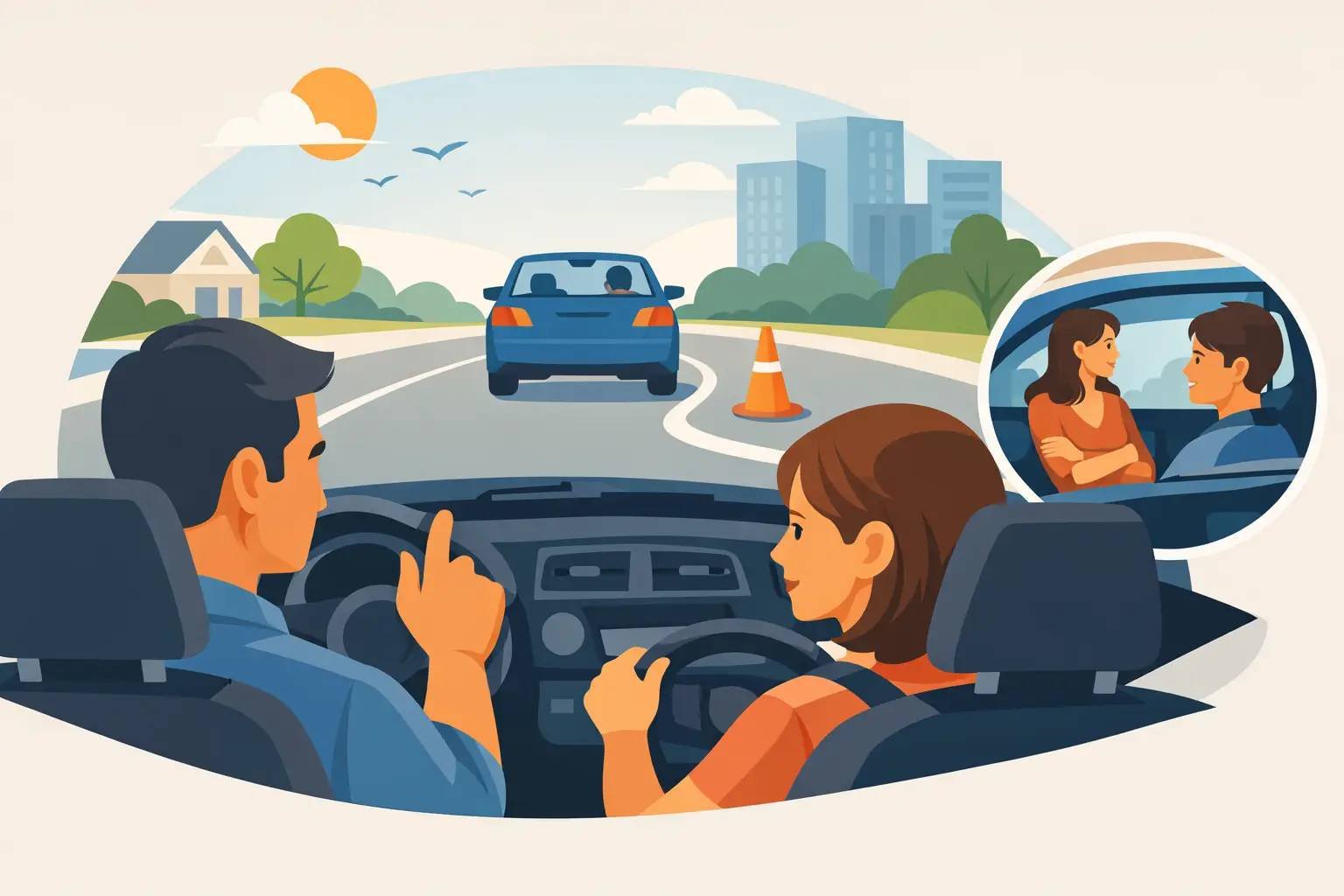
If you are a parent coaching a teen, keep feedback simple and specific. “Stop sooner” is less useful than “start braking at the second mailbox and stop behind the line.” Too many corrections at once can create hesitation.
What to do 24 hours before the test
The day before, do a short drive focused on calm execution, not cramming. If you drive for two hours trying to fix everything, you will show up mentally tired.
Confirm your route to the site and plan to arrive early. Choose comfortable shoes. Avoid anything that changes your pedal feel.
Get sleep. Fatigue causes delayed braking and slower scanning. It is a safety issue, not just a focus issue.
Test-day mindset: calm, cautious, and predictable
On test day, treat every instruction as a chance to show safety habits.
If you do not hear an instruction clearly, ask for it to be repeated. That is safer than guessing. If you make a minor mistake, do not spiral. Correct safely and keep driving. Many drivers lose more points from the panic reaction than from the original error.
When in doubt, choose the safer option: wait for a better gap, come to a complete stop, and slow early. Examiners reward caution that still keeps traffic flow reasonable.
When extra coaching is the smart option
Some drivers can learn with a family vehicle and consistent practice. Others need structured repetition and a calm third party, especially nervous drivers, teens who shut down under parent feedback, or adults adjusting to Florida’s signage, right-on-red rules, and high-speed multi-lane traffic.
A professional lesson also adds safety controls and documentation that families cannot easily replicate, like dual-control brakes and a written progression of skills. If you want that kind of step-by-step road-test preparation in the Orlando area, Pinnacle Driver Safety Orlando builds training around defensive driving habits and a documented Training Action Plan so you can see what is covered and what is next.
You only get one brain on test day, so train your habits until they run without effort – then the drive feels less like a performance and more like what it should be: you making safe, steady decisions one intersection at a time.