A lot of Orlando-area families find out about the “Florida 6-hour driving course” the same way – a teen is eager to get on the road, the DMV checklist starts piling up, and suddenly there’s a required six hours that sounds simple but isn’t always explained well.
If you’re trying to make the safest, most efficient choices for a new driver (or you’re an adult driver who wants structured coaching), it helps to understand what this requirement is, what it is not, and how it fits into real-world readiness.
What is Florida 6 hour driving course?
When people ask, “what is Florida 6 hour driving course,” they’re typically referring to Florida’s requirement for behind-the-wheel driver training totaling six hours for certain teen drivers. It is not the same thing as the online drug and alcohol course (TLSAE), and it is not a one-time “take it and you’re done forever” shortcut to safe driving.
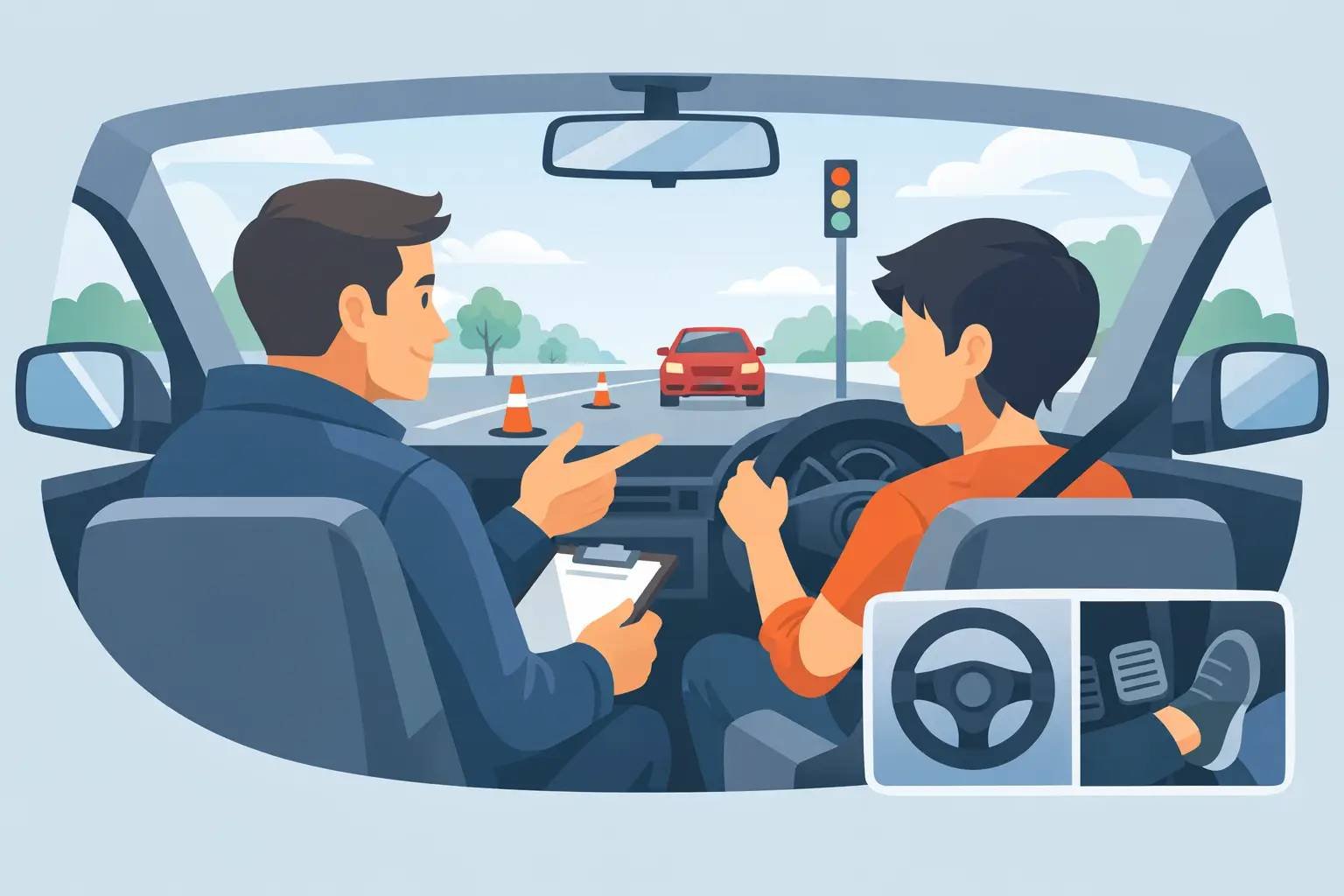
At its core, the six-hour course is supervised, on-the-road instruction with a qualified instructor designed to develop foundational driving skills under professional control and coaching. The goal is to reduce risk at the exact moment risk is highest: the first months a new driver begins operating independently.
Florida’s rules and paperwork can feel like they’re focused on eligibility, but the real value of the six hours comes from what happens inside the car – correcting habits early, learning to scan and predict, and practicing the “boring” safety decisions that prevent crashes.
Who needs the Florida 6-hour behind-the-wheel training?
Most often, this requirement applies to teens who are working toward a Florida driver license and need documented professional training as part of meeting state expectations.
That said, “it depends” is real here. Florida has multiple pathways for teen licensing, and families sometimes mix requirements from different sources (school programs, private lessons, parent practice hours, and DMV forms). The safest approach is to confirm what applies to your teen’s situation – age, permit status, and which licensing step they’re on.
Even when six hours is the legal minimum, many families choose to go beyond it because six hours can establish basics but may not fully cover complex Orlando driving conditions like heavy tourist traffic, sudden lane changes near attractions, and aggressive merging on I-4.
What the 6 hours usually cover (and what it should cover)
Six hours goes quickly. In a high-quality program, time is structured so the student gets repetition without being overwhelmed.
A solid six-hour behind-the-wheel progression typically includes the fundamentals first: pre-drive checks, correct seating and mirror setup, smooth starts and stops, lane position, and steering control. Those sound simple until you see how many new drivers accidentally create risk through poor mirror use, drifting, or late braking.
From there, instruction should move into real traffic decision-making: right-of-way rules, gap selection, speed control, and turning judgment at busy intersections. The most important part is not memorizing a rule – it’s learning to apply it under pressure while still staying calm and predictable.
The best programs also include defensive driving habits throughout, not as a separate lecture. That means consistent scanning patterns, identifying escape routes, managing following distance, and recognizing the early signs of trouble like unstable vehicles, distracted drivers, pedestrians who may step out, or a green light that’s about to change.
If your teen finishes “six hours” having only driven empty neighborhood roads, that’s a concern. Real readiness comes from staged exposure: low traffic first, then busier roads, then complex intersections – always matched to the student’s comfort and skill level.
What the Florida 6-hour course is not
This is where confusion causes delays.
First, the six-hour behind-the-wheel training is not the same as TLSAE (Traffic Law and Substance Abuse Education). TLSAE is commonly completed online and covers legal responsibilities, substance impairment, and traffic safety topics. Many teens need both – but they are separate requirements with separate proof.
Second, the six-hour course is not a guarantee a student will pass the road test. Road tests measure specific skills on a specific day. Safe driving is broader: judgment, consistency, awareness, and managing risk when conditions change. A safety-first program teaches road test skills as a checkpoint inside a bigger plan.
Third, it is not a substitute for supervised practice with a parent or guardian. Professional instruction is critical, but most new drivers also need additional practice hours to build automaticity – the ability to perform basics smoothly without freezing up.
Why Florida puts a six-hour minimum in place
New drivers are statistically higher-risk drivers, and the first year is the most fragile. Florida’s six-hour requirement is an attempt to ensure that teens get at least a baseline amount of structured, professional coaching.
The trade-off is obvious: a minimum standard does not equal full preparation. Six hours can introduce critical skills and correct dangerous misconceptions, but it cannot replicate months of varied driving experience.
Families get the best results when they treat the requirement like a foundation. The question becomes: “What does my teen need after these six hours to be truly road-ready?” not “How do we check the box as fast as possible?”
How the course is documented and why documentation matters
Florida requirements are not only about skills – they are also about proof. The right program should provide documentation that the training occurred and what it covered.
Documentation matters for two reasons. First, it supports compliance if the DMV, insurance, or a licensing step requires verification. Second, it gives parents visibility into progress. Without documentation, families are left guessing: What did they practice? What are they struggling with? What should we reinforce during at-home practice?
A disciplined school will track skill coverage and note readiness levels in a way that’s easy to understand. That record becomes a working plan, not just paperwork.
Online vs behind-the-wheel: how to choose the right “six hours”
If you’ve seen “6-hour Florida driving course” advertised online, pause and read carefully. Some programs use similar language but are classroom-style, education-only, or aimed at different requirements (like traffic school after a ticket).
If your goal is meeting the behind-the-wheel training requirement, the key question is simple: will the student be driving a real vehicle with an instructor for the full six hours?
Behind-the-wheel instruction is where anxiety often shows up, especially for teens who are cautious or perfectionistic. That’s also where a calm, professional instructor makes the biggest difference – not by taking over, but by coaching early enough that the student can correct safely.
What parents should look for in a 6-hour provider
Six hours in a car is not the place to gamble on quality. The risk is not just wasted money – it’s building shaky habits that take months to undo.
Start with the operational standards: Florida state-licensed instructors, commercially insured training vehicles, and dual-control brakes. Dual controls are not about fear; they are about creating a controlled learning environment where the instructor can prevent an error from becoming a collision.
Next, look for structured lesson plans and progression. A good provider can explain how they move a beginner from parking-lot control to real intersections and multilane traffic without rushing. If a program can’t tell you what they cover in six hours, they probably don’t measure it.
Finally, consider logistics. Busy families often abandon consistent training because scheduling is painful. Door-to-door pick-up and drop-off can be the difference between “we’ll do it someday” and a steady, safe learning rhythm.
For families in the greater Orlando area who want instruction that treats safety as the outcome (not the marketing line), Pinnacle Driver Safety Orlando builds behind-the-wheel training around defensive driving fundamentals, documented progress, and professional vehicle safety standards.
How to make the most of the 6 hours
The smartest way to use professional hours is to make them the spine of a longer plan.
Before the first lesson, have your teen practice the basics of mirror adjustment, seating position, and identifying dashboard indicators. That saves driving time for actual driving decisions.
Between lessons, keep practice sessions short and focused. Ten to twenty minutes of intentional practice often beats a long, stressful drive. Repeat one or two skills until they are smooth, then add complexity.
After the six hours, don’t rush straight into the hardest driving situations. If your teen is newly confident, that’s great – but confidence can outpace judgment. Gradually introduce nighttime driving, rain, heavy traffic corridors, and unfamiliar routes.
If you’re an adult driver, does the “Florida 6-hour course” apply?
For most adult drivers, the six-hour requirement is not a standard licensing rule in the same way it is for teens. But many adults still seek six hours of structured behind-the-wheel coaching for practical reasons: returning to driving after a long gap, rebuilding confidence after a close call, or adapting to Florida traffic after relocating.
In those cases, the value is similar: professional feedback, targeted practice, and a safety-first environment. The difference is that adult lessons can be customized more aggressively around your real pain points – highway merging, complex intersections, parking, or defensive strategies for high-density traffic.
The best driving plan is the one that reduces your risk in the situations you actually face, not the one that simply meets a minimum.
A closing thought
Six hours can change a driver’s trajectory if the training is real, structured, and taken seriously. Treat it like the beginning of a safety habit – the kind that keeps paying you back every time Florida traffic gets unpredictable.